
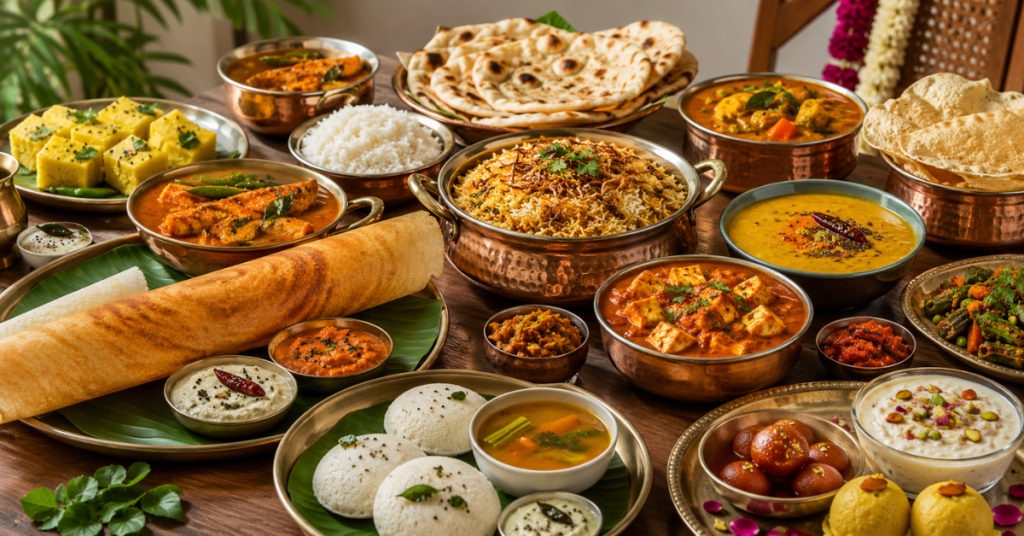
India’s cuisine is one of the most diverse in the world, and each region contributes unique flavors and techniques. For example a single meal might feature a rich Punjabi curry alongside a tangy Goan fish curry or a creamy Bengali eggplant dish. In Singapore’s multicultural dining scene, exploring these regional recipes adds depth and variety to any menu, turning each meal into a culinary journey through India.
Exploring India’s Regional Flavors
North India: Creamy Curries and Tandoors
North Indian cuisine is characterized by wheat-based breads (like naan and roti) and rich, spice-infused gravies. Mughal and Persian influences mean dishes often use yogurt, butter, and nuts for creaminess. Classics such as Butter Chicken (Murgh Makhani, Punjab) and Rogan Josh (Kashmir) exemplify this style. Tandoori ovens are common, imparting smoky notes to kebabs and chicken tikka. Overall, the north’s menu is hearty and aromatic, offering comforting gravies and breads.
South India: Rice, Coconut, and Spice
A vegetarian thali from South India featuring rice with coconut-based curries, chutney, and fried snacks. South Indian meals often arrive on banana leaves, highlighting rice and local ingredients like coconut and lentils. South Indian meals center on rice and coconut. Staples include dosa (crepes of fermented rice), idli (steamed rice cakes), and sambar (spicy lentil stew). Coconut – in grated, milk, or oil form – flavors many dishes, from fragrant chutneys to coconut-based curries. Dishes are often tangy and fiery, thanks to spices like mustard seeds and dried red chilies. This vibrant cuisine contrasts with the north: for example, a South Indian thali might pair tangy tamarind-infused sambar with cooling coconut chutney and crispy papad.
East India: Mustard, Fish and Rice
Eastern India (Bengal, Odisha, Assam) offers delicate yet distinctive flavors. Meals are usually rice-centered with fish or vegetables. Mustard oil and mustard seed pastes impart a pungent kick to curries, as in the famous Bengali Shorshe Maach (mustard fish curry). Dishes here tend to be milder and more nuanced, often blending sweet and sour notes (as in rice puddings or fruit chutneys). For instance, a Bengali platter might include steamed rice with a mustard-based fish curry, spicy potato fry, and a sweet rasgulla dessert. This subtle balance and use of local ingredients like freshwater fish give Eastern cuisine its own distinct identity.
West India: Coastal Curries and Vegetarian Classics
West India covers diverse traditions. In Gujarat, cuisine is mostly vegetarian and often surprisingly sweet-salty, and many dishes traditionally omit onion and garlic for religious reasons. Nearby Maharashtra adds spicy street-food snacks (like vada pav and pav bhaji) and coconut-based curries along the Konkan coast. Goa’s coastal cuisine is famously tangy and coconutty; it frequently uses kokum (a sour fruit) and fresh coconut milk with seafood. For example, Goan fish curry or prawn vindaloo combine vinegar, chilies, and coconut for a fiery flavor. Millets and spices (turmeric, chili) are also common in the west. Together, Western India’s recipes bring a range of seafood curries, peanut-sesame coconut chutneys, and hearty vegetable dals that round out India’s regional palette.
Regional Delights on the Dining Table
Regional Indian dishes spice up any menu by offering new taste experiences. Diners often want to know the story and origin of what they eat, and regional cuisine satisfies that curiosity. For instance, restaurants like Bukhara (Singapore) build menus around multiple regions: Bukhara’s Butter Chicken (Murgh Makhani) represents Punjab, while a tangy Goan Vindaloo lamb curry adds coastal heat. Its kebabs range from Lucknowi Galouti (Awadhi) to Karnataka-style Seekh, showing how even similar dishes vary by province. In practice, offering regional specialties – from Punjabi tandoori breads to Bengali fish curries or Rajasthani lentils – means every bite brings something different. This variety keeps meals exciting: one plate can feature creamy north–south curries, spicy south–east pickles, and crunchy west–east snacks all together.
Bringing Regional Variety to Your Menu
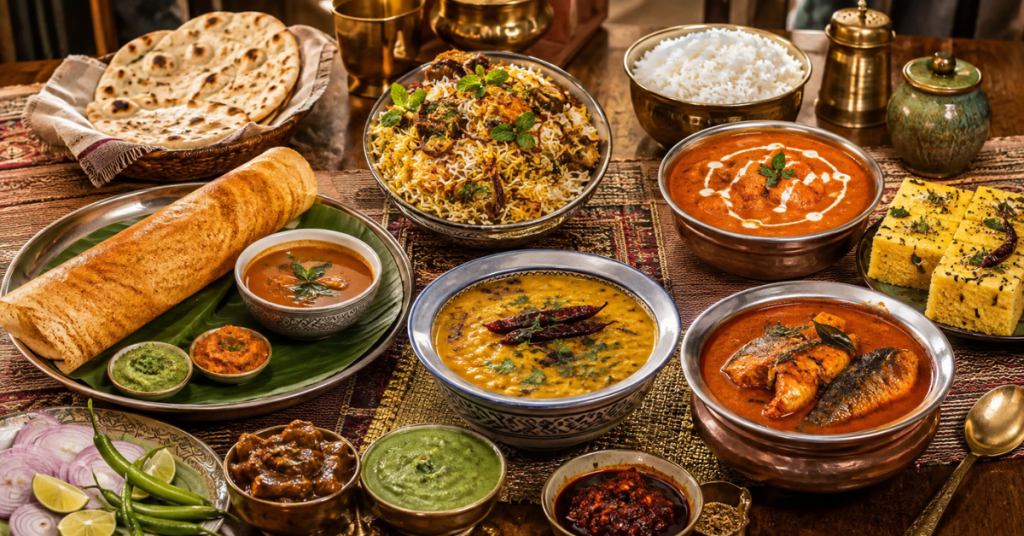
- Try a regional sampler. Dedicate one meal or menu section to a regional platter.” For example, pair a northern dal with a southern vegetable curry and an eastern fish dish. This lets diners mix and match flavors in one sitting.
- Use signature ingredients. Incorporate hallmark ingredients (coconut, mustard oil, kokum, etc.) to give an everyday recipe a regional twist. A splash of coconut milk makes a curry taste coastal, while mustard tempering brings eastern flair.
- Rotate dishes seasonally. Change up specials to spotlight different regions e.g., a “Goan curry week” or “Rajasthani thali night.” Seasonal ingredients (fresh kokum in summer, winter squash in north) can guide which region to feature.
- Learn and share stories. Highlight each dish’s origin on the menu or with servers. Telling customers, “This mutton curry comes from Hyderabad” or “This lentil is cooked Kerala-style” enriches the dining experience and educates the palate.
Conclusion
Regional Indian recipes bring unmatched variety to the dining table. Each region’s history and geography yield distinct ingredients and techniques from North India’s buttery gravies to South India’s spice-forward rice dishes, and from Eastern India’s mustard-scented curries to Western India’s coconut seafood. This diversity means restaurants can offer a much wider palette of flavors, keeping menus fresh and customers intrigued. For diners, exploring these recipes is like a world tour of taste: it adds excitement and meaning to everyday meals. As interest in authentic dining grows, both home chefs and eateries will continue blending these regional traditions, promising even more creativity and flavor on the plate in the future.
FAQs
What are the main regional cuisines of India?
India’s food is often grouped into North, South, East, and West cuisines, each with characteristic ingredients and dishes (see above sections). For example, North is known for breads and creamy curries, South for rice and coconut, East for mustard and fish, and West for coastal curries and snacks.
How do regional ingredients affect flavor?
Each region uses local staples. Coconut and curry leaves are prominent in the South, mustard and rice in the East, dairy and wheat in the North, and kokum or peanuts in the West. These ingredients shape the dish’s taste, aroma, and texture, giving it a distinct regional identity.
How can I try different regional Indian dishes in Singapore?
Many Singapore restaurants (like Bukhara by Legacy) serve a mix of regional recipes. Visiting eateries that feature multiple states’ specialties – or exploring Little India’s diverse stalls – is a great start. You can also cook at home using recipes from different regions or join cultural food events and festivals.
Can one restaurant menu cover all regions?
Some modern Indian restaurants intentionally curate multi-regional menus. For example, Bukhara lists dishes from Punjab, Goa, Kashmir, Bengal and more. While a single chef can only specialize in so many dishes, creative chefs blend regional techniques, so many restaurants do highlight several cuisines together.
Why is regional variety important for diners and restaurants?
For diners, trying regional recipes means discovering new flavors and experiencing culture. For restaurants, it differentiates their offerings and attracts foodies seeking authenticity. Education about a region’s food (ingredients, stories) makes dining more memorable and meaningful.