
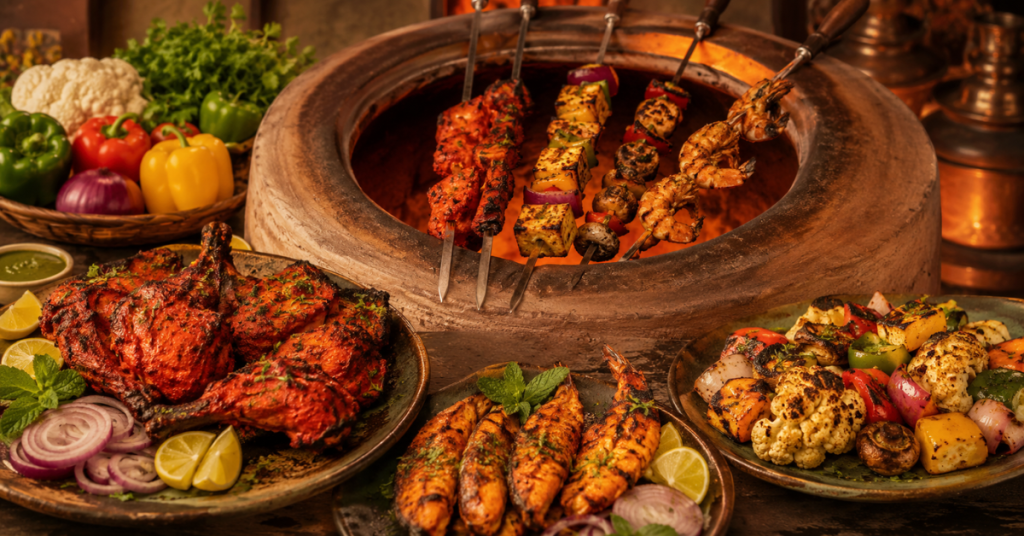
Singapore’s Bukhara Restaurant celebrates the fiery flavors of North-West Frontier cuisine, and at the heart of those flavors is the tandoor a traditional clay oven that works wonders on proteins and produce. In a tandoor, intense radiant heat (often above 480°C) and thick clay walls combine with smoky charcoal to create a unique cooking environment. This extreme heat sears the outside of food almost instantly, locking in juices and flavor, while the clay walls hold temperature steady and impart a subtle smoke. The result is skewered chicken, lamb, fish or vegetables with a deeply caramelized crust and a tender, succulent interior that tastes smoky and vibrant in every bite.
Tandoor cooking isn’t just high-heat grilling it’s a holistic transformation of ingredients. In the sections below, we’ll explore how searing temperatures, marinade chemistry, smoke infusion, and spice chemistry all come together to turn simple meat, seafood and vegetables into something truly extraordinary on the plate.
The Fiery Heart of a Tandoor: Extreme Heat and Clay
A tandoor is essentially a tall cylindrical clay oven heated by wood or charcoal. Temperatures inside can soar past 900°F (≈480°C). This blazing heat gives tandoori cooking its signature advantages: it flash-sears the exterior of the food to brown it quickly, and it cooks rapidly from all sides (with heat radiating from the clay walls and hot air swirling around). Because of this, a piece of marinated chicken or lamb can go from raw to perfectly cooked in just minutes, without drying out. The clay walls also act as a powerful insulator, maintaining even heat inside and eliminating cold spots. This means every skewer placed in the tandoor gets consistent, enveloping heat that cooks it uniformly from exterior to interior.
- Intense Searing: The tandoor’s intense heat rapidly sears the surface of meat and vegetables, locking in natural juices and flavors. This creates a crisp, browned crust (thanks to Maillard browning) while keeping the inside moist.
- Fast, Even Cooking: Because of the high temperature and the way heat surrounds the food (radiant heat from the clay, plus convection from rising hot air), cooking times are very short. Rapid cooking means delicate proteins like seafood stay tender and vegetables stay firmer inside, instead of steaming to mush.
- Consistent Temperatures: The thick clay walls hold heat steadily. As small drips from the food hit the walls, they smolder and add flavor, but the walls don’t have “hot spots,” so nothing burns too quickly in one spot. Every morsel cooks evenly.
In short, a tandoor is part high-powered grill and part convection oven. It gives food an even, intense blast of heat that seals and preserves juices while giving a distinctive char. Chefs treasure this method because it turns simple ingredients into vividly smoky, caramelized dishes (for example, thigh pieces of chicken become tandoori chicken, skewers of lamb become tandoori kebabs) in a fraction of the time of normal roasting.
Marinades and Flavor Infusion
Another key to tandoori magic is the spice-infused marinade. Meats, seafood and even vegetables are typically coated in a thick yogurt-and-spice marinade before they ever see the tandoor. The marinade serves multiple purposes: it clings to the food, carries flavor deep into the surface, and begins to tenderize the protein even before cooking. A classic tandoori marinade often includes yogurt, lemon juice, ginger, garlic and spices like cumin, coriander and red chili. The lactic acid and enzymes in yogurt gently break down surface proteins in meat, pre-tenderizing them. This means the exterior of the chicken or lamb will turn tender rather than tough under the high heat. At the same time, the thick yogurt paste clings to the meat or veggies, creating a flavorful coating that bakes into a crust as it hits the oven, without just sliding off.
Above: Marinating meat or vegetables in yogurt and spices (top) and skewering them (bottom) are critical first steps to tandoori cooking. The oils in spices like cumin, cardamom and Kashmiri chili release under the heat, amplifying aroma and taste. In fact, studies of tandoori marinades point out that these volatile spice oils “release their full aroma under high heat,” so the hotter the oven, the bigger the flavor punch.
Key benefits of a tandoori marinade include:
- Tenderizing Power: Yogurt’s mild lactic acid and enzymes start to break down meat proteins right away, resulting in a more tender texture. This is why properly marinated tandoori chicken or lamb stays juicy and tender inside even after the intense cook.
- Flavor Coating: A thick yogurt-spice paste sticks to the surface. It not only carries spices deep into the surface but also helps form a reddish crust. The spices bloom under the heat, giving that signature tandoori color and fragrance.
- Juice Retention: Because the marinade seals in moisture and fat (like a sponge), the meat doesn’t dry out while cooking. High heat seals in those natural juices that the marinade helps hold onto.
Together, these marinade effects mean that when the skewer finally hits the tandoor, it pops with flavor. The meat or vegetables have already absorbed spice notes inside and out, and as the tandoor cooks them quickly, those flavors lock into the food while a char forms on the outside.
Smoke and Char: Flavor from Clay and Charcoal
A tandoor imparts a unique smoky, charred flavor that you can’t easily replicate on a normal oven or grill. First, the fuel – typically wood or charcoal – smolders at the bottom of the oven, filling it with fragrant smoke. That smoke circulates up around the food, infusing it with depth. Second, as juices and marinated drippings hit the super-hot clay walls or the coals below, they vaporize into smoke and charcoal fumes. These compounds then flavor the food as well.
Research on tandoori cooking notes that smoke contains aromatic compounds which interact with the proteins and amino acids in the meat, intensifying the Maillard reaction during cooking. In simpler terms, it’s not just burning carbon that makes smoke taste good – it’s the smoke chemicals entering the food and fueling browning and savory flavors. The result is a beautiful reddish-black char on the outside of the meat or vegetable, with complex roasted, slightly burnt-sugar notes on the surface.
Clay itself contributes to the effect. As meat drips off the skewers, some of the juices hit the red-hot clay walls. Those juices sizzle and smolder, generating more smoky flavor right there. One tandoori source describes this interaction as creating “a subtle smoky flavor that’s unique to tandoor cooking. In short, no part of the process goes to waste, every drip adds aroma, and every corner of the food gets exposed to charcoal smoke and radiant heat.
The net impact is that tandoor-cooked dishes have a distinctive smoky-sweet layer of taste that’s hard to find anywhere else. In fact, experts say that traditional tandoori fuel (wood/charcoal) combined with marinade drips is responsible for the deep browning and rich flavor in tandoori dishes. This smoky char is key to why tandoori chicken, fish or veggies taste “grilled” even though they cook more like an oven roast – it’s the fire and smoke at work together.
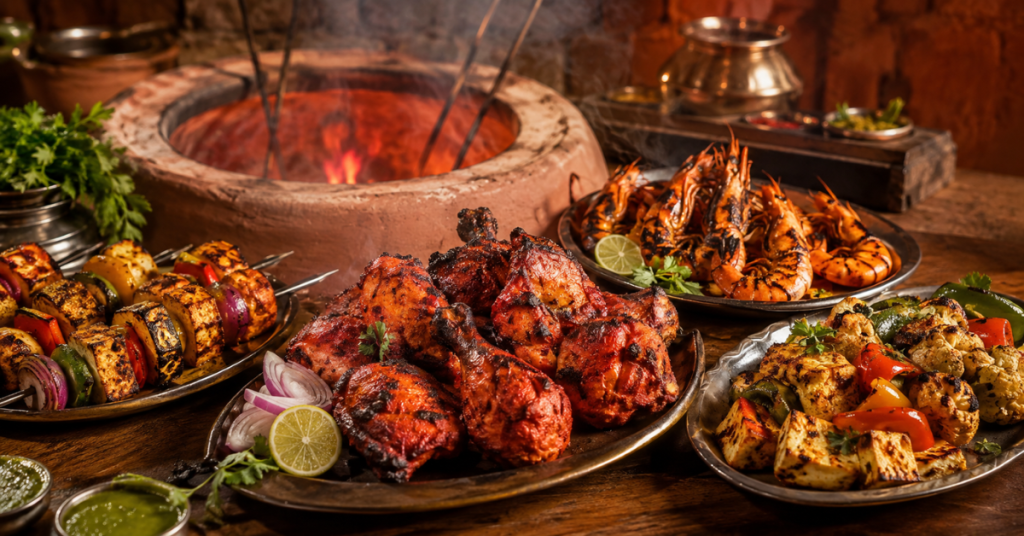
Transforming Meats: Juiciness, Char, and Tenderness
When it comes to meat, the tandoor works wonders. Thick cuts of chicken, lamb chops, or beef kebabs come out incredibly juicy inside and well-charred outside. As noted above, the rapid sear locks in juices, so even a lean piece of meat stays tender. The lactic-acid marinade has already started tenderizing the surface, and now the sear “crust” formed by the Maillard reaction develops rich savory notes. Meanwhile, excess fat renders out and drips away, reducing greasiness and adding smoky flavor in its wake.
Tandoori meats like chicken tikka or lamb kebabs showcase these effects: the exterior develops a dark, spiced crust (often a deep orange-red from chilies and pigments), while the inside remains moist and tender. According to chefs and food scientists, ingredients in the marinade (yogurt, citrus juices, spices) work with the oven to transform the meat’s texture. The heat breaks down connective tissues in tougher cuts (like collagen in lamb) quickly without toughening the muscle fibers. This is why even big pieces of meat can cook through in minutes and still feel soft.
In practical terms, a good tandoori chef will describe the transformation this way: raw, rubbery chicken becomes melt-in-your-mouth on the inside and crisp on the outside. A marinade-coated lamb chop takes on a smoky char and a rosy interior. Even duck or game birds, which can be chewy by conventional roasting, “take beautifully to the heat” – finishing with succulent meat and a distinctive grilled finish.
Key changes in tandoori meats:
- Caramelized Crust: The surface browns deeply (a rich Maillard crust) under the high heat, concentrating savory flavors.
- Juice Retention: Rapid cooking at intense heat prevents moisture loss, so the interior stays succulent.
- Tender Interior: Marinades and quick heat break down proteins and collagen so the inside is soft.
- Smoky Infusion: Char and smoke flavors permeate the meat surface for depth.
These factors are why many fine restaurants and home cooks prize the tandoor for cooking meat. In the words of one chef, “take something simple, hit it with fire, and watch the magic happen”.
Tandoor and Seafood: Delicate, Flaky Perfection
Seafood also thrives in the tandoor, though its lean proteins require a slightly more delicate touch. Fish fillets, prawns and squid can be marinated briefly (often with lemon or yogurt) and then skewered. The same intense heat that sears meat quickly will sear seafood just as effectively. You get a lightly charred exterior and a smoky flavor, but because fish contains less connective tissue and more water, it cooks in a flash.
The transformation here is that seafood develops a thin, crispy crust of spices and char, while the inside turns flakey and moist. For example, tandoori salmon or pomfret will have a glowingly charred skin side and tender flaky flesh. Prawns will curl pink and their exteriors will blister, locking the juices in. Tandoori shrimp and fish “take beautifully to the heat” – they become firmer and more flavorful without drying out.
Marinades for seafood often use yogurt or citrus to keep the proteins tender and add tang. The quick, high-heat cooking means the acids don’t overly cook the fish (as can happen in ceviche). Instead, they season the surface. One practical tip is to not over-marinate seafood; a short soak (30 min or less) is usually enough. Once in the tandoor, less is more – a few minutes per side is often all it takes.
In summary, tandoori cooking gives seafood a unique grilled character: crispy, aromatic exteriors and juicy, delicate interiors. It’s why dishes like tandoori prawns or fish tikka are so popular – the tandoor enhances seafood’s flavor dramatically without needing heavy sauces or oils.
Vegetable Alchemy: Caramelization and Char
It’s not just meats that benefit – vegetables undergo a delicious transformation in the tandoor as well. Under the high heat, the natural sugars in vegetables start to caramelize and char, creating sweet, roasted flavors. At the same time, the interiors stay tender-crisp or soft depending on the vegetable’s density. For example, chunks of cauliflower or potatoes will develop golden-brown charred patches while cooking through. Bell peppers blister and blacken in spots, adding smoky sweetness. Even leafy vegetables or onions will brown and shrink, concentrating their flavor.
Common tandoori vegetable dishes like gobi (cauliflower) tikka or paneer tikka (cottage cheese) illustrate this alchemy. Nik Sharma notes that “even vegetables benefit” from tandoor cooking – ingredients like cauliflower, sweet potatoes or paneer “caramelize beautifully”. In practice, you’ll notice several transformations: the outside of the vegetable gets slightly crispy and charred, intensifying taste, while the inside remains moist or soft. Paneer (a firm cheese) is a special case: it holds its shape and absorbs marinade, turning smoky and spiced on the outside but staying soft within.
Key points for tandoori vegetables:
- Charred Crust: The exterior develops char marks and a smoky crunch, often bringing out a hidden sweetness (for example, charred carrots and peppers taste sweeter).
- Intense Aroma: Smoke from the oven infuses the veggies (and paneer) with a deep savory note.
- Retained Moisture: Because cooking is fast, vegetables don’t dry out; they steam inside while charring outside.
- Versatility: Almost any firm vegetable works – mushrooms, zucchini, even tomatoes and asparagus. Onions and peppers are often skewered whole or in chunks.
This is why tandoori vegetables are celebrated. What starts as a simple potato or cauliflower becomes a “sweet, smoky perfection” when hit with the tandoor’s fire. It allows chefs and home cooks to “take something simple, hit it with fire,” and reveal a complex new taste – exactly as Nik Sharma says about tandoori transformation.
Conclusion
The tandoor oven is a game-changer for transforming meats, seafood and vegetables. By combining extreme heat, moisture-holding clay walls, flavorful marinades, and smoke, tandoori cooking achieves results that ordinary ovens or grills cannot. Meats emerge charred and juicy, seafood turns flaky and aromatic, and even humble vegetables caramelize to smoky-sweet perfection. Each element, the 900°F blast of radiant heat, the yogurt-and-spice marinade, the clay walls absorbing drips contributes to a final dish that’s highly flavorful and texturally exciting.
For restaurants and home kitchens alike, the tandoor offers a way to stand out: dishes cooked this way have a unique taste profile that diners remember. In Singapore’s competitive food scene, Bukhara’s mastery of tandoor cooking delivers an authentic experience of North-West frontier cuisine. Looking ahead, this technique continues to inspire chefs; people experiment with tandoor-inspired home ovens, high-heat grills, or clay pots to capture some of the magic. What’s certain is that as long as there’s fire and clay the tandoor will keep turning simple ingredients into something sensational smoky, charred, tender and utterly delicious.
FAQs
What is a tandoor oven and how does it work?
A tandoor is a tall, cylindrical clay oven from South Asia, usually fired by charcoal or wood. It heats up to very high temperatures (around 480°C/900°F). Food (meat, fish, vegetables) is cooked on metal skewers inside the hot cavity. Heat radiates from the clay walls and coals, cooking food quickly and evenly, while smoke from the fire infuses it with flavor.
Why is tandoori chicken so tender and juicy?
Tandoori chicken is marinated in yogurt and spices which tenderize the meat by breaking down proteins. When the marinated chicken hits the 900°F oven, the outside sears almost instantly, locking in moisture. The result is a crispy exterior but a moist, juicy interior. In short, the marinade + the high heat together keep the meat tender and flavorful.
Can I cook vegetables in a tandoor, and what happens to them?
Absolutely. Vegetables (and paneer cheese) do very well in a tandoor. Under the intense heat, their natural sugars caramelize. You end up with vegetables that are crisp and charred on the outside but tender inside. For example, cauliflower or carrots get browned edges and a smoky flavor while remaining soft within. Tandoor-cooked vegetables take on a sweet-smoky dimension that ordinary roasting rarely achieves.
How is tandoor cooking different from regular grilling or barbecuing?
Unlike a standard grill where heat comes mainly from below, a tandoor’s heat is all around the food. The clay walls radiate heat in every direction and hot air swirls inside. This “enveloping” heat cooks faster and more evenly than a typical grill. Also, because the tandoor is closed, smoke from charcoal and drippings is concentrated around the food, giving a deeper, layered smoky flavor than open barbecue.