
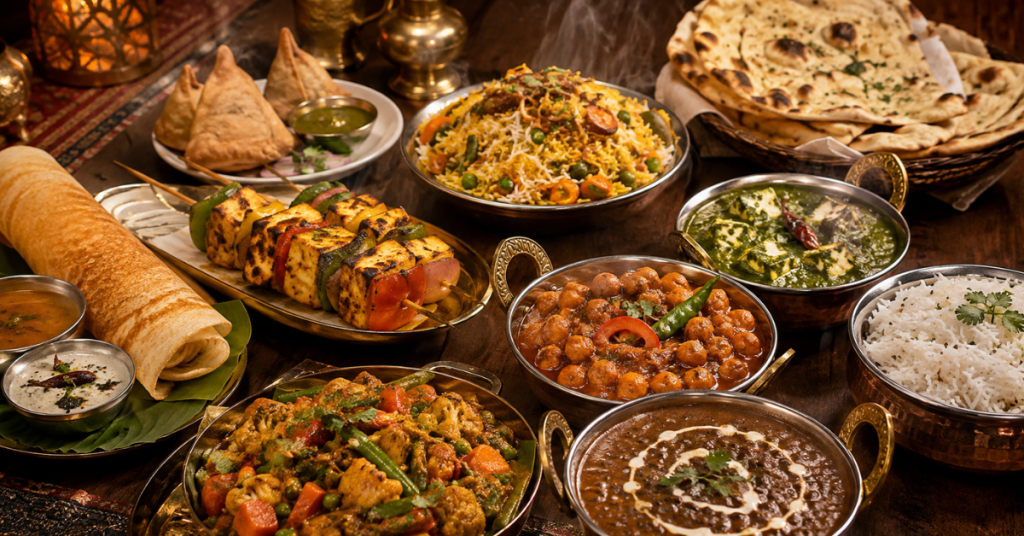
Indian vegetarian cuisine is far from bland it’s a celebration of bold spices, rich sauces, and hearty textures that can win over any palate. In fact, as plant-based options grow in Singapore, even devoted meat-eaters are discovering these dishes. Studies find that a well-crafted meatless meal can be “just as satisfying as meat dishes” thanks to layers of spices, slow cooking and creamy finishes. Restaurants like Bukhara Singapore (North-West Frontier cuisine) pride themselves on “iconic dishes like Dal Bukhara… [and] chargrilled vegetables”, showing that vegetarian options are integral to a complete menu. This means your next veg curry or kebab might have more flavor punch than you expect.
Why Indian Vegetarian Cuisine Resonates with Everyone
Indian chefs have perfected techniques to make vegetables “sing”, using aromatics and umami-rich ingredients that even carnivores crave. For example, blending legumes (dal, chickpeas) with ghee or butter creates deeply satisfying stews, and grilling paneer or eggplant over charcoal adds smoky depth. Many Indian vegetarian dishes are high in plant protein and fiber, so they feel filling and nourishing. One blogger notes, “a plant-based Indian meal can be… surprisingly filling”, especially when lentils, paneer (fresh cheese), nuts and yogurt team up with spices. In short, these dishes trade meat for protein-packed ingredients and layers of flavor, making them hearty, complex, and anything but boring.
- Spices & Aroma: North Indian classics use cumin, coriander, garam masala, chilies and more in generous measure. These spices build “complex flavours and textures” that meat lovers find familiar.
- Rich Sauces: Curries often include cream, yogurt or nut pastes (almond/cashew) for a luxurious mouthfeel. For instance, Dal Bukhara is slow-cooked in butter and cream, yielding a velvety, meaty texture.
- Hearty Proteins: Paneer is a vegetarian’s favorite protein in India. It grills and fries like meat and soaks up sauces. Likewise, dals and chole (chickpeas) are “chock-full of dense, plant-based protein”, giving a protein punch that keeps you full.
- Umami & Smoke: Techniques like tandoor grilling, roasting spices, or adding smoked paprika inject umami (savory) notes that mimic meatiness. A simple trick is to “smoke & char” veggies to bring out meat-like savor.
As one guide sums up: “Even people who usually crave meat find themselves savouring the complex flavours” of these vegetarian dishes.
Signature Vegetarian Dishes That Wow Carnivores
Indian menus are full of vegetarian gems that feel indulgent and familiar. Here are some must-try dishes, often cited for winning over meat-eaters:
- Dal Bukhara (Butter Lentils): A Bukhara specialty, this dal is a slow-cooked black lentil stew finished with cream and churned butter. The 24-hour charcoal simmering makes it smoky and hearty as rich as any meat curry. The creaminess and depth of Dal Bukhara can satisfy even those used to beef stews.
- Paneer Butter Masala (Delhi-style Paneer Curry): Cubes of fresh cheese (paneer) swimming in a tomato-butter gravy. It’s essentially a vegetarian take on butter chicken: buttery, tomatoey and mildly spiced. Paneer’s firm texture soaks up the velvety sauce. As one source explains, paneer is a vegetarian’s favorite protein in Indian cuisine”, making it the perfect stand-in for chicken or lamb.
- Malai Kofta: Often described as irresistible to meat-eaters, this dish features deep-fried balls of potato, paneer and veggies (koftas) in a rich cashew-tomato cream sauce. Each bite is indulgent and creamy, so even carnivores love its savory, spiced flavors.
- Crispy Snacks – Samosa and Pakora: Crunchy fried appetizers are crowd-pleasers. Crisp samosas (triangular pastries filled with spiced potatoes and peas) and assorted vegetable pakoras (fritters) provide a satisfying contrast of textures. In fact, pakoras are called an incredibly addictive snack” that “rivals the French fry in flavor and likability. These snacks are often a hit even before the curries arrive.
- Chole (Punjabi Pindi Chole): A tangy chickpea curry spiked with cumin and dried mango powder. The firm chickpeas absorb the spices, creating a spicy-tangy dish that’s hearty and robust not unlike a smoky pork or beef chili in its comfort factor.
- Vegetable Biryani: Biryani lovers can try the Subz Sufiyani Dum Biryani – a saffron-tinged rice dish slow-cooked with five kinds of vegetables. It’s aromatic and layered with nuts or fried onions. Many find it as appealing as meat biryani, since the fragrant spices and ghee give it a luxurious depth.
Each of these dishes is deliberately flavorful. For example, Bukhara’s menu even highlights “chargrilled vegetables” alongside meat kebabs. That means their vegetarian options are prepared with the same care (marinades, tandoor smoke) as the meat ones. The result? Vegetarians and meat-eaters alike can share a meal without missing out on any indulgence.
Singapore’s Growing Love for Veg Curries
Singapore’s food scene is embracing these meat-free delights more every day. Health and sustainability trends have 39% of Singaporeans eating flexitarian, and even high-end venues now offer plant-based dishes. Dining guides note that the city’s veg-focused Indian eateries dish out everything from “decadent daal” to “perfect paneer” – meaning richly spiced and satisfying curries.
At mainstream restaurants like Bukhara, vegetarian dishes are not an afterthought. Their menu weaves in classics – for instance, Dal Bukhara (lentils), Paneer Butter Masala, Palak Paneer (spinach-cheese), rich Kadhi Pakora (yogurt curry with fritters) and vegetable biryanis. By using premium ingredients and authentic recipes, these dishes appeal to everyone. A slow-cooked Punjabi Kadhi Pakora, for example, pours creamy, tangy yogurt curry over crispy fritters – it’s exotic and homey at once.
Practical tip for diners: Next time you’re at an Indian restaurant in Singapore, try ordering a mix of veg dishes alongside your favorites. You might discover a new staple. For example, pairing Bukhara’s Dal Bukhara or Paneer Butter Masala with fluffy naan and a side of mint-yogurt raita gives a complete, indulgent meal. Even non-vegetarian friends often enjoy these dishes when they come to the table.
Serving & Pairing Tips for Vegetarian Curries
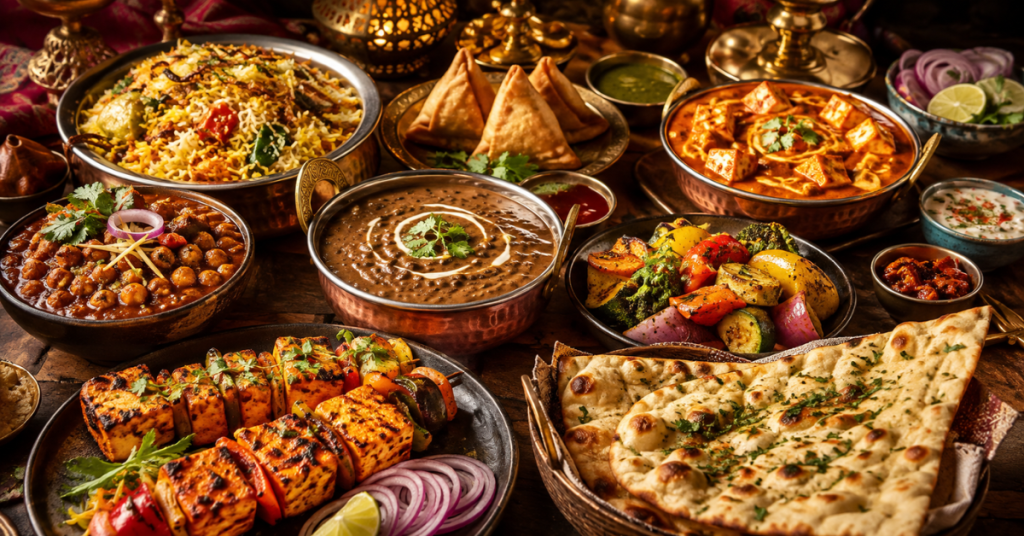
- Balance Textures: Serve a creamy curry (like Dal Bukhara or Butter Paneer) with something crisp. Papad (spiced lentil crackers) or a platter of crisp vegetable pakoras adds crunch. Chilled cucumber-onion raita or tangy pickle help cut through richness. This variety of textures (smooth, crunchy, fresh) keeps each bite interesting.
- Rice and Bread: Offer steamed basmati rice or saffron rice to soak up sauces. Warm flatbreads like naan, tandoori roti or roomali roti are perfect for scooping up thick curries. (At Bukhara, each tandoor bread is baked in-house for authenticity.)
- Spice Customization: Indian curries can be easily tailored. If you prefer less heat, chefs can dial down the chilies without losing flavor. Conversely, additional green chilies or spice masala can be added for heat-lovers. Highlight the dish’s base flavor (spiced tomato, yogurt, or cream) in its name so diners know what to expect.
- Complimentary Flavors: Introduce balanced sides: a light kachumber salad (tomato-cucumber-onion with lemon) adds freshness and lemon wedges can brighten curries on the plate. Fresh herbs (cilantro) or a drizzle of cream on top make dishes look appetizing and add flavor.
- Beverage Pairings: Cool drinks like sweet lassi (yogurt drink) or lightly spiced masala chai can complement spicy veg dishes. Non-alcoholic mint-coolers or light beers also pair well with robust curries.
By thoughtfully combining these elements, even a vegetarian meal will feel as hearty and festive as a meat-based one. As one food writer notes, Indian vegetarian cuisine’s “versatility” means it can shine at home, at a casual lunch or during festive celebrations”. Whether you’re curating a menu or cooking at home this diversity lets you tailor the experience for any crowd from die-hard carnivores to plant-based eaters.
Conclusion
Vegetarian Indian cuisine turns expectations upside-down by delivering deep, satisfying flavors without meat. Slow-cooked dals, paneer curries and fried snacks pack protein, spice and richness that easily rival meat dishes. In Singapore’s vibrant dining scene, restaurants like Bukhara are proving that meat-free doesn’t mean dull – it means decadent. The secret lies in traditional techniques: marinating, grilling, layering spices and using ingredients like cream and paneer to add body. As more people seek out plant-based meals for health or ethical reasons, these dishes meet the moment by impressing every palate. The future is bright for vegetarian curries: chefs are innovating (even veganizing classics) and diners are more open than ever. In short, when done right an Indian veg feast can satisfy a carnivore just as well as any tandoori kebab and that’s a recipe worth celebrating.
Frequently Asked Questions
What vegetarian curries are most satisfying to meat-eaters?
Classics like Dal Bukhara (slow-cooked creamy lentils) and Paneer Butter Masala (rich tomato-butter curry with cheese) are big hits. Crispy snacks such as samosa and pakora, as well as protein-packed dishes like Chana Masala (spiced chickpeas) or Malai Kofta, often win over those who love meaty flavors.
Why do these dishes taste so rich?
Indian vegetarian curries use ingredients like ghee (clarified butter), cream or nuts to create luxurious sauces. They layer aromatic spices (cumin, garam masala, chilies) and often grill or roast ingredients for smokiness. This builds depth and umami, making the dish as hearty and crave-worthy as a meat curry.
Are vegetarian Indian dishes filling and nutritious?
Yes. Many use lentils, chickpeas or paneer which are high in protein and fiber. For example, dals are “chock-full of dense, plant-based protein”. These dishes also tend to have vegetables, pulses and healthy spices, making them balanced and satisfying without the heaviness of some meat dishes.
How can I best enjoy these dishes in a restaurant?
Mix and match textures. Order one creamy curry (like Butter Paneer) and one dry stir-fry or fried item (like Veg Jalfrezi or Pakoras). Pair them with hot naan or steamed rice and a cooling raita (yogurt salad) or pickle on the side. This lets you taste all layers: spicy, tangy, savory and crunchy. In Singapore, many diners also enjoy veg thalis (sets) or sharing platters to try several dishes at once.
Can these recipes be adapted for vegan or gluten-free diets?
Absolutely. Most dishes can be made vegan by substituting coconut milk or cashew paste for dairy cream and using tofu instead of paneer. Ghee can be replaced with vegetable oil. For gluten-free options, skip wheat breads and choose rice or gluten-free rotis. Many Indian restaurants (including Bukhara) are happy to note dietary preferences and can adjust a dish’s ingredients or spice level on request.