
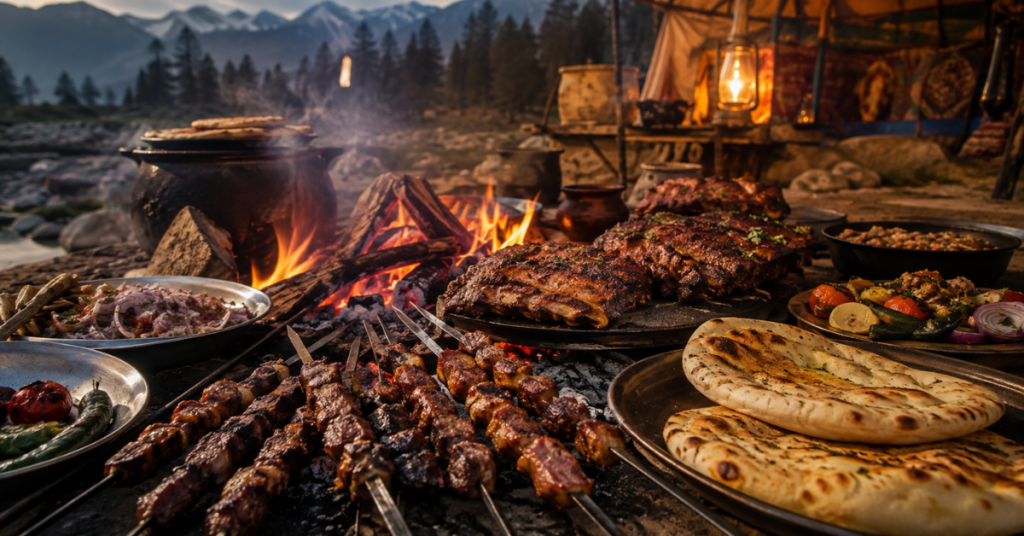
The cuisine of the old North-West Frontier Province (NWFP today’s Khyber Pakhtunkhwa in Pakistan and parts of Afghanistan) is steeped in history and high-altitude adventure. This remote, mountainous region was a crossroads of Persian, Afghan and Central Asian cultures. Over centuries, traders and nomads on the Silk Road shared spice blends, cooking techniques and recipes from hearty stews to marinated meats. The result is a robust, meat-centric cuisine: big cuts of lamb, goat or chicken are simply spiced, often flame-grilled or slow-cooked over wood fires. Not surprisingly, every dish carries the character of rugged terrain and warm hospitality. Even today local cooks recall how meals were prepared by a “warm glow of a campfire” on cold nights.
In this frontier tradition, bold flavours and hearty ingredients reign. Rich spices and aromatic herbs flavor many dishes, but never overwhelm the meat itself. A cup of cardamom tea and a plate of garlic naan would be passed around a family-style spread, accompanied by savory kebabs, tangy stews and fragrant rice. Chefs often describe NWFP food as having no frills “the flavour of the dish is led by the meat with very little…basic spices as one chef notes. This simplicity highlights quality ingredients and authenticity.
This sense of authenticity carries into modern kitchens. For example, Bukhara by Legacy (Singapore) explicitly draws on NWFP roots. Their founders explain that Bukhara’s menu is “a delectable journey through the rustic charm of the North West Frontier’s culinary heritage. Iconic items like Dal Bukhara, Sikandari Raan (leg of lamb), chargrilled vegetables and the legendary Naan Bukhara are all crafted to echo frontier cooking. Indeed, at Bukhara each meal is meant to be a “multi-sensory experience” as if dining around a shared campfire.
Campfire Cooking at the Heart of Frontier Flavors
One of the most distinctive aspects of Northwest Frontier cuisine is its campfire heritage. In the villages and camps of the frontier, gathering around an open flame was more than convenient cooking it was a social ritual. Men and women practiced melmastiya (Pashtun hospitality) by feeding guests hot breads and grilled meats straight from the fire. Today’s restaurants often recreate this atmosphere: for example, ITC Peshawri (Kolkata) decorates its dining room like a rustic camp and explicitly notes that its fare is inspired by “camaraderie around the warm glow of a campfire”.
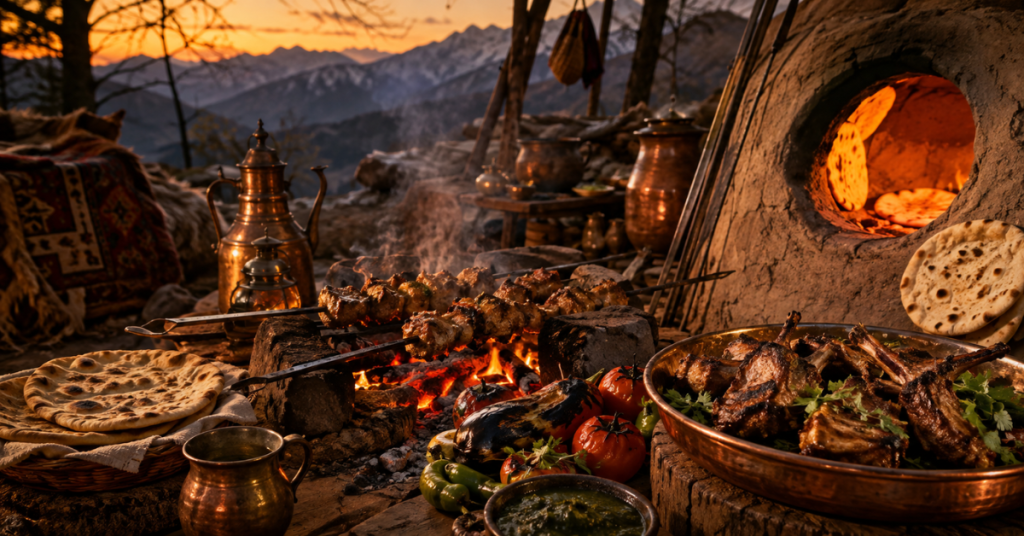
Cooking over wood or charcoal has practical advantages too. The intense heat of an open flame sears meats quickly, locking in juices, while giving each bite a characteristic charred aroma. Traditional tandoor ovens large clay cylinders fired with wood or coal evolved from this campfire mentality. Cooks skewer marinated lamb, chicken and vegetables in the tandoor, or slap flatbreads onto its inner walls, turning the intense heat into soft, puffed nan breads and smoky kebabs. In fact, learning to judge the heat of a tandoor is an art: one food writer notes that frontier cooks gauge timing in near-darkness, relying on the fire’s glow to bake perfect naan and grill meats without burning. (Yes, the famous Naan Bukhara was born from this tradition of communal bread-baking.)
Bright spices and tangy yogurts often start the flavor journey, but the campfire completes it. Meats marinated in spices and yogurt develop a crunchy crust when exposed directly to flames, while roasting whole root vegetables on coals sweetens them naturally. Even slow-cooked items reflect this ethos: Dal Bukhara, Bukhara’s world-famous black-lentil stew, is simmered overnight in a low-heat tandoor, absorbing smoky complexity. In short, each frontier dish is defined by fire, connecting diner to history with every smoky bite.
Key Campfire Traditions & Techniques:
- Clay-Oven Grilling: Most NW Frontier meats are cooked in a tandoor (clay oven) or over charcoal. This high-heat roasting seals in juices while imparting smoke-kissed flavor.
- Simple Marinades: Dishes start with minimal ingredients – quality meat, yogurt, garlic and a few spices. The open fire does the work of “cooking up” rich flavor rather than heavy sauces.
- Communal Bread-Baking: Large, leavened breads (like Peshawari naan) are slapped against oven walls. This act of “breaking bread together” is both practical and symbolic of shared meals.
- Smoke & Sociality: Gathering around the fire turns cooking into communal storytelling. Whether roasting a whole lamb or simmering a kettle of stew, meals were often prepared outdoors with everyone pitching in. The aroma of charred spices becomes part of the feast’s sensory appeal.
Signature Dishes and Flavors of the Frontier
From these campfire roots emerge some unforgettable dishes. NW Frontier cuisine is famous for its kebabs and grills: skewers of minced or chunked lamb, chicken and fish spiced with coriander, cumin, garam masala and garlic. For example, Chapli Kebab a flat, pan-fried patty spiked with chiles and coriander hails from Peshawar, while Chopan Kebab is simply bone-in lamb chops charred over coals. Tangy yogurt-marinated classics like Chicken Tikka and Malai kebabs also owe their juicy tenderness to the tandoor tradition.
Flatbreads are equally important. Besides the famous roti and rumali breads, there’s Peshawari naan a pillowy, nut-studded bread often stuffed with dried fruits and nuts. At Bukhara, this heritage is evoked in the Naan Bukhara, symbolizing the “breaking bread” communal ethos. Rich lentil dishes also stand out: Dal Bukhara (slow-cooked black lentils) and creamy yogurts are served plain, letting their depth shine. In short, the menu reads like a history lesson: every item from Dal Bukhara to Sikandari Raan (spiced tandoori leg of lamb) speaks to the frontier’s campfire spirit.
Notable NW Frontier Dishes:
- Dal Bukhara: Black lentils simmered for hours in a tandoor, yielding a silky texture.
- Sikandari Raan: Entire leg of lamb, marinated in yogurt and spices, slow-roasted in the tandoor until tender.
- Seekh and Chopan Kebabs: Hand-minced spiced meats or bone-in lamb chops, skewered and grilled for smoky crust.
- Peshawari/Naan Bukhara: Thick, buttery leavened naan; the latter highlights communal baking tradition.
- Flavored Rice: Often served with the mains, from simple pulaos to rich biryanis, binding the fire-grilled dishes into a feast.
Bukhara Singapore: Bringing Frontier Flair to Dining
At Bukhara by Legacy in Singapore, chefs have translated these frontier traditions into a fine-dining context. The restaurant’s very concept was “inspired by the essence of frontier tradition”, and that shows in everything from decor to menu. Large clay tandoors blaze in the open kitchen, where diners can smell their naan baking and see chefs tucking kebabs on coals. The menu itself emphasizes grilling mastery: every meat dish is marinated and cooked on high heat, ensuring “tender moistness” and authentic char.
Bukhara’s heady cocktails and aromatic curries make modern refinements, but the soul remains traditional. For example, the famed Dal Bukhara by Legacy faithfully follows the old recipe (it is literally cooked overnight in spirit). Meanwhile, communal platters encourage sharing – a nod to campfire camaraderie. As one reviewer notes, dining at Bukhara feels like a “celebration of meat done right where each dish is slow-grilled with “attention to detail. By embracing the multi-sensory, smoky spirit of NWFP cooking, Bukhara offers Singaporeans a taste of the frontier’s warm hospitality and rich flavors.
Conclusion
The North-West Frontier’s campfire cuisine matters today because it connects diners to a storied past and a timeless way of eating. Its emphasis on simple ingredients elevated by fire and smoke makes for deeply satisfying food: every curry-scented breath and char-grilled bite carries centuries of tradition. For restaurants and home cooks alike, these techniques highlight how low-tech methods (wood, clay ovens, patience) can yield high-impact flavors. At Bukhara and beyond, reviving this heritage means more than nostalgia it brings people together. Sharing a tandoor-baked naan or a platter of sizzling kebabs around a table, much like around a campfire, reminds us that food is about community as much as taste.
Looking forward, the “campfire roots” of NW Frontier cuisine inspire chefs worldwide to honor authenticity. In an age of fusion and fast food, preserving those smoky, soulful recipes offers both a delicious experience and a cultural lesson. As diners increasingly seek meals with history and heart the rugged romance of frontier cooking will continue to kindle appetites, one fragrant dish at a time.
FAQs
What is North-West Frontier cuisine?
It refers to the traditional foods of the former North-West Frontier Province (NWFP) of British India roughly today’s Pakistan-Afghanistan borderlands. This cuisine blends Central Asian and South Asian influences, and is known for its grilled meats, hearty lentils, and breads baked in clay ovens.
Why do we call it “campfire” cuisine?
Historically, villagers, tribesmen and travelers in this region cooked over open flames or clay tandoors. Meals were communal events around a fire. Many modern restaurants (like Bukhara and Peshawri) intentionally recreate this setting, and the food itself (fire-roasted kebabs, tandoori breads) literally bears that smoky campfire flavor.
Are NW Frontier dishes very spicy?
Not necessarily. Unlike some Indian curries, many NWFP dishes highlight the meat’s natural taste. Spices (garlic, ginger, cumin, chilies) are used, but often in moderation. The emphasis is on marinated meats and smoky char rather than extremely hot sauces.
What are some classic NW Frontier dishes?
Signature items include kebabs (like Seekh or Chopan kebabs), Tandoori Raan (leg of lamb), Dal Bukhara (slow-cooked black lentils), and rich breads like Peshawari naan. Each has a distinctive smoky or buttery flavor from clay-oven cooking.
How does Bukhara Singapore showcase this cuisine?
Bukhara’s chefs use traditional methods clay ovens, high heat and long marinades to serve NWFP classics. Its menu (Dal Bukhara, Sikandari Raan, Naan Bukhara, etc.) is built around campfire-style cooking. Dining there is meant to evoke the communal spirit of frontier meals: think sharing platters of chargrilled kebabs and freshly-baked naan, just as people did around a fire in the mountains.