
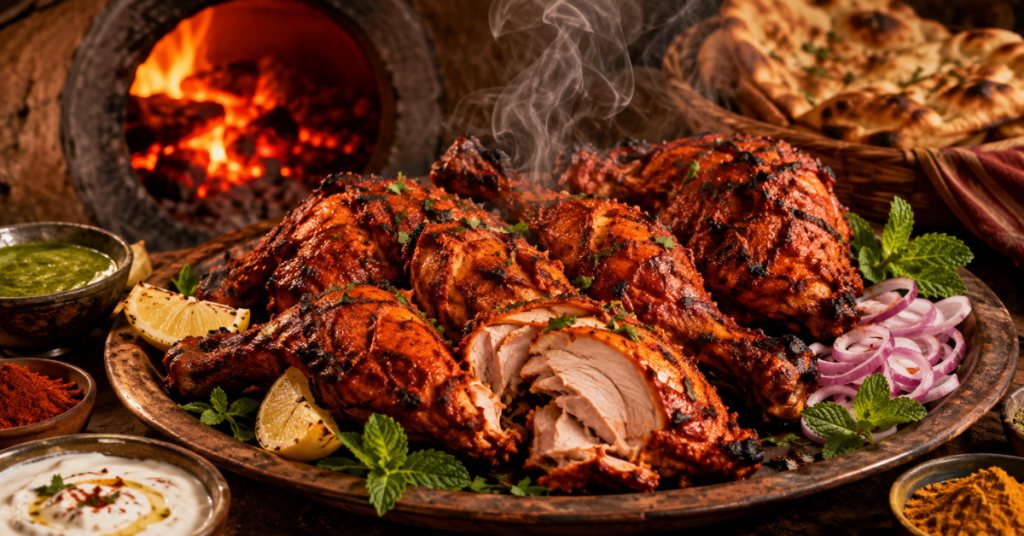
Tandoori chicken looks simple on the plate, but it is one of those dishes that exposes every kitchen shortcut. If the fire is weak, it tastes flat. If the marinade is wrong the outside burns before the inside stays juicy. If the seasoning only sits on the surface the chicken looks dramatic but eats bland. That is why great tandoori chicken always feels memorable: it is built on heat, timing and a marinade that works with the meat instead of against it. For a restaurant like Bukhara Singapore, which roots its identity in North-West Frontier traditions, slow-cooked specialties, and tandoor-fired breads that balance is not a side detail. It is part of the whole dining experience.
The smoke starts with the tandoor, not just the spice mix
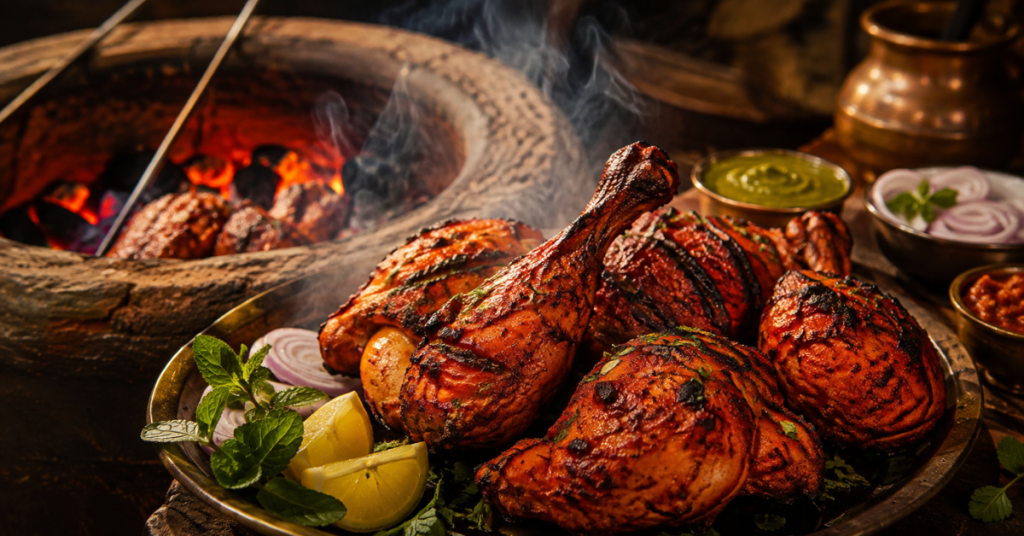
The signature smokiness of tandoori chicken begins with the oven itself. A tandoor is a cylindrical clay oven used over charcoal, and the environment inside it is unusually intense: the clay walls hold heat, the air inside gets extremely hot, and the fire below creates the live-fire aroma people associate with proper tandoori cooking. Sources describing traditional tandoors note that they can run up to about 900°F, which explains why the chicken cooks fast, chars in spots, and develops that unmistakable roasted edge.
What makes that smoke feel different from ordinary grilled chicken is the way the cooking environment works from multiple directions at once. In a tandoor, the meat gets radiant heat from the oven, direct heat from the coals, and extra aromatic depth when dripping fat hits the fire below and sends smoke back up toward the chicken. That is why authentic tandoori chicken does not taste merely “spiced.” It tastes fired, roasted, and lightly perfumed by charcoal.
Why high heat makes the flavor deeper
High heat does more than blacken the edges. It drives browning reactions that create the savory, roasted notes people describe as charred, nutty, or deeply meaty. Serious Eats explains that the Maillard reaction is responsible for the browned, complex flavors that make cooked foods taste more interesting, while tandoor-style cooking adds smoke on top of that browning. In other words, the best tandoori chicken gets two kinds of flavor at once: smoke from fire and depth from browning.
That is also why smoky tandoori chicken should never taste as if smoked paprika did all the work. Spice can support the effect, but it cannot replace what clay, charcoal, and high heat naturally create. When the real fire element is there, the flavor lingers in the nose as much as on the tongue.
Tenderness is built in the marinade
If the tandoor creates the smoky character, yogurt does much of the work that keeps the chicken tender. Yogurt marinades matter because they tenderize in a gentler way than harsh acid-based marinades. Epicurious, citing food science experts, explains that yogurt brings microbes and lactic acid, and that lactic acid is milder than the acid in lemon-heavy or vinegar-heavy marinades. Serious Eats reaches a similar conclusion, showing that lactic acid is gentler on proteins and helps meat absorb and hold more moisture during cooking.
That gentle action is important because tandoori chicken is cooked over fierce heat. The marinade needs to soften the surface and support juiciness without turning the meat mushy. Serious Eats found that lactic acid marinades improved water retention and reduced moisture loss during cooking, while recent expert commentary in Simply Recipes notes that yogurt is forgiving enough for longer marination windows, often up to 12 hours, without wrecking texture. That makes yogurt especially well suited to tandoori chicken, which benefits from time.
Salt matters as much as yogurt
Tender tandoori chicken is not only about dairy. Salt is doing serious work too. USDA explains that salt helps dissolve some muscle proteins so meat can absorb moisture and hold onto it during cooking, improving tenderness and juiciness. Serious Eats makes a related point in its dry-brining guide: salting ahead helps produce juicy meat and better browning. In practice, that means a good tandoori marinade is not just “spiced yogurt.” It is yogurt plus deliberate seasoning, so the chicken is flavorful beneath the crust and not only on top of it.
This is why bad tandoori chicken often fails in a very specific way. It may have a red exterior and a strong aroma, but once you bite through the surface, the inside tastes under-seasoned and dry. A strong marinade is supposed to season, tenderize, and protect the meat during that blast of heat. If it does only one of those jobs, the dish feels incomplete.
Flavor comes from layers, not one loud spice
The best tandoori chicken does not rely on a single “tandoori masala” flavor. It tastes dimensional because the seasoning is layered. Contemporary recipe guidance that stays close to traditional logic often uses a first seasoning step with salt, ginger, garlic, and lemon, followed by a second, thicker yogurt-based marinade with spices such as cumin, garam masala, paprika or chili. That two-step approach makes sense because the first layer seasons the meat directly, while the second layer builds the crust and aroma.
Yogurt also helps carry flavor in a practical way. Food & Wine notes that yogurt helps chicken stay juicy while soaking up flavor from aromatics and spices, and Bon Appétit points out that yogurt produces a distinctive crust once it hits high heat. Instead of only tasting “hot” or “red,” well-made tandoori chicken has tang, warmth, savoriness, and a slightly caramelized edge from the yogurt itself.
A well-built tandoori flavor profile usually depends on a few core elements working together:
- Ginger and garlic build the savory backbone, so the chicken smells aromatic before it even reaches the table.
- Salt and lemon sharpen the flavor and start seasoning the meat early, which helps the final bite taste lively rather than heavy.
- Cumin, garam masala, paprika, or chili add warmth, color, and depth, but they should support the fire flavor rather than bury it.
- Yogurt ties the marinade together, tenderizes gently, and cooks into the savory crust that makes tandoori chicken feel rich without being greasy.
That layered approach is the difference between chicken that tastes restaurant-worthy and chicken that tastes like spice paste with char marks. Great tandoori chicken has flavor in stages: first smoke, then tang, then spice, then the savoriness of the meat itself.
The cut and prep decide whether it stays juicy
Not every piece of chicken behaves the same way in tandoori cooking. Serious Eats recommends thighs for juicier, more flavorful kebabs, and recent recipe guidance from The Guardian similarly favors skinless thighs and drumsticks because they retain flavor and moisture better under high heat. That is why so many strong tandoori chicken versions lean toward dark meat or mixed bone-in portions rather than relying only on breast meat.
Preparation matters almost as much as the cut. BBC Good Food’s tandoori methods call for slashing the chicken before marinating, which helps the seasoning cling more effectively and gives heat more even access during cooking. That one small step is easy to overlook, but it changes the eating experience: the marinade reaches deeper, the crust forms in more interesting ridges and edges, and each bite tastes better integrated.
A few practical details make a visible difference:
- Choose thighs, drumsticks, or bone-in leg portions when possible, because they handle fierce heat better and stay juicier than leaner cuts.
- Score the meat before marinating so the seasoning has more contact and the finished chicken tastes less surface-level.
- Cook hot, but not carelessly. For safety, poultry should reach 165°F internally, which means the goal is intense heat with control, not endless blasting.
This is where many home versions miss the mark. People often chase the color and forget the structure: the right cut, a properly salted marinade, and enough heat to brown quickly without drying the center. When those basics are missing, no extra spice can rescue the result.
Why this matters on a Singapore table
For diners, tandoori chicken is often the easiest way to judge whether a kitchen truly understands live-fire Indian cooking. At Bukhara Singapore, the brand story centers on North-West Frontier traditions, slow-cooked specialties, rich spices, and tandoor-fired breads, while the menu places kebabs prominently within that wider experience. That means the quality of a tandoori dish does more than satisfy one order. It signals whether the kitchen’s technique matches its heritage-led promise.
That matters for restaurants because tandoori chicken is one of those dishes people remember in sensory terms. Guests do not usually describe it by recipe structure; they remember whether it smelled truly smoky, whether the meat stayed juicy near the bone, and whether the spice felt balanced instead of heavy. Bukhara’s own positioning emphasizes flavors guests remember long after the meal, and its banquet concept is built around shared plates of chaats, kebabs, curries, breads, and desserts. In that setting, a well-made tandoori chicken becomes both a signature item and a standard-setter for the rest of the meal.
For the Singapore market specifically, where diners have many choices for grilled chicken, kebabs, and Indian dining, the winning version is not the loudest one. It is the one with the most control: real smoke, disciplined marination, and juiciness that survives the heat. That is the version people reorder.
How to tell when tandoori chicken is truly excellent
If you want to recognize great tandoori chicken quickly, look for these signs:
- The exterior has char in patches, not a uniform burnt shell. Good tandoori chicken should show browning and roasted spots that signal strong heat and real flavor development.
- The aroma suggests fire first, spice second. If it smells only of chili and masala, the live-fire element is probably missing.
- The inside stays juicy even when the outside looks intense. That usually points to the right cut, a properly salted marinade, and yogurt doing its job.
- The marinade has turned into a crust, not a wet coating. Yogurt should cook into a flavorful outer layer rather than sit on the meat like sauce.
- The chicken tastes seasoned beyond the surface. When salt and marinade are handled properly, the flavor carries inward instead of fading after the first bite.
Conclusion
What makes tandoori chicken smoky, tender, and flavorful is not one secret ingredient. It is the combination of a live-fire cooking environment, yogurt’s gentle tenderizing power, salt’s ability to improve moisture retention and seasoning, layered aromatics and spices, and the right cut of chicken for high-heat cooking. The reason great versions stand out so clearly is that each part supports the others: the tandoor builds smoke and char, the marinade protects the meat and deepens flavor, and smart prep keeps the final bite juicy instead of dry.
For restaurants and diners alike, that balance is the future of the dish. As more people learn to tell the difference between artificial intensity and real craft, the most memorable tandoori chicken will continue to be the version that tastes honest to its fire, its marinade, and its heritage.
FAQs
Is the smoky taste in tandoori chicken mainly from spices?
No. The signature smoky note comes primarily from cooking in a charcoal-fired tandoor, where high heat and fat dripping onto the coals create smoke around the meat. Spices support that flavor, but they do not replace it.
Why is yogurt used in tandoori chicken?
Yogurt gently tenderizes the chicken through lactic acid, helps it stay moist, and cooks into a flavorful crust during high-heat cooking.
Which chicken cuts work best for tandoori chicken?
Thighs and drumsticks are usually the best choice because they stay juicier and handle intense heat better than lean breast meat.
Can you make good tandoori chicken without a tandoor?
Yes. A very hot oven, grill, or barbecue can produce excellent results, though a traditional clay tandoor still gives the most distinctive smoky character.
How long should tandoori chicken marinate?
A few hours works, but yogurt marinades are forgiving enough that 4 to 12 hours including overnight, often gives better flavor and texture without making the chicken mushy.