
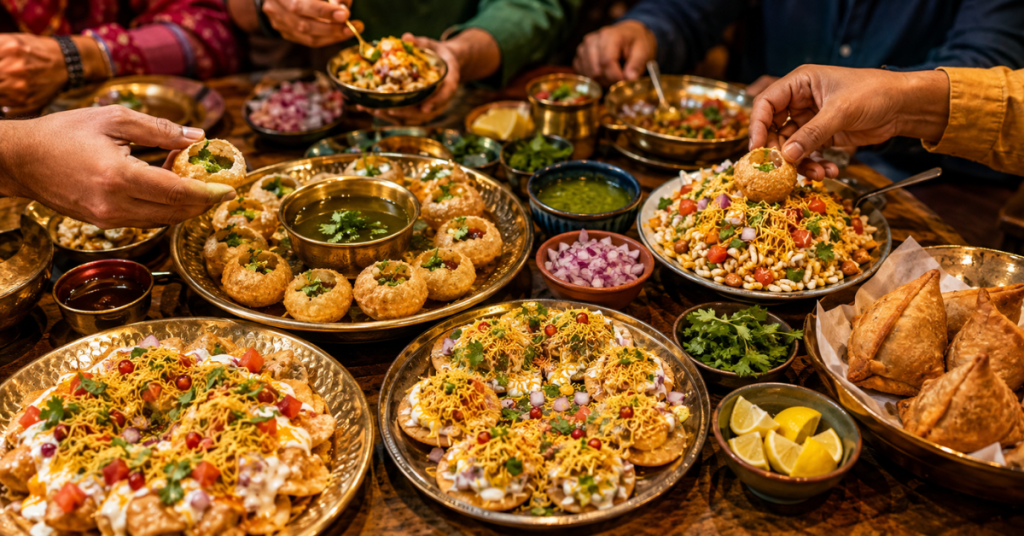
Group gatherings often begin with an appetizer that sets the mood for the feast. Indian chaat – the tangy, spicy street snacks from North India excels at this role. Served as small, sharable bites, chaat instantly enlivens any table. Its vibrant mix of flavors and textures awakens the palate, while its playful, hands-on nature spark conversations and communal enjoyment. Chefs and food experts note that chaat delivers a sensory explosion with every bite, making it an irresistible starter that appeals to a crowd.
A Rainbow of Flavors and Textures
Indian chaat is famous for packing sweet, sour, spicy and savory tastes into one mouthful. It often combines crispy elements (like fried puri, sev or papdi) with soft potatoes or chickpeas, cooling yogurt, tangy tamarind chutney and spicy chili all in one dish. This variety means each bite is unique; one forkful might be crunchy and zesty, the next creamy and minty.
- Flavor Punch: Chaat dishes balance sugar, salt, and spice. Tamarind and date chutneys add sweet-tart notes, yogurt and mint chutney cool the palate, and chaat masala spices give a tangy kick.
- Textural Contrast: Crunchy bases (puffed rice, fried crackers or potato patties) mix with soft beans, cubed potatoes, fresh veggies and chewy lentils. Every forkful includes crispy sev or peanuts against creamy sauces and vegetables, engaging all the senses.
This complex layering of tastes and textures is exactly what makes chaat so addictive and fun. As chef Maneet Chauhan puts it, Chaat has something for everyone you build your own bowl as you go, [with] a little bit crunchy, a little sour, some spice and a whole lot of flavor. In other words, it’s almost impossible to get bored with chaat even picky eaters find elements they love.
A Social, Interactive Starter
Beyond taste, chaat is inherently communal and social. In India, it’s traditionally sold by street vendors to neighbors and friends who stand around a chaat cart chatting and eating. As one food writer notes, “Chaats are especially popular when people go out with their friends and family… gathering all around a Chaat Wallah’s cart, eating from their plates, licking their fingers”. That street-cart vibe translates well to a dinner party table.
- Conversation Starter: Watching someone assemble a paper-puri or papdi chaat – spooning chutney on a crisp shell, topping it with potato and yogurt, then popping it in their mouth is almost theatrical. It draws smiles and “oohs” of surprise at the burst of flavor. Restaurants even set up live chaat stations or counters so guests can see the ingredients being mixed fresh. According to a Singapore dining guide, a “Live Chaat counter… prepares fresh, tangy treats before your eyes, sparking immediate joy and conversation”.
- Interactive Fun: Some chaat like pani puri (crispy hollow balls to be filled) become a playful “build your own” game. Guests can customize each bite with different chutneys or spice levels. This hands-on element encourages people to laugh, taste-test each other’s creations, and bond over the novelty. One blogger recalls childhood chaat parties as my favorite snack + activity of all time… this colorful spread… felt celebratory, and so fun… It could definitely turn any mood right around.”
In short, chaat naturally gets people talking and sharing. Offering it first gives everyone a common experience that breaks the ice and makes the meal feel festive.
Practical Perks for Groups
Chaat isn’t just fun – it also checks practical boxes for group dining: it’s shareable, accommodating, and even somewhat healthy.
- Easily Shareable: Most chaat are served in small portions or bowls, perfect for grazing and passing around the table. Items like papdi chaat and bhel puri come in communal dishes that everyone can help themselves from. This “family-style” service means fewer individual orders and more communal sampling.
- Dietary Versatile: Chaat is often vegetarian by nature, using chickpeas, potatoes, veggies and grains. In fact, many chaat dishes are vegan-friendly. This makes it easy to cater to groups with different dietary preferences. The fresh veggies, herbs and legumes also mean these snacks are relatively light and filling without feeling heavy. As one health-minded writer points out, chaat can be “inexpensive health food… Chickpeas, sprouts, onions, tomatoes, yoghurt, mint… are all ‘good for you’”.
- Appetite-Whetting: The tangy spices and variety in chaat naturally stimulate hunger. By the time the hot main courses arrive, everyone’s mouths are watering and eager to try the next dish. In many Indian traditions, starting with street-food-style snacks in the cool of evening helps settle everyone in for a long, leisurely meal.
Key takeaway: for a group, chaat offers something for everyone – crunchy bits for kids (who especially love the fun of making their own bowl), flavorful excitement for adventurous eaters, and vegetarian staples for those avoiding meat. It’s the opposite of a one-size-fits-all dish – it’s a “fix-a-bit-of-everything” introduction that gets all taste buds on board.
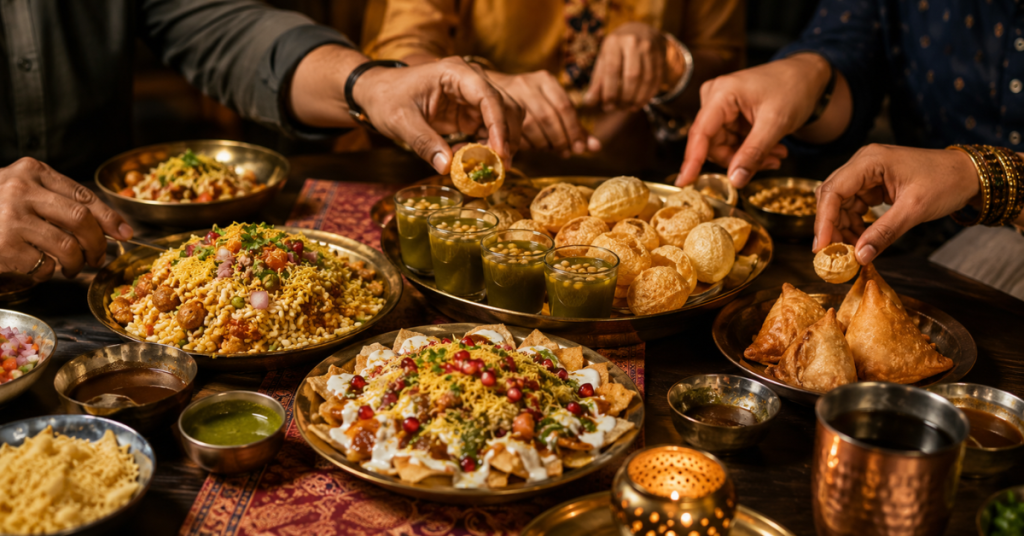
Chaat at Bukhara: Tradition of Sharing
At Bukhara Singapore, chaat isn’t an afterthought it’s central to how we start our group meals. Our Banquet Menu is “designed for sharing” and explicitly includes a selection of chaats to bring guests together. For example, Bukhara’s banquet entrée features a chaat counter with Papdi Chaat, Bhel Chaat, Samosa Chaat and Pani Puri. These dishes arrive as communal bites, inviting everyone at the table to sample each flavor. This curated mix of chaats is our way of letting you “taste the best of Bukhara” together in one sitting.
By kicking off the meal with chaat, we set an authentic and friendly tone. The combination of cool yogurt, hot chutneys and crisp fried elements showcases the rich, aromatic spices we use a perfect preview of the hearty tandoori and curry dishes that follow. As our team says, every meal at Bukhara is “treated like a celebration”. Starting with chaat exemplifies that spirit: it’s warm, inviting, and memorable.
Conclusion
In summary, Indian chaat is the perfect appetizer for any group feast because it combines sensory delight with social fun. Its complex flavors and textures build excitement, its shareable format brings people together, and its variety ensures no one feels left out. Whether you’re dining at a restaurant like Bukhara or hosting friends at home, setting out a platter of chaat instantly makes the meal festive. The tangy crunch primes everyone’s palate and sparks lively conversation turning a simple gathering into a memorable culinary experience.
FAQs
Why is chaat ideal for a group appetizer?
Chaat dishes are generally shareable finger foods with diverse flavors. Guests can try a bit of everything, which encourages passing plates around and chatting. This communal aspect makes chaat a lively starter for groups.
What are common types of chaat?
Popular examples include papdi chaat (crispy crackers with potatoes and chutney), samosa chaat (fried samosas topped with yogurt and chutneys), bhel puri (puffed rice mixed with veggies and tamarind), and pani puri/golgappa (hollow fried puri balls filled with tangy water and potato).
Can chaat be vegetarian or adapted for diets?
Yes. Most chaat are naturally vegetarian, featuring legumes, yogurt and vegetables. You can adjust spice levels easily, add protein like chickpeas or paneer, and use gluten-free options (rice puffs, millet crackers) if needed. Chaat’s reliance on veggies and pulses also means it’s relatively nutritious.
How spicy is chaat?
Chaat is flavorful but not always very hot. It balances tangy and sweet tastes, so even mild versions are delicious. Spiciness can be customized – for example, extra green chutney can add heat. In a group setting, hosts often offer a range of chutneys (mint, tamarind, chili) so each person can spice their bite to taste.
How much chaat should I order for a party?
A good rule of thumb is one or two small servings of each chaat variety per person, since it’s just the start of the meal. For a banquet-style meal (like at Bukhara), plan on at least one serving of papdi or samosa chaat and a small bowl of pani puri or bhel puri per guest. This ensures everyone has enough to sample without filling up before the main courses.