
A generous Indian feast can be wonderfully rich: slow-cooked dal, creamy curries, fragrant biryani, warm naan and smoky kebabs all competing for attention. But when every dish leans towards richness, softness or spice, the meal can start to feel heavy before the final course arrives.
Chargrilled vegetables solve that problem without making the spread feel any less indulgent. Properly cooked over intense heat, vegetables develop smoky edges, concentrated sweetness and a tender centre. They bring contrast to curries, complement tandoori dishes and give vegetarian and non-vegetarian diners something they can enjoy together.
That is particularly relevant to the North-West Frontier style celebrated at Bukhara Singapore, where live-fire cooking, charcoal, tandoor-fired breads and robust flavours are central to the dining experience. Chargrilled vegetables belong naturally at this kind of table because they carry the same fire-driven character as the rest of the feast.
Chargrilling Gives Vegetables a Completely Different Character
A boiled or lightly sautéed vegetable mainly tastes of the vegetable itself and its seasoning. Chargrilling adds another layer.
Intense dry heat removes moisture rapidly from the surface, allowing vegetables to brown rather than steam. Their edges blister and darken while their natural sweetness becomes more pronounced. A little controlled char introduces roasted, nutty and smoky notes that simply cannot be achieved by simmering vegetables in a sauce.
The best char is about contrast, not burning
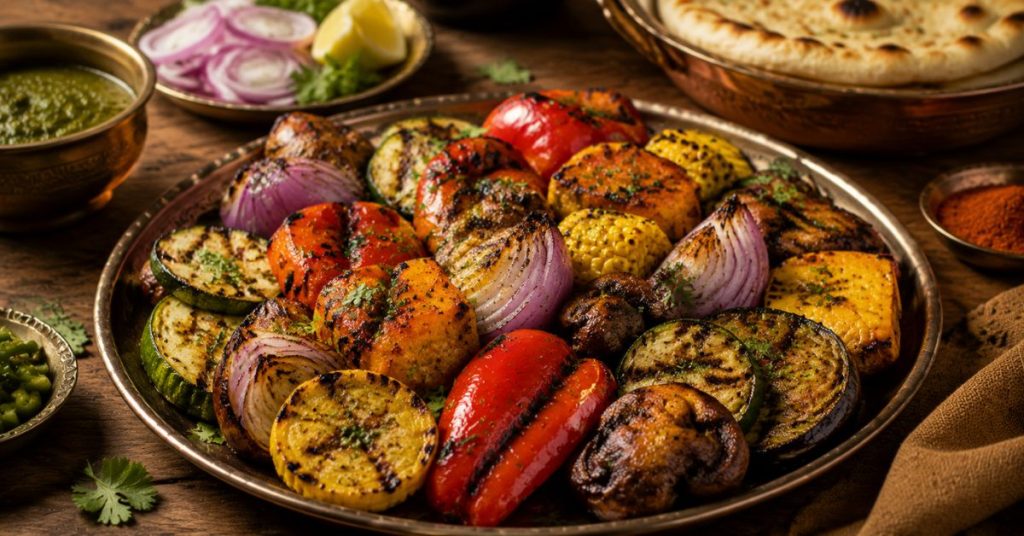
Good chargrilling does not mean turning every surface black. The most enjoyable vegetables have irregular browned patches alongside areas that retain their natural colour and texture.
Think of a piece of cauliflower with deeply roasted tips but a tender stem, or a bell pepper that has blistered edges while remaining juicy inside. Onions become sweeter as their outer layers catch the heat. Mushrooms develop a deeper savoury character. Paneer, although technically a cheese rather than a vegetable, responds similarly: its exterior can take on smoke and spice while its centre remains soft.
This combination of charred exterior and tender interior is what makes high-heat cooking so effective.
For a closer look at what happens when ingredients meet intense tandoor heat, Bukhara’s guide to how tandoor cooking transforms meat, seafood and vegetables explains why this style produces such distinctive flavour and texture.
Chargrilled Vegetables Bring Balance to a Rich Indian Feast
Balance matters more in an Indian feast than simply having a large number of dishes.
Put butter-rich dal, paneer gravy, biryani and naan together and the meal has plenty of comfort, but many components share a soft or rich texture. Introduce a plate of vegetables with roasted edges and a drier finish, and the table immediately feels more varied.
Chargrilled vegetables can contribute:
- Smokiness without extra heaviness: They echo the flavour of tandoori kebabs without needing another rich gravy.
- Textural contrast: Blistered edges and firmer centres break up a succession of curries, rice and soft breads.
- Natural sweetness: Charred onions, peppers and other vegetables provide a gentle counterpoint to chilli, cumin, coriander and garam masala.
- A useful bridge between dishes: Vegetables work comfortably beside meat kebabs, paneer, lentils, biryani and breads, making the whole spread feel connected rather than fragmented.
The point is not to make the feast “lighter” for the sake of it. It is to make every other dish more enjoyable by giving the palate something different between bites.
They Give Vegetarian Guests More Than an Afterthought
At a shared meal, vegetarian food should not feel like a separate menu designed only for the person who does not eat meat.
Chargrilled vegetables help avoid that problem because live-fire flavour has universal appeal. A well-charred cauliflower or smoky paneer skewer can sit beside lamb and chicken kebabs without looking like the compromise on the table.
Bukhara’s Indian vegetarian menu choices already demonstrate how substantial vegetarian dining can be. Sufiyani Gulnar Paneer is grilled with three different spice marinades, while mains include Dal Bukhara, Subz Jalfrezi, Aloo Gobi Adraki Masaleda, Paneer Butter Masala, Palak Paneer and Awadhi Subz Sufiyani Dum Biryani.
Together, dishes like these make it possible to build a vegetarian spread with the same range of smoke, spice, creaminess and richness associated with a traditional feast.
That matters for group dining in Singapore, where one table can easily include meat-eaters, vegetarians and guests with different preferences. Rather than designing two separate meals, chargrilled vegetables provide common ground.
Bukhara’s guide to Indian vegetarian dishes that even meat lovers will enjoy explores the same idea: vegetarian Indian food can be satisfying because the cooking technique and flavour structure matter just as much as the absence or presence of meat.
Indian Spices and Char Are Natural Partners
Another reason vegetables work so well over live fire is that Indian seasonings respond beautifully to high heat.
Ginger and garlic develop deeper roasted aromas. Cumin and coriander provide earthy warmth. Chilli brings heat, while yoghurt-based or lightly spiced marinades can create a seasoned coating that browns around the vegetable.
The important word is lightly.
Vegetables should not be buried under so much marinade that they steam beneath it. Good chargrilling allows the ingredient to remain recognisable. The seasoning should strengthen the vegetable’s flavour while the fire does the rest.
That is one reason ingredients such as cauliflower, mushrooms, bell peppers and onions are so effective for this cooking style. Their structures can handle direct heat while developing noticeably different flavours at the edges.
The result is much more interesting than simply adding “a vegetable side” to the table.
Chargrilled Vegetables Make the Whole Feast Easier to Build
A successful Indian spread does not require ten unrelated dishes. It needs dishes that perform different roles.
Chargrilled vegetables are especially useful because they can work at several points in the meal. They can arrive with the kebabs, sit beside the curries or become a shared dish that diners return to throughout dinner.
A balanced spread could follow this pattern:
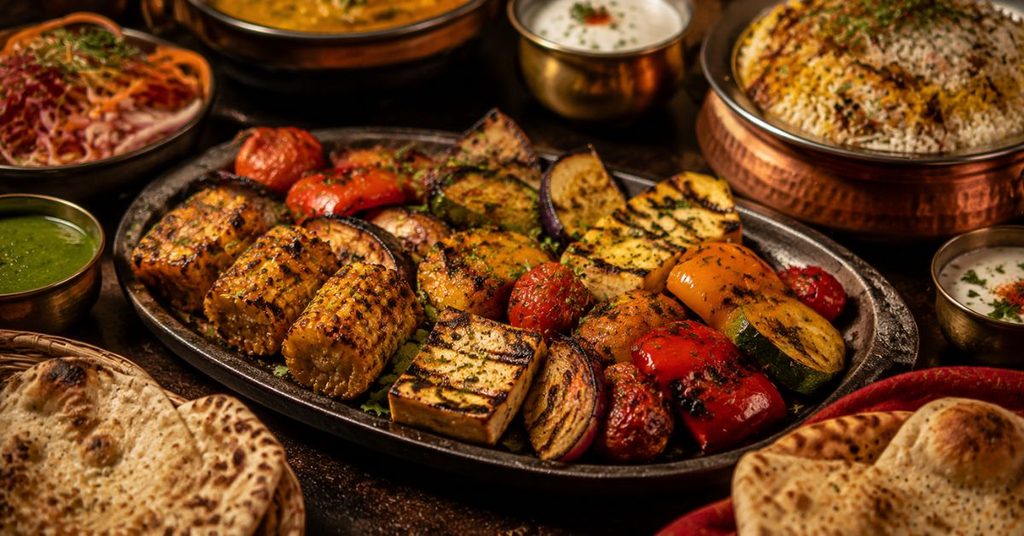
- Begin with grilled vegetables or paneer alongside kebabs. The shared smoky character keeps the opening course cohesive for vegetarian and non-vegetarian diners.
- Follow with a rich curry or slow-cooked dal. Something creamy such as Dal Bukhara becomes more enjoyable when contrasted with a drier, charred element.
- Add rice and tandoor-fired bread. Naan or tandoori roti gives diners something to scoop curries with while the grilled vegetables provide texture between bites.
- Keep a cooling accompaniment nearby. Raita, chutney or a fresh salad can sharpen the meal and keep the combination of smoke and spice from becoming overwhelming
The Fire Connects Vegetables to North-West Frontier Cooking
Chargrilled vegetables are not simply a modern response to increased interest in vegetarian dining. They make sense within a cuisine shaped by fire.
North-West Frontier cooking is associated with straightforward ingredients treated with strong technique: charcoal, grilling, slow cooking and the tandoor. That style is especially good at creating flavour without relying on an elaborate sauce for every dish.
Vegetables benefit from the same philosophy.
When a vegetable is properly charred, you can taste the ingredient, the seasoning and the fire separately. The smoky edge feels related to a kebab coming from the same kitchen, while tandoor-fired naan continues that roasted character elsewhere on the table.
This creates coherence. Instead of treating vegetables as the fresh or healthy interruption in an otherwise traditional meal, they become part of the same culinary language.
Chargrilled Vegetables Can Make the Most Memorable Bite on the Table
Indian dining is often associated with spectacular meat dishes and luxurious curries, so diners sometimes underestimate simple vegetables before they arrive.
Fire changes those expectations.
A vegetable does not need an elaborate sauce when its edges are smoky, its centre is properly cooked and its seasoning is balanced. In fact, leaving the ingredient relatively exposed can be its advantage. After several spoonfuls of a rich curry, that direct combination of vegetable, spice and char can be exactly the bite the palate wants.
And that is ultimately why chargrilled vegetables deserve more than a corner of the table. Their purpose is not merely to provide a vegetarian option. They make the entire feast work better.
Conclusion
The strongest Indian feasts are not built around richness alone. They move between creamy and dry, soft and crisp, spicy and cooling, slow-cooked and fire-charred.
Chargrilled vegetables fill a role that few other dishes can. They bring live-fire aroma, roasted sweetness and textural contrast while pairing naturally with kebabs, curries, dal, biryani and tandoor-fired breads. Just as importantly, they allow everyone at a shared table to participate in the same flavour experience rather than dividing the meal into vegetarian and non-vegetarian camps.
For restaurants and diners in Singapore, that makes them increasingly valuable as group dining becomes more diverse. And for a cuisine such as Bukhara’s, where charcoal, grilling and North-West Frontier traditions already define the experience, vegetables cooked over fire are not an optional extra.
They belong at the centre of the feast.
FAQs
Why do chargrilled vegetables taste sweeter?
High heat browns the surface and concentrates the vegetables’ natural flavours, making ingredients such as onions and peppers taste noticeably sweeter and more roasted.
Which vegetables are best for chargrilling?
Cauliflower, bell peppers, onions, mushrooms, aubergine and other firm vegetables generally work well because they can develop charred edges without immediately falling apart.
Are chargrilled vegetables a good choice for an Indian feast?
Yes. Their smoky, relatively dry character provides useful contrast to creamy curries, dal, rice and breads while complementing tandoori kebabs.
What should chargrilled vegetables be served with?
They pair particularly well with dal, paneer dishes, kebabs, biryani, naan, tandoori roti, mint chutney and cooling raita.