
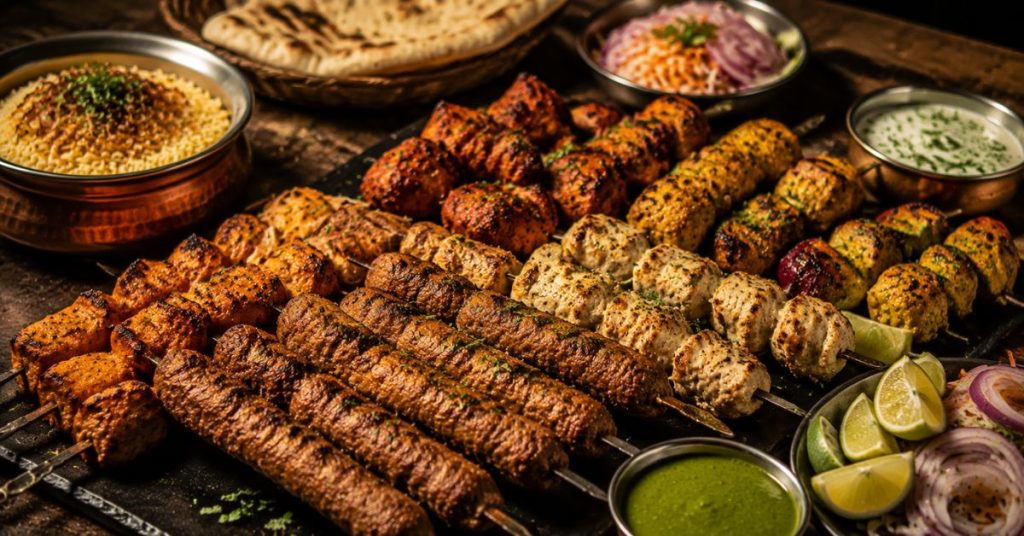
Order “kebab” at an Indian restaurant and you could receive anything from smoky pieces of chicken blistered in a tandoor to delicate minced-meat patties cooked on a griddle. That variety is exactly what makes Indian kebabs interesting but it can also make a menu difficult to navigate if you do not know how one style differs from another.
The biggest differences are not simply chicken versus lamb. They come from how the ingredient is cut, marinated, shaped and cooked. Some kebabs depend on intense tandoor heat for char. Others use finely minced meat to create an almost creamy texture. Some are robust and heavily spiced, while others use cream, yoghurt or subtle aromatics for a gentler finish.
For diners in Singapore who want to explore beyond the familiar chicken tikka, understanding these Indian kebab varieties makes it much easier to order according to the texture and flavour you actually enjoy. Bukhara’s current kebab menu reflects that diversity with chicken, lamb, seafood and paneer preparations inspired by different regional traditions.
Indian Kebab Varieties Worth Knowing
Chicken Tikka: The Charred, Boneless Classic
Chicken tikka is one of the best starting points for understanding tandoori kebabs. Boneless pieces of chicken are marinated with yoghurt, spices and aromatics before being threaded onto skewers and cooked at high heat.
Its appeal comes from contrast. A good chicken tikka develops browned, lightly charred edges while remaining juicy in the centre. Because the chicken is cut into individual pieces, the marinade can season more surface area than it would on a whole bird.
This is a useful choice when you want smoke and spice without the richness of minced-meat kebabs.
At Bukhara, the House-of-Patiala Murgh Tikka on the restaurant menu represents the Punjabi side of this style. The menu also uses chargrilled chicken tikka in its Murgh Tikka Masala, showing how tikka can work both as a standalone kebab and as the foundation of a curry.
Tandoori Chicken: For Deeper Roasted Flavour
Chicken tikka and tandoori chicken are sometimes treated as interchangeable, but the eating experience is noticeably different.
Tikka normally uses boneless pieces. Tandoori chicken typically uses larger, bone-in portions that are marinated and roasted in the tandoor. Cooking meat on the bone produces a more substantial bite, while exposed edges develop the smoky flavour associated with high-temperature clay-oven cooking.
The best versions are not simply bright red pieces of chicken. What matters is whether the marinade has penetrated the meat and whether the kitchen has created enough char without drying the interior.
Bukhara explores the technique in its guide to what makes tandoori chicken smoky, tender and flavourful and lists Murgh Tandoori-Kebab Da Badshah among its Punjabi kebabs.
Seekh Kebab: Minced Meat Built Around the Skewer
Seekh kebab changes the texture completely. Instead of placing pieces of meat on a skewer, seasoned minced meat is shaped around the skewer before being grilled.
That difference matters. Minced meat allows spices, herbs, aromatics and fat to be distributed throughout the kebab, rather than remaining mostly on its surface. The result should be juicy and cohesive with a smoky exterior—not dry or crumbly.
Seekh kebab can be made with lamb, chicken or other meats, and the seasoning varies considerably from one regional interpretation to another. It is particularly satisfying with flatbread because the soft minced texture works naturally with naan or roomali roti.
Bukhara offers two useful examples on its menu: Nizams Murgh Seekh Bijapuri made with chicken and Sultanate Seekh Kebab made with lamb. The restaurant pairs the latter with roomali roti, a classic way to turn a seekh kebab into a more complete meal.
Kakori Kebab: Seekh Kebab at Its Most Delicate
Kakori kebab belongs to the refined kebab tradition associated with Awadhi cuisine around Lucknow. Although its elongated shape resembles a seekh kebab, its defining feature is an exceptionally fine, tender texture.
The meat is minced much more finely than in a typical seekh, traditionally with tenderising ingredients and carefully balanced aromatics. That creates a kebab soft enough to demand considerable skill: the mixture must remain delicate while still holding together on the skewer.
Food stories surrounding Kakori’s creation vary, but it is consistently associated with the royal culinary culture of Awadh and the pursuit of increasingly tender kebabs.
Galouti Kebab: The Melt-in-the-Mouth Griddle Kebab
Galouti or galawat kebab is another Lucknow speciality but it should not be confused with Kakori.
Rather than being wrapped around a skewer, galouti is normally shaped into a small patty and cooked on a flat griddle. Finely minced meat and tenderising ingredients give it its famous soft consistency. The outside becomes gently browned while the interior remains exceptionally delicate.
Lucknow’s galouti tradition is significant enough that India’s official tourism platform highlights the kebab as part of the city’s culinary identity.
Choose galouti when texture matters more to you than aggressive char. Compared with a seekh kebab, it is less about biting through a grilled crust and more about richness, aromatics and softness.
Shami Kebab: A Savoury Minced-Meat Patty With More Body
Shami kebab may look similar to galouti at first glance because both are generally served as patties. Their structures, however, are different.
Traditional shami preparations combine minced meat with split chickpeas or chana dal, spices and aromatics. The mixture is formed into patties and usually shallow-fried. The lentil component gives shami kebab more body and firmness than the extremely soft galouti.
That makes it particularly versatile. Shami kebabs can be eaten as an appetiser, tucked into bread or served as part of a larger meal.
If galouti represents refinement through extreme tenderness, shami offers a more substantial, comforting bite. Knowing that distinction prevents one of the most common mistakes diners make when comparing Indian minced-meat kebabs.
Malai Kebab: Creamy, Mild and Exceptionally Tender
Not every Indian kebab aims for fiery spice. Malai kebab proves the opposite.
“Malai” refers to cream, and the style usually combines chicken with creamy or yoghurt-based ingredients, gentle spices and aromatics. Instead of the strong chilli-forward flavour people sometimes expect from kebabs, the emphasis is on tenderness, richness and a smoother finish.
The mild marinade also allows the flavour of the chicken and subtle aromatics to remain noticeable after grilling.
Malai kebab is particularly useful when sharing food with a group because it provides contrast alongside stronger seekh, tikka or lamb preparations.
Boti Kebab: When You Want the Texture of the Meat Itself
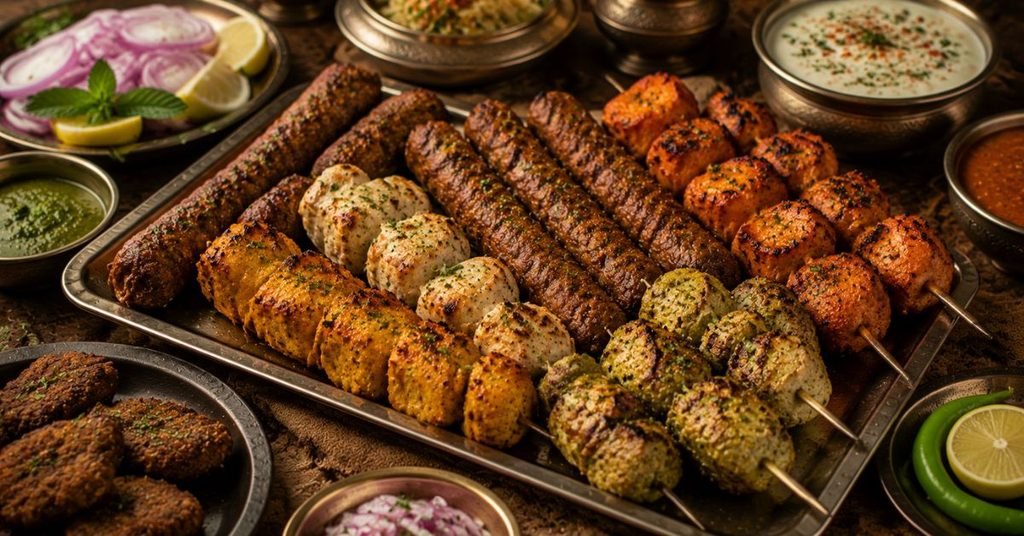
Boti kebab is built around pieces of meat rather than mince. “Boti” broadly refers to a small piece or chunk, so the success of the dish depends heavily on both the quality of the meat and the marinade.
Unlike seekh kebab, where mince creates a uniform texture, boti allows you to feel the natural grain and juiciness of the meat. A good version balances tenderness with enough chew to remain satisfying.
It is therefore an excellent choice for diners who enjoy grilled lamb or mutton but want something more heavily marinated and aromatic than a straightforward chop.
Boti, seekh, Kakori and galouti also demonstrate why “Indian kebab” is better understood as a broad cooking family rather than one fixed recipe. Lucknow alone is associated with several clearly distinct forms.
Fish and Prawn Kebabs: A Lighter Side of Indian Grilling
Indian kebab menus are not limited to poultry and red meat. Fish and prawns work particularly well with tandoor or charcoal cooking because their natural sweetness responds quickly to high heat.
The challenge is precision. Seafood needs enough heat to create browning and smoky flavour, but overcooking quickly makes it dry or rubbery. Marinades also tend to work best when they complement rather than overwhelm the seafood.
Bukhara’s seafood kebab selection includes Tamralipta Sarson Machilyan, a chargrilled fish preparation with a Bengal connection, and Jhinga-E-Samarkhand, a prawn dish. Its mixed non-vegetarian platter combines the fish with chicken tikka and lamb seekh, making the differences between the three styles particularly easy to experience in one meal.
Paneer Tikka: Proof That Kebabs Do Not Need Meat
Paneer tikka is one of the strongest vegetarian examples of Indian kebab cooking because paneer behaves particularly well under intense heat.
The cheese is firm enough to remain on a skewer while its exterior browns and absorbs the flavours of the marinade. Unlike meat, paneer does not need tenderising. The goal is therefore to season it well, create colour on the outside and keep the centre moist rather than rubbery.
Bukhara’s Sufiyani Gulnar Paneer uses grilled cottage-cheese chunks with multiple spice marinades, placing a vegetarian preparation alongside its chicken, seafood and lamb kebab selection.
It is a useful reminder that Indian kebab traditions are defined as much by marination, grilling and texture as by the choice of protein.
How to Choose the Right Indian Kebab for Your Taste
Instead of ordering based only on whether you want chicken or lamb, choose according to the eating experience you prefer:
- For smoky char: chicken tikka or tandoori chicken.
- For juicy minced meat: seekh kebab.
- For exceptionally soft texture: Kakori or galouti kebab.
- For a firmer pan-fried patty: shami kebab.
- For mild, creamy flavours: malai kebab.
- For meatier chunks: boti kebab.
- For something lighter: fish or prawn kebabs.
- For a vegetarian grill: paneer tikka.
This approach is especially useful when sharing. Instead of ordering three kebabs with similar flavours and textures, combine contrasting styles: a creamy chicken kebab, a smoky seekh and a chargrilled paneer or fish dish, for example.
What Goes Well With Indian Kebabs?
Kebabs can work as starters, sharing plates or the centre of a full meal. The best accompaniments support their smoky and spiced character rather than competing with it.
- Mint or coriander chutney adds freshness to rich meat kebabs.
- Lemon and sliced onion sharpen smoky tandoori flavours.
- Roomali roti or naan works particularly well with seekh and other minced kebabs.
- Raita or yoghurt-based drinks provide cooling contrast when the seasoning is robust.
- Jaljeera or masala chaas can refresh the palate between different grilled dishes.
Bukhara’s drinks menu includes sweet and salted lassi, masala chaas and jaljeera, giving diners several non-alcoholic options that naturally complement spiced food.
Indian Kebabs Are About Technique, Not Just Spice
The most interesting lesson from exploring Indian kebab varieties is that there is no single definition of what a kebab should taste or feel like.
Chicken tikka shows what intense tandoor heat can do to marinated pieces of meat. Seekh transforms mince into a smoky skewer. Kakori and galouti take tenderness to another level. Shami introduces lentils and griddle cooking, while malai kebab shows that subtlety can be just as satisfying as strong spice. Seafood and paneer extend the same grilling traditions beyond the familiar meat-based favourites.
That diversity is likely to remain the strength of Indian kebabs. Modern menus may introduce new marinades, vegetarian ingredients and regional interpretations, but the kebabs that stand out will still depend on the fundamentals: thoughtful marination, controlled heat, the right texture and seasoning that complements rather than masks the main ingredient.
FAQs
What is the most popular type of Indian kebab?
Chicken tikka and seekh kebab are among the most widely recognised. Chicken tikka offers charred boneless pieces, while seekh kebab uses seasoned minced meat grilled around a skewer.
What is the difference between seekh kebab and chicken tikka?
Seekh kebab is made from minced meat shaped around a skewer. Chicken tikka uses boneless chunks of chicken that are marinated and skewered individually before grilling.
Which Indian kebab is the softest?
Galouti and Kakori kebabs are famous for exceptionally tender textures. Galouti is normally cooked as a patty on a griddle, while Kakori is a refined seekh-style kebab.
Which kebab is best for someone who does not like very spicy food?
Malai kebab is a good choice because its creamy marinade generally produces a milder, smoother flavour. Paneer tikka can also be suitable depending on the marinade.