
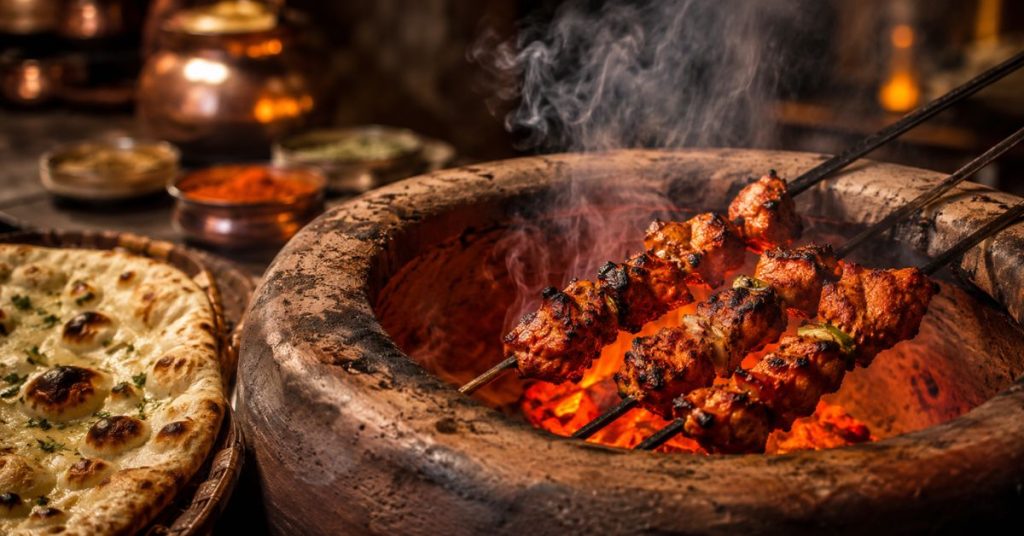
The smoky character of tandoor cooking is often mistaken for something that comes mainly from spices. In reality, spices are only part of the story. What makes properly cooked tandoori food taste so distinctive is the way intense heat, a heat-retaining oven, marinades, browning, live-fire aromas and controlled charring work together in a very short cooking window.
That distinction matters. Chicken coated in a tandoori spice mix and baked in a conventional oven may taste well seasoned but it rarely develops the same roasted edges, concentrated marinade and subtle smokiness found in food cooked inside a properly heated tandoor.
The reason becomes clearer once you look at what is happening inside the oven.
A Tandoor Creates Several Types of Heat at the Same Time
A tandoor does more than surround food with hot air. Its thick walls absorb heat from the fire and release that energy back towards the food, while the heat source below continues to provide intense direct energy.
This creates a cooking environment in which radiant heat from the hot oven surfaces plays an important role alongside heat from the fire. When bread is attached directly to the wall, contact with the heated surface adds another powerful form of heat transfer. Studies of tandoor-baked flatbread have found conduction from the hot surface and radiation from the refractory walls to be particularly important.
That combination explains why the results are difficult to reproduce in a standard kitchen oven.
The hot walls are more important than the clay “flavouring” the food
It is tempting to describe tandoor food as having an earthy taste because the oven is traditionally made from clay. However, the clay’s more important job is physical rather than flavour-based: it stores a large amount of heat and radiates that heat efficiently back towards the food.
Culinary training sources similarly describe the tandoor as a thick-walled, highly insulated cooking chamber capable of reaching temperatures far beyond those used for most conventional baking.
The deep flavour therefore comes less from food absorbing a mysterious “clay taste” and more from what this heat environment allows the cook to do.
Extreme Heat Creates the Roasted Flavours We Associate With Tandoori Food
Put marinated chicken, lamb or paneer into intense tandoor heat and the surface begins browning almost immediately.
As proteins and naturally occurring sugars are heated, they undergo the Maillard reaction, creating many of the savoury, toasted and roasted aromas associated with browned meat and bread. Higher surface heat encourages this process once excess moisture has evaporated.
This is why a good piece of tandoori chicken does not taste simply of chilli, cumin or yoghurt. Underneath the seasoning are flavours reminiscent of roasting, grilling and toasted spices.
Browning must happen before the food dries out
High temperature alone is not enough. Timing is crucial.
Leave meat in severe heat for too long and the same conditions that create an appealing crust will eventually dry the centre or burn the spices. Remove it too soon and the surface can remain pale and soft.
The tandoor works particularly well because chefs can develop substantial surface browning quickly. With the correct cut, marinade and timing, the outside develops roasted character while the centre remains succulent.
That balance is one of the clearest differences between skilled tandoor cooking and simply making food darker over a flame.
Marinades Become More Intense Inside the Tandoor
A tandoori marinade has two jobs. It seasons the ingredient before cooking, but it also forms part of the surface that will be transformed by heat.
Traditional-style marinades frequently combine yoghurt or another moist base with salt, spices, aromatics and acidic ingredients. As the food enters the tandoor, some of that surface moisture rapidly evaporates. What remains becomes increasingly concentrated.
Spices toast. Aromatics become deeper. Fat carries fragrant compounds across the surface. Small areas of marinade brown and blister.
This is why tandoori flavour often seems more powerful after cooking even though no additional seasoning has been added.
Too much wet marinade can work against the tandoor
There is an important technical detail here: more marinade does not automatically mean more flavour.
If an ingredient enters the oven covered in a thick layer of loose liquid, much of the initial heat is spent evaporating water. Until the surface becomes sufficiently dry, strong browning is delayed.
A well-prepared tandoor dish therefore needs enough marinade to season and coat the ingredient without leaving it swimming in excess moisture. The objective is a marinade that clings closely enough to become part of the crust.
For a practical example of how heat, marinade and timing come together with poultry, see Bukhara’s guide to what makes tandoori chicken smoky, tender and flavourful.
Dripping Juices Add Another Layer of Smoky Aroma
The fire creates heat, but some of the most recognisable grilled aromas develop when juices, fat and marinade fall from skewered food towards the hot area below.
When these drippings hit extremely hot coals or surfaces, they can vaporise and produce aromatic compounds. Some of those compounds travel upwards and settle back onto the food. Charcoal-grilling specialists describe this interaction between heat, drippings and combustion gases as an important contributor to grilled flavour.
So when people say they can “taste the fire” in a kebab, they are often noticing several things at once: browned meat, toasted marinade, combustion aromas and vapours created by the food itself.
Good smokiness should remain in the background
More smoke is not necessarily better.
Heavy, dirty smoke can make food bitter or acrid. Proper tandoor flavour is usually more integrated. You notice a warm grilled aroma and lightly smoky finish without feeling as though the ingredient has been covered by smoke.
That is one reason tandoor cooking should not be confused with low-and-slow smoking. A smoker may expose food to smoke for hours. Tandoori food is typically cooked much faster, making the fire part of the overall flavour rather than the only flavour.
Controlled Charring Creates Contrast Rather Than Burnt Flavour
The dark patches on tandoori chicken, kebabs and naan are not simply decoration. Carefully controlled charring provides tiny bursts of bitterness and roastiness that contrast with creamy marinades, savoury meat or soft bread.
The key word is controlled.
A skilled tandoor cook aims for irregular caramelised and charred areas rather than turning the entire surface black. This produces several flavours and textures in one bite: juicy meat, roasted spices, browned crust and occasional smoky char.
When judging a well-cooked tandoori dish, look for:
- browned and lightly blistered areas rather than a uniformly pale surface;
- smoke that smells appetising rather than harsh or sooty;
- a roasted spice aroma alongside the fresh flavour of the seasoning;
- a moist interior contrasting with a firmer, slightly charred exterior;
- natural variation across the surface, showing genuine exposure to intense heat.
These differences are especially noticeable in skewered foods, where separate areas face the walls, fire and rising heat at slightly different intensities.
Vertical Skewers Help Create an Even but Characterful Cook
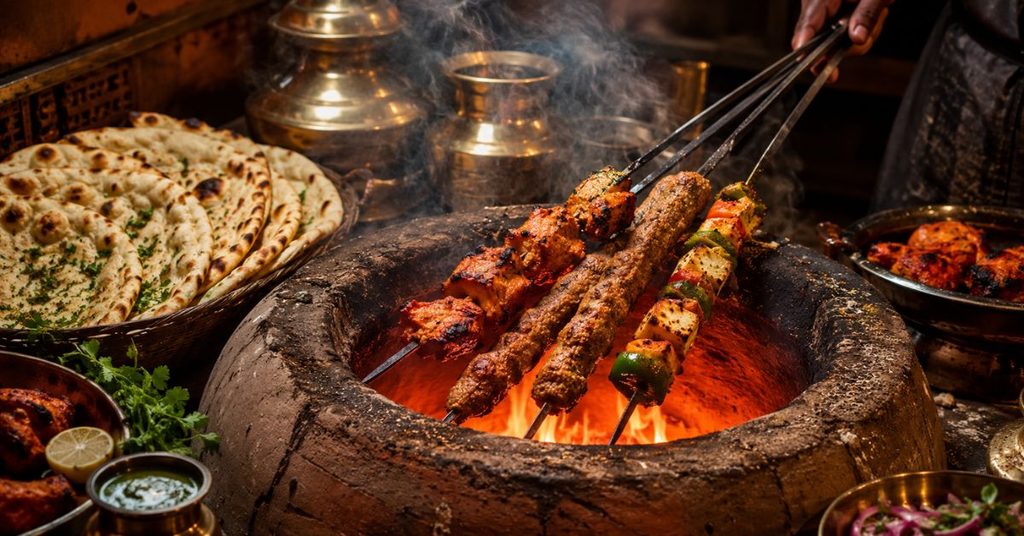
Many tandoor meats and kebabs are cooked vertically on long skewers positioned inside the oven.
This arrangement is important because the ingredient receives strong heat from several directions rather than resting against a flat cooking surface. The hot walls surround the skewer with radiant energy, while heat rising from the lower part of the oven cooks from beneath.
Juices can also run down the skewer instead of collecting in a frying pan. That helps the surface remain suitable for browning rather than effectively stewing in released liquid.
The result is a useful combination: relatively even cooking with deliberately uneven browning.
Bukhara’s Singapore menu demonstrates how broadly this cooking style can be applied, with dishes including House-Of-Patiala Murgh Tikka, Murgh Tandoori, Sultanate Seekh Kebab and grilled paneer alongside tandoor-baked breads.
Tandoor Heat Changes Vegetables and Paneer Differently From Meat
The same oven produces different effects depending on what goes into it.
Paneer does not behave like chicken because it contains no muscle fibres that need to cook through in the same way. Its appeal comes from developing browned edges while retaining a soft centre. A clinging marinade can toast on the surface, adding spice and acidity without overwhelming the mild cheese.
Vegetables bring another advantage: their natural sugars can become noticeably sweeter and more concentrated when their surfaces brown.
That contrast explains why tandoor cooking works particularly well across a shared platter. Meat may bring savouriness and rendered fat, paneer provides creaminess, while vegetables contribute sweetness and roasted edges all connected by the same fire-driven flavour profile.
Tandoor-Baked Bread Shows the Oven’s Heat Most Clearly
Few foods demonstrate the mechanics of a tandoor as clearly as naan.
Instead of sitting on a baking tray, naan dough is traditionally attached directly to the hot wall of the oven. The surface touching the wall receives strong contact heat, while the exposed side receives radiant heat from the chamber.
The dough can therefore puff, blister and brown quickly. High-temperature tandoor baking is responsible for the soft interior and charred spots that are difficult to reproduce perfectly in an ordinary oven.
The result also explains why freshly baked naan works so well beside smoky kebabs and rich curries: its toasted edges echo the flavours created elsewhere in the tandoor.
At Bukhara, the bread selection includes Plain Naan, Tandoori Roti, Garlic Naan, Butter Naan, Laccha Paratha and stuffed naan varieties prepared using the tandoor.
Why Tandoor Flavour Is Difficult to Reproduce in a Home Oven
A conventional oven can produce excellent roasted food, but it operates differently.
Even at its highest setting, a normal domestic oven usually cannot reproduce the combination of extreme radiant heat, intense wall temperature, live-fire cooking and dripping-over-fire effects found in a traditional tandoor.
Home cooks can get closer by combining techniques—using a very hot grill, preheated baking steel or stone, and an open flame where appropriate—but each method recreates only part of the tandoor environment.
The difference becomes easier to recognise when comparing the finished results:
- Conventional baking: gentler browning and a more evenly roasted surface.
- Pan cooking: strong contact browning but little surrounding radiant heat.
- Charcoal grilling: excellent fire flavour but a different heat geometry.
- Tandoor cooking: intense wall radiation, live heat, concentrated marinades and rapid char occurring together.
That combination, rather than any single secret ingredient, is what makes the flavour so difficult to copy.
Why Tandoor Cooking Fits the Character of North-West Frontier Cuisine
For Bukhara Singapore, tandoor cooking is particularly relevant because the restaurant draws inspiration from the food traditions of the North-West Frontier, where grilling, robust spices, breads and slow-cooked dishes form part of the wider culinary identity. Bukhara describes its food around traditional grilling, tandoor-baked bread and hearty Frontier flavours.
That makes the tandoor more than another piece of restaurant equipment. It determines how several elements of the meal relate to one another.
A charred kebab gains contrast from a cooling accompaniment. Fresh naan carries the roasted flavour of the oven into a curry. Grilled paneer provides a vegetarian expression of the same fire-driven cooking style.
Conclusion
Deep tandoor flavour is not created by adding more chilli powder, artificial smoke or a heavier marinade. It develops because several processes happen together: the oven walls radiate intense heat, ingredients brown rapidly, spices toast, marinades concentrate, drippings meet the heat source and selected areas develop controlled char.
Just as importantly, the process depends on restraint. Too little heat gives food a flat, baked character; too much exposure creates dryness and bitterness. Too much marinade can interfere with browning, while uncontrolled smoke can hide the ingredient rather than improve it.
That balance is why traditional tandoor cooking continues to matter even in modern restaurant kitchens. Technology can make cooking more predictable, but the combination of fire, stored heat and skilled timing still produces a flavour profile that ordinary roasting struggles to duplicate.
For diners in Singapore, that difference can be tasted rather than explained: a properly cooked kebab or freshly blistered naan carries roasted, smoky and savoury notes that could only have developed through intense heat working on the ingredient itself.
FAQs
Why does tandoori food taste smoky?
The flavour comes from a combination of intense browning, live-fire combustion, toasted marinade, controlled charring and aromatic vapours created when juices or fat encounter the hot area of the oven.
Does a tandoor actually smoke the food?
To a degree, but tandoor cooking is not the same as slow smoking. Food normally cooks quickly, so smoke complements the roasted and charred flavours rather than dominating them.
Why is tandoori chicken often charred on the outside but juicy inside?
Very high heat browns the exterior rapidly. When the meat is properly marinated and removed at the correct time, substantial surface flavour can develop before excessive moisture is lost from the centre.
Why does naan taste different when baked in a tandoor?
Naan is attached directly to the hot oven wall, giving one side strong contact heat while the exposed surface receives radiant heat. This produces fast puffing, blistering and characteristic browned patches.