
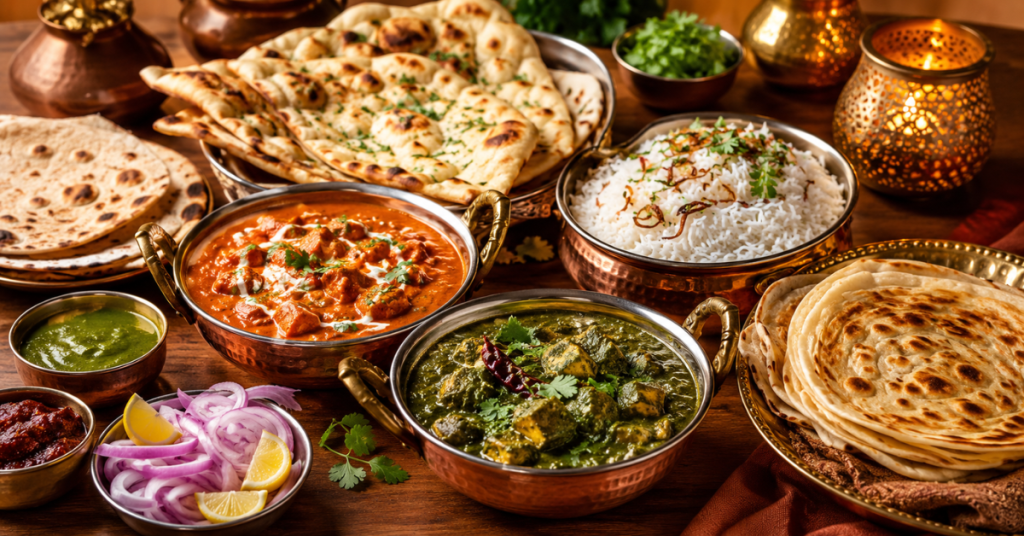
Indian cuisine shines when a rich curry is paired with fragrant rice and warm flatbread. A well-planned meal balances spicy, creamy and tangy flavors, and offers contrasting textures. At Bukhara Singapore, chefs draw on North-West Frontier traditions slow-cooked gravies, fragrant spices and tandoori-fired breads to create “rich, hearty” dishes that linger in your memory. When building your own meal, think like a thali (platter) combine curries, rice, breads and sides so each bite is satisfying and balanced.
Key Components of an Indian Meal
An authentic Indian meal is built from several parts that work together. For a “complete curry meal” one usually includes:
- A main curry: The heart of the meal, e.g. chicken tikka masala, lamb rogan josh, or a vegetable curry.
- Rice or bread: A neutral base (steamed basmati rice, cumin-flavored jeera rice, or flatbreads like naan) to soak up sauce.
- A cooling side: Yogurt-based raita or plain dahi to tame the heat from spices.
- A crispy element: Papadums, pakoras or crispy salad to add texture.
- A condiment: Chutney or pickles (mint, mango chutney, lime achar, etc.) to punctuate flavors.
Together these elements create a balanced thali. For example, one might serve a rich curry with both naan and rice on the side, plus bowls of cucumber raita and mango chutney for contrast. This variety helps cater to different tastes and dietary needs, and makes the meal feel special.
Choosing Curries: Protein and Flavor Variety
Begin by selecting 1–3 curries that complement each other. Mix proteins and vegetarian options for color and nutrition. For example:
- Chicken and Meat Curries: Milder, creamy dishes like Butter Chicken (Murgh Makhani) or Korma provide rich comfort, while a spicy lamb vindaloo or rogan josh adds heat. Bukhara’s menu includes Punjabi classics such as Murgh Makhani (butter chicken) and Gosht-E-Roganjosh (Kashmiri lamb) alongside fiery Goan-style Vindaloo.
- Seafood Curries: Light coconut-based curries (e.g. Goan Fish Curry) bring a tangy twist. These pair well with lemon wedges and mild side dishes.
- Vegetarian Curries and Dals: Include a lentil dal or paneer dish for vegetarians (or extra variety). Creamy Paneer Butter Masala or a rich Dal Bukhara (lentils slow-cooked 24h) round out the lineup. Lentil dals are high in protein and fiber, and “pair beautifully with rice and curry,” helping to fill out the meal.
Tip: Offer at least one milder (cream or tomato-based) curry and one boldly spiced curry so diners of all spice preferences can enjoy the meal.
Rice Varieties: The Fragrant Base
Rice is the staple base for many curries. In fact, basmati rice (grown in the north) is often called the “king of rice” for its aroma and texture. Choose one or more rice preparations:
- Plain Steamed Basmati Rice: Fluffy, fragrant, and neutral – the most versatile choice. Bukhara even advertises its “Steamed Basmati Rice, prepared simply and elegantly”. Serve this in a bowl so guests can spoon curries over it.
- Jeera (Cumin) Rice: Basmati cooked with cumin seeds for a subtle earthy aroma. A step up from plain rice, it adds flavor without overpowering curries.
- Saffron or Turmeric Rice: Yellow-hued rice steamed with saffron or turmeric adds color and a gentle fragrance. It goes especially well with grilled meats or biryani.
- Specialty Rice Dishes: You might serve a pulao or biryani as one of the dishes. These one-pot rice meals (vegetable, chicken, or lamb biryani) are complete on their own but can also complement other curries. In a mixed meal, a small bowl of biryani offers variety in seasoning and texture.
By including at least steamed rice, every diner has a mild base to balance spicier dishes. As one source notes, aromatic basmati “complements most Indian food”. Keep rice warm and fluffy by cooking it last or using a steamer, so it’s ready alongside the hot curries.
Bread Varieties: Scooping and Sopping
North Indian meals are known for an array of flatbreads. Bread serves as an edible utensil: you literally scoop up curry with it. At Bukhara and similar restaurants you’ll find items like plain naan, tandoori roti, garlic naan, butter naan, laccha paratha and rumali roti. Key types to include:
- Naan: A soft, leavened bread baked in a tandoor (clay oven). Its pillowy texture and slightly chewy bite soak up creamy gravies beautifully. Garlic or butter naan adds flavor and richness.
- Tandoori Roti (Chapati): An unleavened whole-wheat flatbread baked in the tandoor. Thinner and more rustic than naan, it has a pleasant chew and a hint of char. Roti’s whole-grain flavor complements spicy curries without overwhelming them.
- Paratha: A layered, pan-fried flatbread (laccha paratha is a spiraled version). Flaky and rich, it is excellent with hearty or dry curries because it adds crunch and absorbs sauces well.
- Rumali Roti: Very thin, large, and folded like a handkerchief. Because it’s so delicate, rumali is ideal for lighter, fragrant dishes like fish or prawn curries. Its thinness lets you wrap a variety of ingredients in each bite.
- Other Breads: In a home meal you might also include puris (deep-fried rounds) or bhaturas (yeasted fried bread) for special occasions, though these are not on every menu.
As one chef notes, “Indian breads are not just side dishes, they are essential” to the experience – they “scoop up gravies, absorb spices, and balance strong flavors.” When serving, stack breads in a basket or platter and keep them covered so they stay warm and soft.
Pairing Curries with Rice and Bread
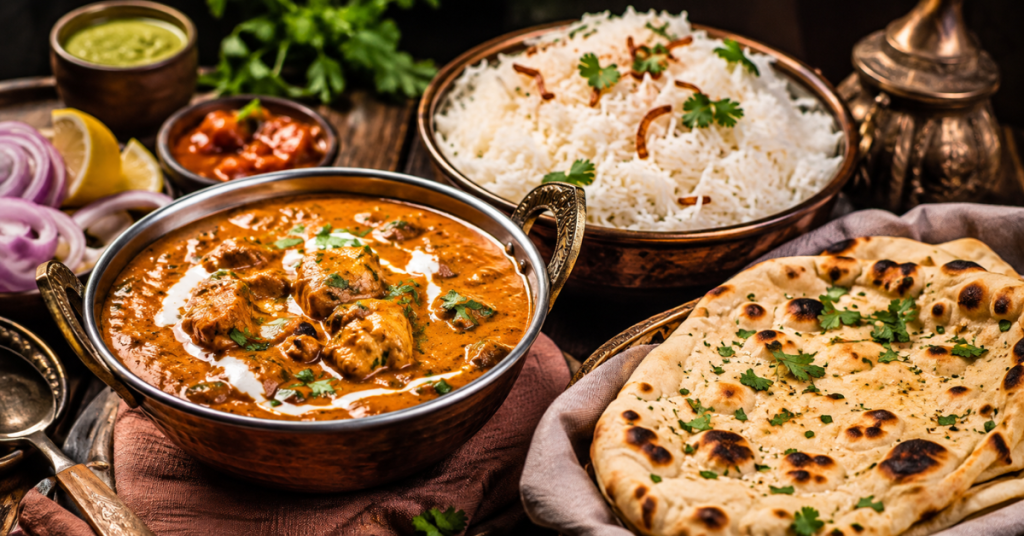
The art of the meal is in the pairing. A good rule of thumb: thicker, creamy curries go with soft breads; light, tangy or very spicy curries can go with rice or thin breads. For example, classic Butter Chicken (a rich tomato-butter curry) is often paired with garlic naan – the fluffy naan soaks up the sauce perfectly. By contrast, a spicy lamb vindaloo can be balanced by either plain rice or naan; Bukhara explicitly notes that its fiery Vindaloo “pairs perfectly with naan or rice”.
Here are some pairing tips:
- Creamy Tomato or Cashew Gravies: (Butter chicken, paneer butter masala, tikka masala) – Pair with garlic naan or butter naan. The bread’s richness complements these buttery sauces.
- Dry Curries and Kebabs: (Tandoori chicken, kebabs, meat tikka) – Pair with tandoori roti or rumali roti. Since the meat is already flavorful on its own, a simpler bread is fine.
- Hearty Meat Curries: (Rogan josh, slow-cooked lamb) – Stack with laccha paratha or naan; the layered paratha soaks up thick juices and its crispiness contrasts tender meat.
- Vegetable and Lentil Curries: (Aloo Gobi, Saag Paneer, Dal Tadka) – Serve with plain naan or roti. For very spicy lentils (e.g. dal tadka), a slather of butter or a spoon of yogurt can help temper heat.
- Seafood Curries: (Goan fish curry, prawn curry) – Pair with rice or rumali roti so as not to overpower the delicate flavors. A simple lemon-dressed salad or cucumber raita is ideal alongside fish.
Also, balance your palate: provide a small bowl of raita or plain yogurt, which “helps cool the palate after eating spicy food”. Papadums and pickles on the side offer crunch and tang between bites. In practice, set out the curries in bowls or on a platter, place rice in a covered dish, and serve breads hot. Encourage everyone to take a little of each – the joy of an Indian meal is in mixing curry with rice or bread in every bite.
Meal Planning & Serving Tips
Preparing everything so it’s hot and fresh can take coordination. A few planning tips:
- Cook Curries Ahead: Curries often taste better the next day. You can slow-cook them in advance (Bukhara’s Dal Bukhara simmers 24 hours) and gently reheat before serving. This lets spices meld and frees you up on mealtime.
- Fluffy Rice Last: Prepare the rice just before mealtime. Rinse basmati well, use a bit more water than usual, and fluff with a fork so each grain stays separate. Keep it warm with a tight lid or in a bowl wrapped in cloth.
- Bake Bread Fresh: For homemade breads, grill or bake them just before serving so they’re soft. If you can’t bake on demand, reheat flatbreads wrapped in foil in a hot oven for a few minutes.
- Serve Hot and Covered: Keep curries warm on low heat and cover rice and bread to retain steam. Let guests serve themselves family-style. Arrange bowls around the table, and put bread in a basket at the center.
- Timing: Start with the milder curries and breads first, then bring out spicier dishes. This way everyone can prepare their palate (with yogurt and salad) if needed.
By planning each component, you’ll ensure nothing goes cold and the final meal feels like a feast. Bukhara’s buffet-style banquet menu even suggests sharing everything together, with a curated selection of curries, breads and accompaniments to showcase the best flavors.
Conclusion
Building the perfect Indian meal is about harmony of flavor, texture and tradition. The curry provides the punch, the rice and breads carry and balance it, and the sides tie everything together. By choosing a mix of curries (chicken, lamb, vegetarian), offering a neutral rice base (steamed basmati or jeera rice), and including a variety of breads (naan, roti, paratha, rumali), you create an experience that satisfies every diner. Remember that cooling yogurt, zesty chutneys, and crisp papadums are not just extras they make each bite more exciting.
Whether cooking at home or ordering from a place like Bukhara Singapore (which “brings together slow-cooked specialties, fragrant spices and tandoor-fired breads”), the goal is the same: a rich, hearty spread meant for sharing. Take inspiration from the thali tradition: plate up a selection of dishes and encourage everyone to mix and match. The result is a meal where every dish reflects passion, perfection and heritage and everyone leaves the table happily full.
FAQs
What are the basic components of a typical Indian meal?
At least one curry (meat or vegetarian), a starch (rice or flatbread), and complementary sides. A balanced meal often has a gravy-based curry, plain or flavored basmati rice (for example, jeera or saffron rice), and breads (naan, roti, paratha) for scooping. Accompaniments like yogurt raita, salad, pickles or chutneys round it out.
How do I decide between serving rice or bread with curry?
It depends on the curry and your guests. Rich, saucy curries (like butter chicken) are great with naan, while tangy, coconut-based curries (like Goan fish curry) often go with rice. Seafood dishes frequently pair best with rice or thin bread (rumali roti) so the flavors shine. If unsure, offer both: many enjoy spooning curry over rice or tearing bread freely, as needed.
Which Indian breads should I include for a home meal?
A good spread might include 2–3 types. Naan is a must – soft leavened bread (plain, garlic or butter flavored) that everyone loves. Roti/Chapati is a whole-wheat flatbread, lighter and ideal for spicier dishes. A paratha adds a flaky crunch (especially if stuffed or layered), and rumali roti (paper-thin bread) is fun to wrap around food. If you buy them, a mixed bread basket (naan, paratha, roti) ensures there’s something for every curry.
What rice dishes go well with curry?
Plain basmati rice (steamed) is the simplest base and goes with everything. You can also make jeera rice (cumin-flavored) or saffron/turmeric rice for more aroma and color. For variety, serving a small portion of biryani or pulao alongside curries can be nice – those are already seasoned rice dishes (often with vegetables, chicken or lamb). Ultimately, fluffy basmati that soaks up sauce is key.
How can I balance the heat and richness in an Indian meal?
Provide cooling elements. Always include plain yogurt or cucumber raita, which “helps cool the palate after spicy food”. Fresh salad (tomato-onion-cucumber) and pickles add crunch and tang. If a curry is very rich, eat it with a squeeze of lemon or a mint chutney. On the rich end, start with milder curries, then move to hotter ones. This way, everyone can adjust spice (adding extra yogurt or chutney) and still enjoy the full range of flavors.