
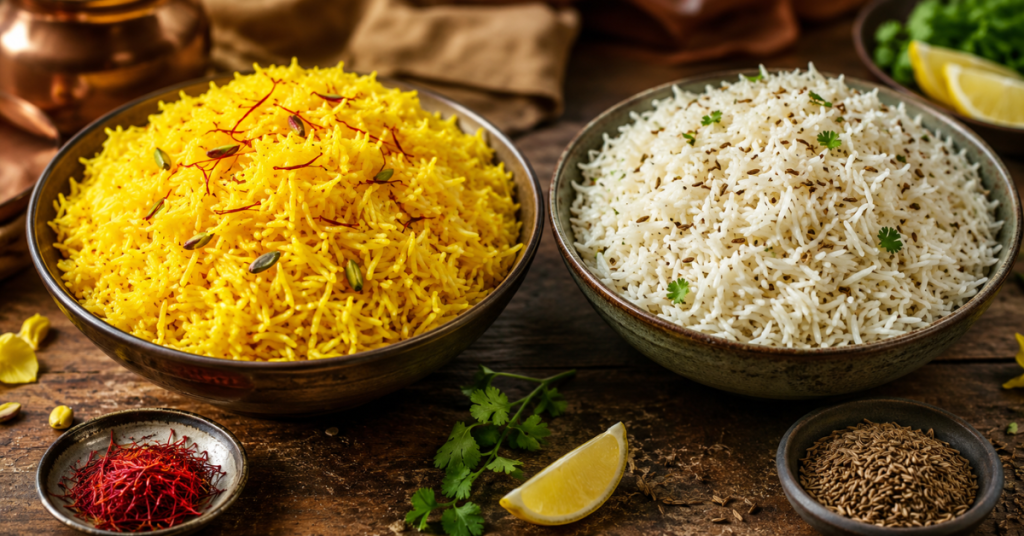
Indian restaurants often offer both saffron rice and jeera rice, but they’re quite distinct dishes. Even Bukhara’s menu spells out the basic contrast: “Saffron Rice” is “basmati rice cooked slowly with saffron,” while “Jeera Rice” is “Shahi cumin-tempered basmati rice. In practice, the difference comes down to the spice used and the resulting aroma, color, and occasion. Understanding these differences helps diners choose the right rice for their meal and helps cooks prepare each rice in its optimal way.
What Is Saffron Rice?
Saffron rice is basmati rice infused with a few threads of saffron (the dried stigma of Crocus sativus). This spice is extremely potent in fact, McCormick notes that saffron is “the most expensive spice in the world” and only a few threads can tint an entire pot of rice golden yellow and impart its signature aroma. Saffron has a delicate, floral scent and flavor (“subtle taste and aroma”), so cooks typically steep the threads in warm water or milk before adding them to the rice.
- The result is a light yellow rice with a warm, lightly sweet fragrance. One home cook describes saffron rice as loaded with aromatics, warm Indian spices, luxurious saffron, and flavourful ghee. This reflects the common practice of sautéing spices (like cardamom, cinnamon, or cloves) and ghee into the rice before adding saffron for depth of flavor.
- Because only a tiny pinch of saffron is needed, saffron rice is considered a luxury or celebratory dish. It’s often reserved for special occasions (think biryanis or festive meals) or served alongside rich gravies. At Bukhara Singapore, for example, their saffron rice is slow-cooked to let the saffron fully infuse, yielding a “gorgeously tinted” and fragrant rice.
What Is Jeera Rice?
Jeera rice (pronounced jee-rah) is a simple everyday rice dish flavored with jeera, the Hindi word for cumin seeds. It’s made by tempering whole cumin seeds in hot oil or ghee and then cooking basmati rice in that fragrant oil. In fact, Wikipedia notes that jeera rice “is an Indian dish made from rice and cumin seeds” and is “the kind of food people can eat every day”.
- When you heat the oil and add cumin, the seeds sizzle and release their warm, earthy aroma. As one recipe explains: “Tempering the cumin seeds in oil before adding the basmati rice gives the rice a lovely fragrance”. The rice grains then soak up that cumin-scented oil. The result is a fluffy white rice speckled with brown cumin seeds.
- Jeera rice has a nutty, slightly savory flavor but it is not spicy. It’s very mild – you mostly notice the aroma of cumin rather than heat. Because it’s so simple and quick to make (just fry cumin, add rice and water, then simmer), jeera rice is a common staple in North Indian meals. It pairs perfectly with lentils and vegetable curries. For example, it “tastes best with rajma curry, chhole, [and] pulses” (kidney beans, chickpeas and the like).
Key Differences Between Saffron Rice and Jeera Rice
- Main Spice & Flavor: Saffron rice is flavored with delicate saffron threads, giving it a floral, slightly sweet aroma. Jeera rice uses cumin seeds, which give it a warm, earthy, nutty scent.
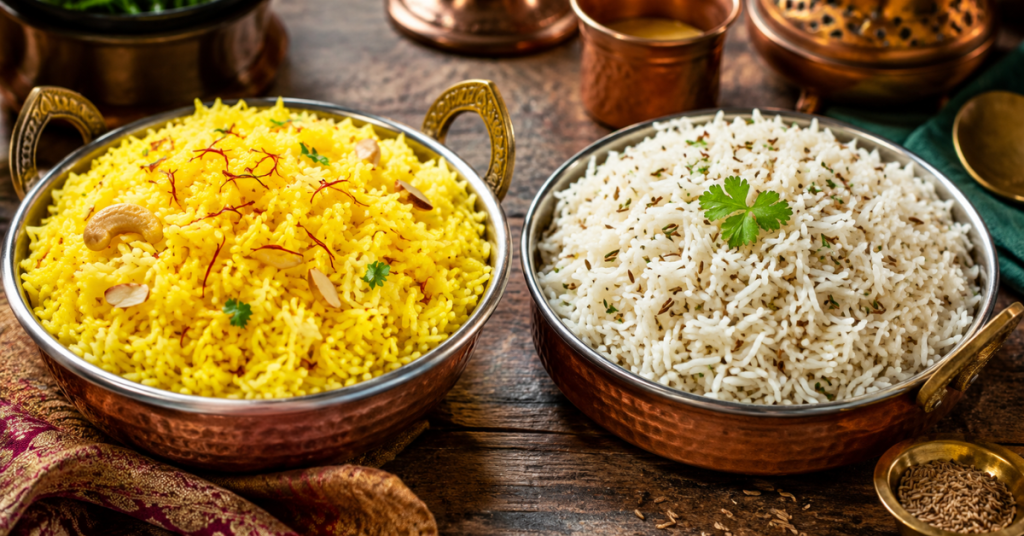
- Color: Saffron rice turns a golden-yellow color when cooked, even if only a few threads are used. By contrast, jeera rice remains white (with visible brown cumin seeds) since cumin does not color the rice.
- Serving Occasions: Saffron rice is usually reserved for special or festive meals. Its rich aroma and color complement celebratory dishes like biryanis, kebabs, or creamy curries. Jeera rice is an everyday staple – it’s comforting and pairs with almost any curry or dal. (In fact, Wikipedia specifically calls jeera rice “the kind of food people can eat every day”.)
- Typical Pairings: You’ll often see jeera rice served with dals or bean curries (like rajma or chole), because it’s mild enough not to overpower simple gravies. Saffron rice, on the other hand, is ideal with rich, aromatic mains. It complements dishes like butter chicken, lamb rogan josh, or paneer makhani, where its floral notes and color add an elegant touch.
- Cost & Rarity: Saffron is labor-intensive to harvest (it takes ~70,000 flowers to yield a pound of saffron), making it extremely expensive. As a result, saffron rice tends to be a higher-priced menu item. Cumin seeds are common and cheap, so jeera rice is very affordable.
Cooking Tips & Serving Suggestions
- Saffron Rice: Start by steeping saffron in a little warm water or milk for 5–10 minutes to draw out its color and flavor. Use good-quality basmati, and sauté some whole spices (like cloves, cinnamon, or cardamom) and a knob of ghee or butter with the rice. Then add the saffron-infused liquid as the rice cooks on low heat (Bukhara’s menu literally says “cooked slowly with saffron”). Cooking gently on low heat ensures the saffron aroma permeates every grain. Fluff the rice with a fork before serving.
- Jeera Rice: Heat oil or ghee in a pan and add the cumin seeds. Fry them just until they turn golden and pop this toasts the spice, releasing its aroma. Then add the soaked and drained basmati rice and stir to coat each grain. Pour in water (and salt) and simmer with the lid on. The rice will cook in the cumin-scented oil. (For extra flavor, you can also fry some sliced onion or a few cashews along with the cumin.) Once the water is absorbed, remove from heat and let it steam a minute. The result is fluffy rice with a distinct cumin fragrance.
Each of these rice dishes shines when you follow its specific method. Remember: soaking saffron threads unlocks their magic, and toasting cumin seeds is essential for a fragrant jeera rice. Both are best served hot and immediately alongside curries or kebabs.
Conclusion
In summary, the main difference is the star ingredient. Saffron rice uses the golden saffron spice to create a delicately scented, yellow-hued dish fit for special occasions. Jeera rice relies on cumin (jeera) for a warm, earthy flavor in an otherwise plain basmati rice. Saffron rice is typically richer and more luxurious (and a bit pricier) due to the costly saffron threads, whereas jeera rice is a budget-friendly everyday option. Both complement Indian meals in their own way: saffron rice elevates creamy curries and tandoori meats, while jeera rice is the ideal side for dals, vegetables, and bean dishes.
For diners in Singapore and beyond, knowing these differences can help you choose the perfect rice side for your meal. For example, at Bukhara Singapore, you might pick saffron rice to accompany a rich butter chicken or try the aromatic jeera rice with a simple dal makhani. Chefs and home cooks can also use these insights to prepare each rice authentically. Ultimately, whether you crave the luxury of saffron or the comfort of cumin, both rice recipes add flavor and tradition to Indian cuisine.
FAQs
What exactly is saffron rice?
Saffron rice is basmati rice cooked with a small amount of saffron threads. The saffron imparts a golden-yellow color and a subtle floral aroma to the rice.
What is jeera rice?
Jeera rice (or cumin rice) is basmati rice cooked with whole cumin seeds. The seeds are tempered (fried) in oil to release their aroma, giving the rice a warm, earthy flavor.
How do saffron rice and jeera rice differ in taste and appearance?
Saffron rice is yellow and has a delicate, sweet-spicy fragrance from the saffron. Jeera rice is white with brown cumin flecks and has a toasty cumin scent. The taste of saffron rice is more floral and aromatic, while jeera rice is more savory and nutty.
When should I choose one over the other?
Choose saffron rice for special dishes and occasions (it pairs well with rich curries, biryanis, or kebabs). Choose jeera rice as a daily comfort side (it’s perfect with lentil dals, vegetable curries, rajma, chole, etc.).
Is one healthier than the other?
Not really both are primarily rice. Jeera rice does include cumin, which can aid digestion and adds a bit of iron, while saffron adds trace antioxidants. Nutritionally they’re very similar, so “health” should not be the deciding factor – pick based on flavor preference.