
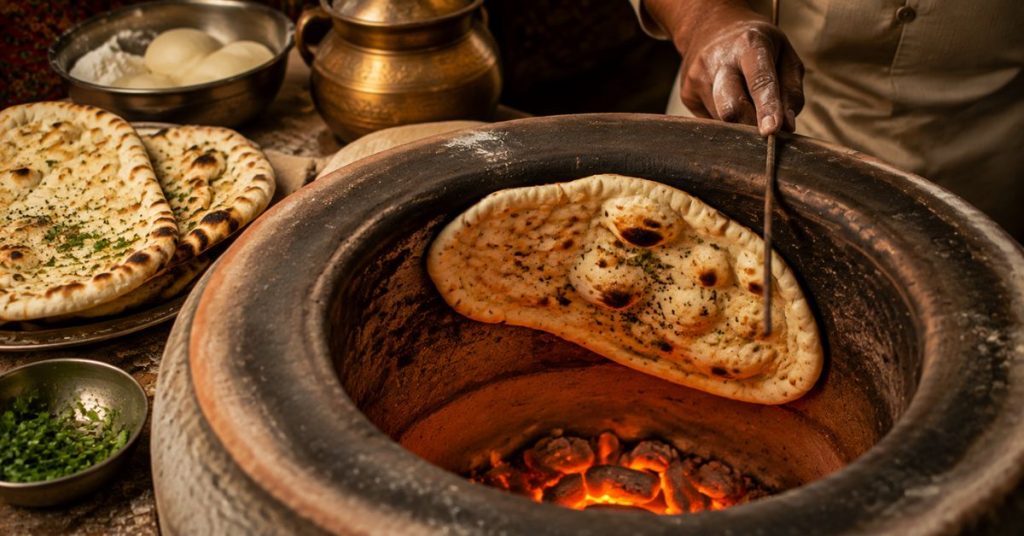
Fresh naan can look deceptively simple: flour, dough, heat and a little butter. Yet it is one of the easiest breads to get almost right and one of the hardest to get exactly right. A dough that is too firm will bake dense. A tandoor that has not stored enough heat can leave the bread pale and dry. Stretch it carelessly and the naan loses the air that should create its soft, blistered texture.
That is why truly fresh tandoor naan depends less on a complicated recipe than on control—of fermentation, dough texture, fire, shaping and timing.
For Bukhara Singapore, that craft fits naturally into a cuisine inspired by the North-West Frontier, where tandoor-fired breads sit alongside grilled dishes, slow-cooked specialities and robust flavours. Bukhara itself describes tandoor-baked naan as part of its tradition of “breaking bread” together.
Great Naan Is Made Before It Reaches the Tandoor
The dramatic moment is when the bread is placed against the clay wall, but much of the quality has already been decided by then.
The Dough Must Be Soft Enough to Stretch
Naan dough needs enough structure to hold trapped air without becoming stiff. Typical versions combine refined wheat flour with water, salt and a leavening agent, while ingredients such as yoghurt or oil may be used to create a softer, richer dough. Traditional and restaurant recipes vary, so there is no single formula that defines good naan.
What matters most to the tandoor cook is how the dough behaves.
A properly developed dough should stretch without immediately springing back, yet remain strong enough to be transferred to the oven without tearing. If too much flour is added simply to make the dough easier to handle, the finished naan can become heavy. If the dough is excessively loose, controlling its shape and attaching it cleanly to the tandoor becomes more difficult.
The target is softness with strength.
Resting the Dough Creates More Than Volume
Fermentation produces the gases that help naan develop its characteristic bubbles, but resting also makes the dough easier to stretch.
Under-rested dough tends to fight the cook. Pull it into an oval and it quickly contracts again. Properly rested dough feels more relaxed, allowing the bread maker to shape it gently rather than forcing it.
Leave it too long, however, and the structure can weaken. Experienced naan makers therefore pay attention to feel rather than treating proofing time as an absolute rule. Kitchen temperature, dough temperature and the particular flour being used can all affect how quickly it becomes ready.
Preparing the Tandoor Is Part of Making the Bread
A traditional tandoor is not simply an unusually hot oven. Its clay walls store heat, allowing food to cook in an intense environment very different from an ordinary domestic oven. Michelin describes naan being slapped onto the sides of the cylindrical tandoor, where the high heat helps create its characteristic lightly blackened char.
The Clay Wall Must Be Properly Heated
Heating the air inside the oven is not enough. The clay itself must absorb sufficient heat because it becomes one of the cooking surfaces.
When the wall is properly heated, the naan begins setting almost immediately after contact. Meanwhile, the exposed surface receives fierce radiant heat from the interior of the tandoor. This means the bread is effectively being cooked from two directions at once: direct contact on one side and intense surrounding heat on the other.
If the tandoor is too cool, the naan takes longer to colour and can lose moisture before developing the right surface texture. Excessively aggressive heat, on the other hand, can burn thin areas before thicker parts are properly baked.
The skill lies in maintaining powerful but usable heat throughout service.
Shaping Naan Without Knocking Out Its Character
Once the dough has been divided and rested, shaping should be controlled but gentle.
Uniform Portions Improve More Than Appearance
Consistent dough portions help every naan cook at roughly the same rate. This becomes especially important in a restaurant kitchen, where several breads may need to reach the table alongside curries, kebabs and other dishes at the same moment.
After portioning, the dough balls are usually given another short rest. This allows the gluten to relax again before stretching.
Stretching Creates the Familiar Naan Shape
The cook gradually presses and stretches the dough into an oval, teardrop or rounded form depending on the restaurant’s style. The objective is not geometrical perfection.
In fact, slight variations in thickness are part of what make tandoor naan interesting. Thinner areas can become crisp and blistered while thicker sections remain soft and pleasantly chewy.
The important thing is avoiding extremes. A centre that is excessively thick may remain doughy, while paper-thin areas can tear during transfer.
The Moment That Requires the Most Confidence
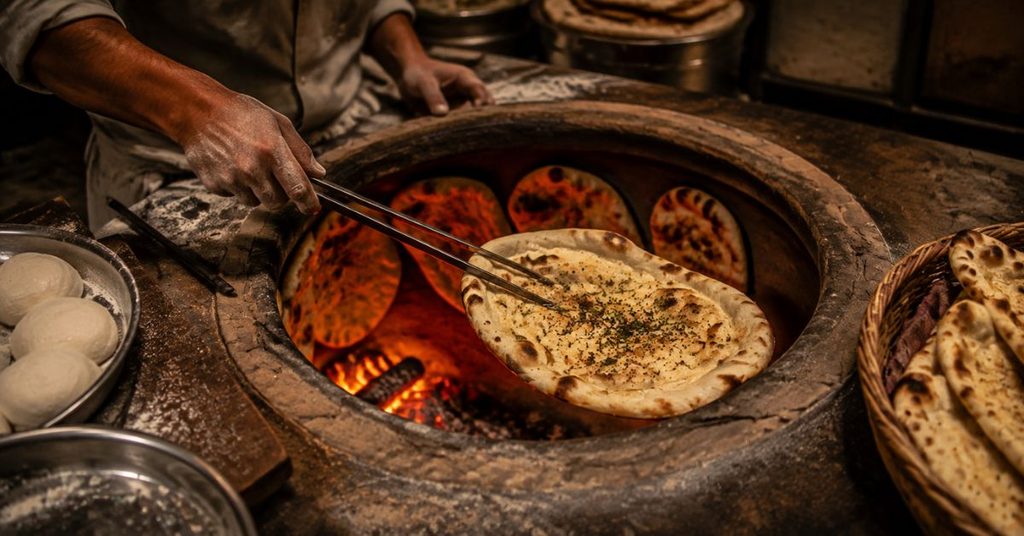
Traditional tandoor baking involves placing the shaped dough directly against the oven’s inner clay wall.
In professional bread making, the stretched dough may be laid across a cloth-covered pad before being firmly attached to the clay. This gives the cook control over the shape while keeping the hand farther from the intense heat. Chef Floyd Cardoz demonstrated this type of technique by stretching naan over a fabric pillow before slapping it against the tandoor wall.
It is a quick movement, but hesitation matters. Poor placement can fold the dough over itself or create uneven contact with the wall.
What Happens Once the Naan Sticks
The transformation is rapid.
Moisture in the dough turns to steam, fermentation gases expand and bubbles rise across the exposed surface. At the same time, the section touching the clay begins setting and browning. The heat facing the front of the bread produces scattered dark blisters rather than the completely even colouring associated with many conventional ovens.
The naan is ready when it is cooked through, properly puffed and attractively spotted—not when every raised bubble has been burnt black.
That distinction separates desirable tandoor char from bitterness.
How to Recognise Properly Made Fresh Naan
Appearance can tell you something, but texture is the better test. A well-made naan should combine several qualities rather than pushing one of them to an extreme:
- Irregular blistering: Brown and darker spots should appear naturally rather than covering the entire surface.
- Softness with light chew: The bread should bend and tear comfortably without feeling rubbery.
- A slightly crisp surface: Thin sections and raised bubbles may have a delicate crispness while the main crumb stays tender.
- A clean toasted aroma: Tandoor cooking should add roasted character without leaving the bread tasting of soot.
- A light, open interior: Proper fermentation and intense heat create pockets rather than a uniformly dense crumb.
Freshness matters because these contrasts are strongest immediately after the naan leaves the tandoor.
Finishing the Naan While It Is Still Hot
The final treatment should happen quickly.
Butter or ghee applied to hot naan melts across the uneven surface and settles around the blisters and edges. Garlic, herbs and other toppings can add flavour, while stuffed versions require additional control because the filling changes the thickness and cooking behaviour of the bread.
Bukhara’s current restaurant menu shows how one tandoor technique can support several styles, including plain naan, garlic naan, butter naan, cheese naan and chilli cheese naan, as well as other tandoor-baked breads such as roti and laccha paratha.
The variations may change, but they still depend on the same foundation: correctly prepared dough and a well-managed oven.
Timing Is the Hidden Final Ingredient
Fresh naan does not improve by sitting around.
As it cools, the contrast between the tender centre and lightly crisp exterior begins to disappear. Butter becomes less fluid, steam escapes and the bread gradually becomes firmer. Even perfectly baked naan can therefore disappoint if it spends too long waiting for the rest of the meal.
This makes coordination an important part of restaurant tandoor work.
Ideally, the bread maker works backwards from service. Curries are ready, kebabs are finishing and the naan enters the tandoor close enough to serving time that it reaches the table warm and flexible.
It is one reason freshly made naan feels so different from bread that has simply been reheated.
Common Mistakes That Change the Final Naan
Several seemingly small errors can completely alter the bread:
- Using dough that is too stiff: It becomes difficult to stretch and often produces a dense finished naan.
- Rushing the resting stage: Tight dough contracts during shaping and develops less appealing texture.
- Working with an underheated tandoor: Longer cooking can dry the bread before proper blistering develops.
- Making the thickness uneven in the wrong places: Extremely thin patches burn while heavy sections remain undercooked.
- Chasing excessive char: More blackening does not automatically mean more tandoor flavour; eventually it simply tastes burnt.
- Holding cooked naan for too long: Good baking cannot compensate for bread that reaches the diner after losing its freshness.
A skilled tandoor cook avoids these problems through repetition and observation rather than relying solely on timers.
Why Fresh Naan Matters to the North-West Frontier Dining Experience
Naan works especially well with North-West Frontier cooking because it performs several jobs at the table.
It can scoop up slow-cooked lentils, absorb rich gravies, accompany smoky kebabs and provide a mild, toasted contrast to strongly seasoned dishes. The bread is therefore not simply an extra carbohydrate placed beside the meal. Its texture and freshness influence how the rest of the food is eaten.
That connection is reflected in Bukhara’s approach to North-West Frontier cuisine, where tandoor-fired breads appear alongside slow-cooked specialities and fragrant spices as part of the restaurant’s culinary identity.
When the naan is hot, blistered and torn by hand at the table, the idea of sharing food becomes tangible.
Conclusion
The art of fresh tandoor naan is ultimately the art of getting several simple things right at exactly the right moment.
The dough has to be soft but strong. Fermentation must develop enough structure and air without weakening it. The clay wall needs to hold intense, stable heat. Shaping should preserve the dough’s character, placement must be confident and baking has to stop at the point where blistering becomes flavour rather than burning.
Then the naan needs to be finished and served while those qualities are still at their best.
Modern restaurant kitchens can make temperatures and preparation more consistent, but they do not remove the need for judgement. That is why the traditional tandoor remains so relevant: its best results still depend on the cook understanding dough, fire and timing as one continuous process.
Fresh naan may take only a short time to bake. Learning exactly when it is ready is the part that takes years.
FAQs
Why does tandoor naan taste different from oven-baked naan?
A tandoor combines direct contact with a hot clay wall and intense radiant heat around the exposed side of the bread. This creates rapid puffing, blistered spots and a toasted character that is difficult to reproduce exactly in a conventional oven.
Why does naan puff inside a tandoor?
Moisture turns rapidly to steam while gases already trapped in the fermented dough expand under the intense heat. These forces create the bubbles and air pockets associated with fresh naan.
Should naan be eaten immediately after baking?
Ideally, yes. Naan is at its best when the surface still has light crispness and the interior remains warm, soft and flexible.
Are garlic naan and butter naan made using the same tandoor technique?
The basic baking principle is similar, although toppings, fillings and individual dough recipes can change how the bread is handled. Bukhara currently lists plain, garlic, butter, cheese and chilli-cheese naan among its tandoor-baked bread options.