
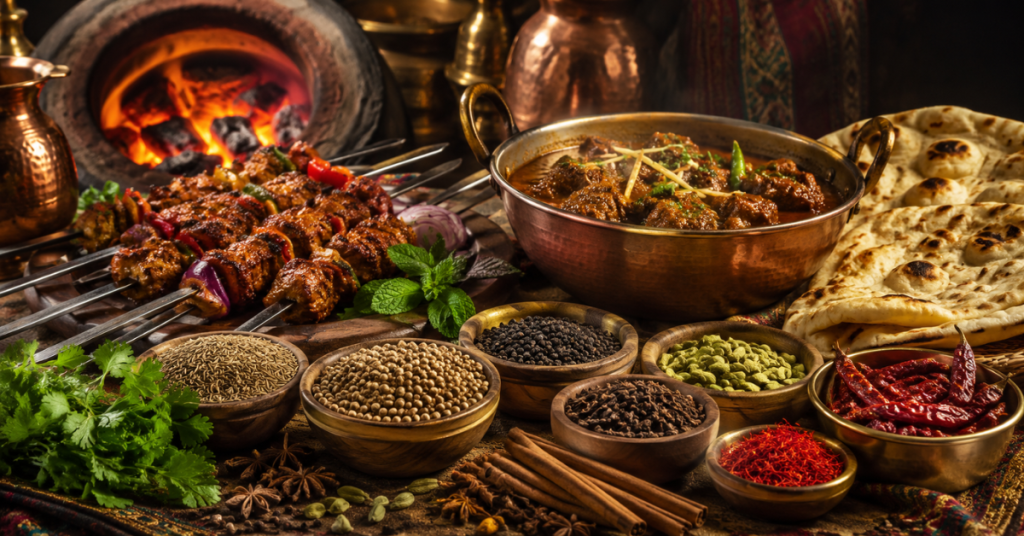
North-West Frontier cooking (from the old NWFP region of Pakistan and bordering Afghanistan) is built on hearty meats, rice and breads but it’s the aromatic spices that give these dishes their soul. Chefs here use whole, fragrant spices cardamoms, cinnamon, cloves and star anise for example to perfume curries and pilafs rather than relying on fiery heat. The result is cuisine that smells rich and complex: think smoky grilled kebabs, warm biryanis and even kahwah tea brewed with saffron and cardamom, all exuding a spice-market aroma. Singapore’s own Bukhara by Legacy honors this tradition its menu is a journey through the rustic charm of the North West Frontier’s culinary heritage” showing that these time-honored spice flavors still captivate diners today.
A Rich Culinary Heritage
The spices of the North-West Frontier reflect centuries of cultural exchange. This was a crossroads of Persian, Afghan and Central Asian trade (the Silk Road ran nearby), so cooks absorbed techniques like slow stewing and aromatic stews. One Hyderabad food writer notes NWFP’s cuisine is rooted in “its history, influenced by Persian, Afghan, and Central Asian” cultures, with “bold flavours, aromatic spices, and hearty ingredients” that echo the region’s rugged past. Even simple meals are stories of hospitality: a communal thali of Painda curry and broken bread honors guests with the scent of cumin and bay leaves in the gravy. In fact, Singapore’s Bukhara brand explicitly draws on this legacy. Its founders trace the restaurant’s philosophy to “the rugged terrains and spirited camaraderie of the North-West Frontier Province,” aiming to capture the frontier campfire spirit in every dish.
Key Aromatic Spices of NW Frontier Cooking
The characteristic fragrance of Frontier dishes comes from a handful of warm, sweet and earthy spices. Famous culinary sources list these common staples in Pakistani (and Pashtun) cuisine:
- Cardamoms (green and black): Sweet, floral pods that scent rice, sweets and especially kahwah tea. In traditional Peshawari green tea, cardamom is simmered with cinnamon and saffron to create a “fragrant, golden” brew.
- Cinnamon & Cloves: Woody, spicy-sweet sticks and buds used in curries and biryanis. They form the backbone of garam masala blends and infuse stews with warm depth.
- Star Anise & Nutmeg: Provide subtle licorice or camphor notes. A pod of star anise or a shard of mace in a slow-cooked lamb curry adds gentle sweetness.
- Cumin & Coriander Seeds: Earthy, nutty seeds toasted or ground. These are everyday workhorses cumin (and sometimes coriander) is tempered in hot oil to flavor dals, pickles and curries.
- Bay Leaves: Fragrant leaves simmered in biryanis and meat dishes. They give an almost floral base note that ties complex flavors together.
- Saffron: The ultimate luxury spice a few threads lend golden color and a honeyed aroma to special rice dishes. (Even in simple meals a pinch of saffron in water or milk can perfuse pilafs.)
- Black Pepper & Dried Red Chillies: Used sparingly. Instead of chili heat, recipes often just add a few peppercorns or green chilies for warmth. As one guide notes, NW Frontier cooks rely on “almost no spices” beyond salt, pepper and cumin so that the smoke and quality of the meat shine through.
Each spice plays a purpose: cinnamon and cardamom add sweet perfume; cloves and black pepper give depth; cumin and coriander provide warmth; and bay leaf and saffron lend complexity. Together they create layers of flavor without overpowering pungency.
Techniques That Bring Out These Aromas
Frontier chefs use several classic methods to coax maximal aroma from their spices:
- Dry-toasting whole spices: Spices like cumin, coriander or fenugreek are gently roasted in a pan (on low heat) until they pop and release oils. The now-crisped spices are then ground to a powder. This toasting step deepens their fragrance before they even hit the pot.
- Infusing fats (tadka): Spices are added early into hot ghee or mustard oil so that they bloom. For example, mustard oil is often heated to smoking point before chicken is seared, then browned onions, garlic and the toasted spice blend are added and stir-fried. This anchors the dish in a spicy aroma from the start.
- Slow “dum” cooking: Rice and meat dishes are frequently sealed in a pot (often with dough around the lid) and cooked on low heat. In a dum biryani or pulao, delicate spices like saffron, star anise and bay leaves infuse every grain. Food writers describe Bannu pulao as “full of aromatic rice” where “each grain was coated with flavours” even though you hardly see the spices themselves.
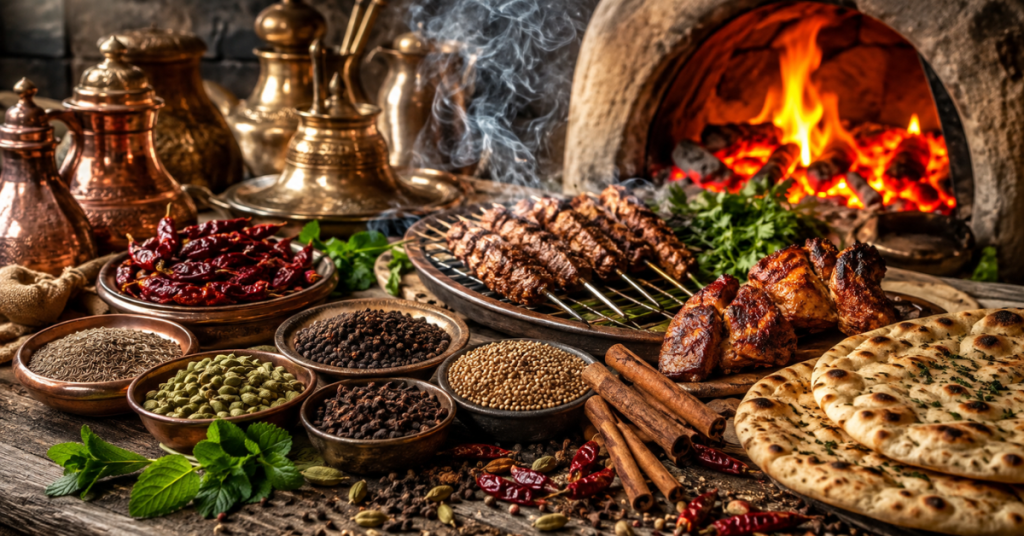
- Grilling over charcoal: Open-fire cooking is non-negotiable in NW frontier tradition. Tandoors and wood grills add a smoky layer that complements the spices. As one festival review notes, the “smoky aroma of grilled kebabs” is a hallmark of the cuisine. Restaurants like Bukhara recreate this by cooking kebabs and meats on charcoal, so the charred scent blends with the warm spices.
- Tea and drink infusion: Even drinks are spiced. Traditional green tea (kahwah) simmers crushed cardamom, cinnamon, cloves (and sometimes saffron or rose) until the water smells like a bazaar. This shows how deeply these aromatics are woven into daily life – not just in food, but in every comforting sip.
By layering these techniques, North-West Frontier cooks ensure every spoonful releases a burst of fragrance. From the first inhale of a simmering pot to the final bite, the cooking process itself is designed to magnify the spices’ natural aromas.
Iconic Dishes and Flavor Profiles
Many signature NW Frontier dishes showcase this spice philosophy:
- Karahi and Grill Favorites: Classic meats (like Karahi Gosht or tandoori fish) are typically cooked with only a few spices usually ginger-garlic, green chilis and minimal ground masala letting the main ingredients shine. For example, a Peshawari Karahi might have ginger, garlic and green peppercorns as highlights, while a simple Namak Gosht uses just salt, black pepper and the lamb’s fat.
- Chapli Kebab: The famed minced-meat patties from Peshawar are “packed with… whole spices” along with cilantro and bits of tomato. They use crushed coriander seeds and pomegranate seeds for fragrance and texture, shallow-fried in meat fat. Despite the name “kebab”, there are usually no heavy gravies – each bite bursts with the aroma of freshly ground coriander, cumin and a hint of green chili.
- Aromatic Pilafs: Feast dishes like Bannu or Kabuli Pulao are all about perfumed rice. One food writer observed that the Bannu Pulao at a festival was “full of aromatic rice” cooked with spices and nuts so that “each grain was coated with flavours… the blend of spices with the nuttiness and sweetness of dry fruits gave it a unique taste.”. In other words, the saffron, cardamom and cinnamon infuse the rice gently, creating a delicate warmth rather than chili heat.
- Lentil and Vegetable Stews: Even humble dishes carry aroma. A Chana Dal cooked the KP way, for example, is described as “cooked with whole spices and a generous hand with ginger warming and deeply aromatic.” You might find bay leaf, cumin or cloves in such dals, providing a fragrant base.
- Kahwah (Green Tea): No discussion is complete without tea. The traditional Peshawari green tea blends green cardamom, cinnamon and saffron, brewing “a fragrant, golden green tea” that makes the kitchen smell like a spice market. Sipping kahwah is a reminder that in NW Frontier culture, the aroma of spices is literally brewed into hospitality.
Each of these dishes relies on aroma as much as or more than, pungency. The spice blends, whether used whole or ground, contribute layers of scent and warmth. As one chef pointedly notes, even a rich biryani’s aromatic masalas not just red chilies are key to its identity.
Aromatic Spices in Singapore’s Culinary Scene
Today the Northwest Frontier’s aromatic approach still captivates food lovers – including in Singapore. Local restaurants like Bukhara by Legacy have built their identity on these very traditions. Bukhara’s menu is explicitly “inspired by the essence of [the Frontier] tradition”: imagine tandoori grills, slow-cooked stews and buttery naans, all seasoned with hand-ground spice blends. Diners at Bukhara taste this in dishes like their Dal Bukhara and Sikandari Raan (charred lamb) – the cinnamon, clove and cumin in the gravy are unmistakable.
The popularity of such places shows how aromatic spices impact business: they offer customers a memorable sensory experience. In a city with many Indian restaurants, highlighting a distinctive spice profile helps eateries stand out. Patrons in Singapore appreciate the “multi-sensory experience” of Frontier cuisine: the warm fragrance of spices becomes part of the ambiance. Even for home cooks and food enthusiasts, buying those spice jars (cardamom pods, Kashmiri chili and all) is a way to taste authentic Frontier flavors locally.
The takeaway: In North-West Frontier cooking, every spice has purpose. It’s not about making your mouth burn, but about making your nose happy. That focus on aroma enriches the food’s character, honors cultural roots, and today continues to influence chefs and diners far beyond the frontier itself.
FAQs
What spices are commonly used in NW Frontier cooking?
Cardamom (green and black), cinnamon, cloves, cumin, coriander, star anise, bay leaf, nutmeg and saffron are staple aromatic spices. Dishes often feature garam masala (a blend of these aromatics) and modest chili for heat.
Are North-West Frontier dishes very spicy (hot)?
Generally no. Pashtun/Frontier cuisine “is traditionally non-spicy”. Cooks prefer subtle warmth from black pepper and minimal chili rather than high heat, letting the meat or vegetables shine.
Why focus on aromatic spices rather than heat?
Aromatic spices add depth and complexity without overwhelming. They enhance mouthfeel and aroma – for example, slow-cooked rice absorbs the scent of cinnamon and cardamom, giving richness without pungency. This suits the Frontier’s heavy meats and communal dining style, where balanced aroma is prized.
What are some classic NW Frontier dishes to try?
Look for dishes like Karahi Gosht or Sikandari Raan (slow-cooked lamb), Peshawari chapli kebab, and rich pulaos (Bannu or Kabuli Pulao). Even dal Bukhara and salt-cooked namkeen gosht are regional favorites. Each uses the signature spices – for instance, chapli kebabs include whole coriander and pomegranate seeds with cumin and pepper.
Where can I taste these flavors in Singapore?
Restaurants like Bukhara by Legacy specialize in North-West Frontier cuisine. They offer tandoori grills, biryanis and breads seasoned with authentic spice blends. You’ll literally smell cardamom and saffron in their biryani and kebabs – a fragrant taste of the frontier right in the city.