
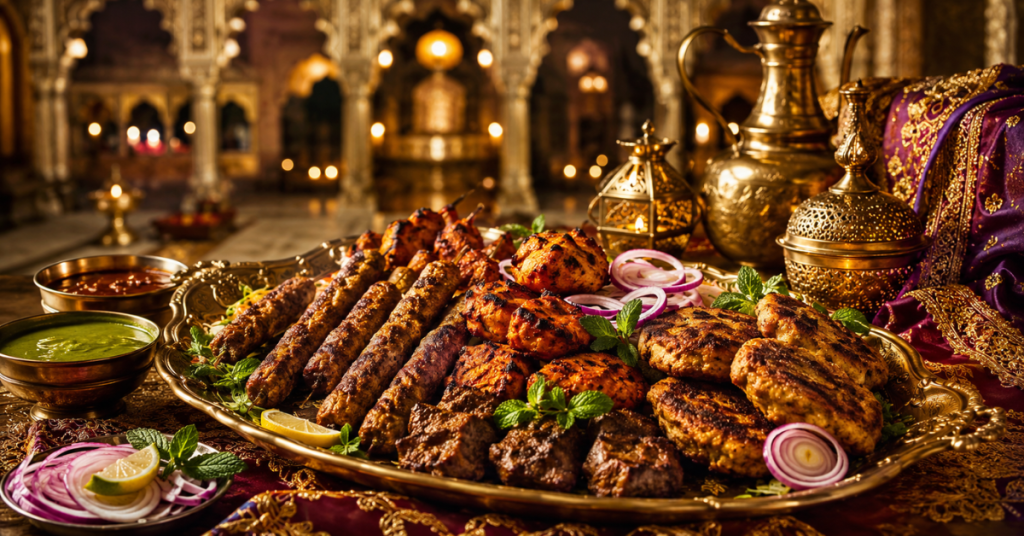
Indian kebabs owe their fame not just to bold flavors but to centuries of royal patronage. In the Mughal era and under India’s princely states, meat dishes were refined into culinary art. Emperors and nawabs (royal governors) brought Persian spices, yogurt marinades, and tandoor ovens to the subcontinent. This Indo-Persian fusion created iconic grilled and skewered meats that became staples of royal banquets. Over time, each region’s court from Lucknow’s nawabs to the Nizams of Hyderabad added its own twist, making kebabs a symbol of regal cuisine. Today, chefs and food lovers celebrate this legacy. As Singapore’s new Bukhara restaurant notes, they serve “an authentic culinary experience inspired by the rich flavors of Indian and Middle Eastern cuisine,” blending aromatic spices with time-honored techniques. Understanding this heritage explains why dishes like Galouti and Kakori kebabs are as much history as they are food.
Mughal Empires: The Birth of Indo-Persian Kebabs
The Mughal emperors (16th–18th centuries) are credited with transforming Indian cuisine. They introduced Persian ingredients and techniques that led to the birth of Indian kebabs. In royal kitchens, chefs began marinating meat with yogurt, ghee (clarified butter), and exotic spices for hours. They also invented the clay oven (tandoor) and its flatbread (naan), providing the ideal method to grill marinated kebabs. Dishes like seekh kebab (minced meat on skewers) were adopted from Central Asian origins and adapted in Mughal India. In fact, historical records note that “the seekh kebab was introduced by the Mughals,” originally made from beef, and cooked over charcoal fires. The Mughal fusion of robust spices and slow-grilling techniques set the foundation for many famous Indian kebabs.
Over time, Mughal recipes mixed with local flavors. Emperor Akbar even invited Hindu cooks to his court, creating a syncretic cuisine. As noted by culinary historians, Akbar’s chefs combined Indian methods with Persian ingredients, giving rise to legendary dishes (murgh mussalam, navratan korma, biryani) and importantly for our topic, ultra-tender kebabs. These royal kitchens prized meat cooked until melt-in-your-mouth tender, a hallmark still associated with Mughal-style kebabs.
Awadhi Innovation: Lucknow’s Nawabi Kebabs
In northern India’s Awadh region (modern-day Lucknow), the Nawabs (governors) of Awadh elevated kebab-making to new heights. The bawarchis and rakabdars (royal chefs) of Awadh developed the slow dum cooking style, simmering meat and rice over low heat in sealed pots. Alongside biryanis and rich curries, they perfected soft kebabs grilled over coals. According to traditional accounts, 18th-century Nawab Asaf-ud-Daula of Lucknow loved meat but had lost his teeth. His court chefs responded by inventing the Galouti Kebab a spiced minced meat patty so tender it “literally melts in the mouth.” They called it “Galouti” (from the local word for melt). (Legend says they even used dozens of spices to achieve the melt-in-mouth texture.)
Galouti kebabs from Lucknow’s royal kitchens are famously soft. According to lore, this “melt-in-the-mouth” lamb kebab was created for toothless Nawab Asaf-ud-Daula, so that the king could enjoy kebabs without chewing.
Likewise, in the 19th century a Nawab of Kakori (a suburb of Lucknow) challenged his chefs to improve the tenderize on seekh kebabs. The result was the Kakori Kebab a lean minced lamb kebab blended with raw mango and papaya to tenderize the meat. When a British guest complained that the seekh kebabs were too tough, Nawab Syed Haider Kazmi’s cooks spent days perfecting a softer version. The secret, they say, was Maliabali mangoes in the spice mix, giving Kakori kebabs their silky texture and delicate flavor. These stories illustrate how Lucknow’s nawabi chefs turned kebabs into royal inventions, prized for fine taste and refinement.
Through the 1800s, Awadhi cuisine’s richness was legendary. Nawab Asaf-ud-Daula himself was praised for bringing a “renaissance in cuisine” to Lucknow. His legacy was a cuisine featuring dozens of kebab recipes from Shami kebabs (lentil-studded patties) to Boti kebabs (marinated lamb cubes) all distinct from, say, Punjabi-style skewers because they were often pan-grilled or cooked on a chula (clay stove) instead of tandoor. In short, Awadhi kitchens made kebabs a symbol of hospitality and artistry.
Regional Royalty: Patiala, Hyderabad and Kashmir
Patiala’s Culinary Legacy
In the Punjab, the Maharajas of Patiala also cultivated a royal food culture. A recovered Patiala royal cookbook (late 19th–early 20th century) shows that Patiala rulers embraced Mughal and Nawabi traditions alongside their Punjabi heritage. The recipe collection begins with dum pukht meats and includes numerous kebabs, alongside curries and sides. Patiala cuisine was known for rich gravies (e.g. dum lamb stews) and kebabs marinated in butter and spices. The menu even notes that the Maharaja enjoyed Murgh Malai (a creamy chicken kebab) and Bhootan kabab (a spicy lamb chop). These dishes reflect Patiala’s luxury-loving legacy: blending Afghan-heritage preferences (they were given their title by an Afghan ruler) with refined Mughal flavors. Bukhara’s own menu nods to this history for example, a Patiala Murgh Tikka (Punjab) is described as “included in the banquets of the Maharaja of Patiala.
Nizami Feast of Hyderabad
In southern India, the Nizams of Hyderabad ruled similarly sumptuous feasts. Their Nizami cuisine fused Persian, Turko-Mughal and local Deccan elements. Traditional Hyderabad tables featured elaborate kebabs and patties served alongside royal biryanis. For instance, Shikampuri Kebab (ground meat stuffed with spiced green paste) and Lukhmi (flaky meat-stuffed pastries) were signature Hyderabadi treats. One food writer notes that Hyderabad’s legacy is built on “velvety Shikampuri kebabs” and “golden, flaky Lukhmis”, dishes once served at Nizam’s royal banquets. Today these terms evoke the elegance of Nizam-era cooking.
Kashmiri Wazwan Feast
Up in the Himalayas, Kashmir’s traditional Wazwan banquet is the ultimate royal meat feast. Introduced from Central Asia about 600 years ago, the wazwan became Kashmir’s signature social meal. Weddings and festivals feature up to 20+ dishes, each prepared by teams of wazas (master chefs). The wazwan’s pride is lamb, and one highlight is Tabak Maaz crispy fried lamb ribs. In this course, fatty ribs are first simmered with spices (cardamom, cinnamon, ginger, etc.) until melting, then briefly fried in ghee to caramelize the exterior while keeping the inside succulent. This “crisp and tender” Tabak Maaz is a classic Kashmiri kebab starter. (An image below shows Tabak Maaz, showcasing its deep-golden finish.) The entire wazwan tradition with its emphasis on premium spices and expert techniques underscores how even Himalayan royalty valued kebabs as culinary art.
Tabak Maaz (Kashmiri fried lamb ribs) is a signature kebab of the traditional wazwan feast. Chefs slow-cook the meat with whole spices until tender, then fry it in ghee to achieve a crispy golden crust and juicy interior.
Signature Royal Kebabs
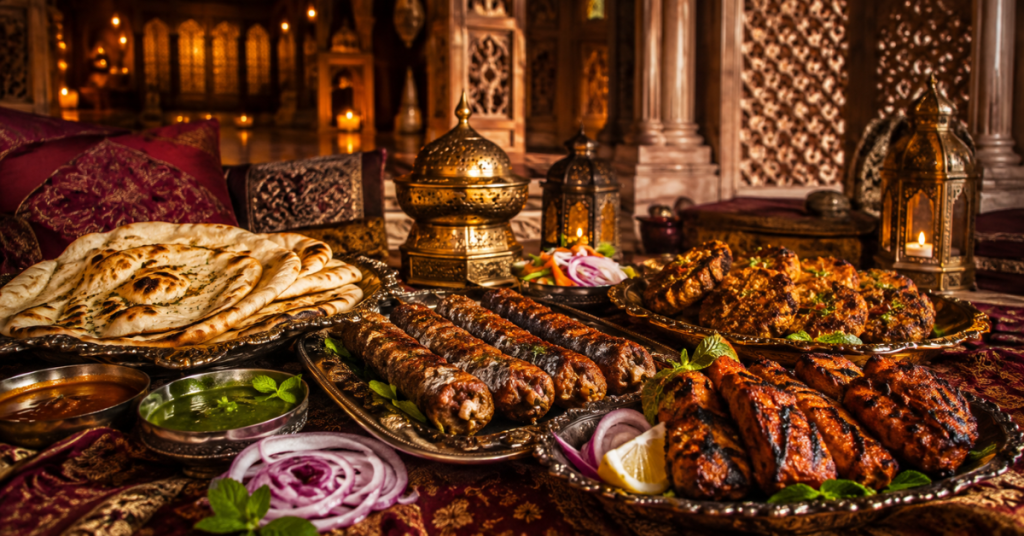
Indian royal cuisine yielded many iconic kebab recipes, some of which remain famous today. For example:
- Galouti Kebab (Lucknow) Literally “melt-in-the-mouth,” this lamb patty was invented for toothless Nawab Asaf-ud-Daula, blending dozens of spices and tenderizers so it needed no chewing.
- Kakori Kebab (Lucknow) A refined lamb seekh kebab from Kakori. Legend says Nawab Haider Kazmi commissioned it after a guest complained about ordinary kebabs. His chefs added raw mango and special spices to make a silky-soft kebab.
- Seekh Kebab (Mughal Delhi) Minced meat skewers introduced by the Mughals, traditionally made with beef mince on skewers over charcoal. (Today lamb is preferred for its tenderness.)
- Sultanate Seekh Kebab (Bengal) A famed Bengali kebab named for the Nawabs (“Sultans”), served with roomali roti. It reflects Persian influence and was a royal favorite in Bengal.
- Murgh Malai Gulzar Kebab (Lucknow) – A creamy chicken kebab from Lucknow, known to have been “a favourite at Nawab feasts”. It combines yogurt, cream, and mild spices for a rich taste.
- Sufiyani Paneer Kebab (Punjab/Mughal) A vegetarian kebab of cottage cheese cubes in three spice marinades. The name and recipe trace back to the Mughal era.
- Tabak Maaz (Kashmir) As described above, this is tender lamb ribs fried to crisp perfection as part of the royal wazwan feast.
Each of these kebabs carries a story of aristocratic origin, whether invented by a nawab’s chefs or documented in a royal kitchen’s recipes. They illustrate how regional courts – Lucknow, Delhi, Bengal, Kashmir – each added their favorite ingredients and techniques to the royal kebab repertoire.
Royal Culinary Techniques
Royal kitchens also developed specialized techniques and ingredients for kebabs. Key features include:
- Long Yogurt Marination Chefs would marinate meats in spiced yogurt and ghee for hours or days, a Mughal innovation that tenderized the meat and infused rich flavor.
- Dum (Slow) Cooking Especially in Awadh, meat was cooked slowly in sealed pots over charcoal, allowing juices to mingle. This dum style made kebabs and biryanis incredibly tender.
- Wood or Charcoal Grilling Kebabs were traditionally cooked over coals or fruitwood fires for smoky flavor (the tandoor is an example of such a grill).
- Fruit Tenderizers Royal chefs in Lucknow introduced raw mango and papaya to kebab spice mixes. These enzymes soften the meat naturally a technique noted in the Kakori legend.
- Luxurious Spices Ingredients like saffron, cardamom, cloves and nuts were often used in royal kebabs. Awadhi fare, for example, is famed for delicate spice blends and saffron-scented dishes.
These methods ensured that royal kebabs were as much about texture and aroma as about heat. The emphasis was on refinement – even a humble kebab became an elegant dish. Today’s chefs who honor this heritage still use long marinades, charcoal grills and even fruit pastes to achieve those classic textures and flavors.
From Royal Courts to Singapore: Modern Legacy
The grand tradition of kebabs continues to influence dining today. In Singapore’s bustling food scene, North Indian restaurants draw on these royal recipes. The new Bukhara Singapore, for instance, explicitly celebrates this lineage. Their chefs crafted menus inspired by Nawabi and Mughal classics, as seen in dishes like Dal Bukhara and Royal Lamb Shank Biryani. The restaurant’s philosophy “authentic flavors inspired by rich Indian and Middle Eastern cuisine” reflects the same blend of cultures that produced these kebabs.
Moreover, storytelling has become part of the dining experience. Menus often mention “Nawab’s recipe” or “Mughal-era kebab,” giving guests insight into the dish’s history. This cultural context adds value: diners appreciate not only the taste but the tale behind it. For chefs and restaurants, highlighting royal heritage can be a unique selling point that connects food with history.
Beyond fine dining, the royal influence survives in home kitchens and street food. In India, popular eateries still serve Kakori and Galouti kebabs by the dozen, and families pass down old marinade secrets through generations. In Singapore, Indian and Muslim communities honor such traditions during festivals (like Eid) when kebabs are staples at feast tables.
As global palates expand, the royal kebab legacy endures through adaptation. Chefs innovate (e.g. by grilling vegetarian kebabs or using new proteins), but the core ideas remain: rich marinades, precise spice blends, and the slow-cooking patience of royal chefs. This living tradition shows that “royal heritage” in Indian kebabs is more than nostalgia – it’s a foundation for continued culinary creativity.
Conclusion
From the Mughal courts of Delhi to the Nawabi feasts of Lucknow and the palaces of Hyderabad and Patiala, royalty has shaped Indian kebabs. These rulers and their chefs invented cooking methods and recipes that made kebabs an art form tender, fragrant and worthy of banquets. Today’s chefs and food lovers benefit from this heritage. When we savor a melt-in-the-mouth Galouti or a saffron-spiced seekh kebab, we are tasting history. For businesses like Bukhara Singapore, drawing on this heritage creates a memorable dining journey. In an age of fast food, these time-honored techniques and stories set these kebabs apart. Looking ahead, preserving such traditions while allowing for new interpretations will keep India’s royal kebab legacy vibrant, intriguing both the palate and the mind.
FAQs
What Mughal influence shaped Indian kebabs?
Mughal emperors introduced marinating meats in yogurt and spices and cooking them in tandoors (clay ovens). These techniques – combining Persian flavors with Indian ingredients – led to the first celebrated kebabs in India.
Why are Lucknow kebabs so famous?
Lucknow’s Nawabs (Awadhi royalty) invested heavily in cuisine. Royal chefs there created iconic kebabs like Galouti and Kakori for their refined taste buds. The city became known for very tender, aromatic kebabs as a point of Nawabi pride.
Can you name some kebabs from royal kitchens?
Yes – for example, Galouti Kebab (Lucknow, made for a toothless Nawab), Kakori Kebab (Lucknow, for a demanding Nawab), Seekh Kebab (introduced by the Mughals), Sultanate Seekh (Bengal), and Tabak Maaz (Kashmiri lamb ribs) are all from royal or aristocratic traditions.
How do modern restaurants keep this tradition alive?
Many North Indian eateries highlight these classic recipes on their menus and even explain the backstory. For instance, Bukhara Singapore offers halal versions of Awadhi and Mughlai dishes, emphasizing “traditional cooking techniques” in a modern setting. Chefs today may update ingredients or cooking methods, but they still follow royal marination and slow-cooking techniques to capture the original flavors.
Are royal kebab recipes relevant to Singaporeans?
Absolutely. Singapore’s diverse food culture includes a fondness for Indian kebabs. Understanding their royal origins adds depth to enjoying these dishes. Restaurants and home cooks in Singapore often use these age-old recipes, adapted to local tastes, so the legacy lives on at dinner tables from Orchard Road to Little India.