
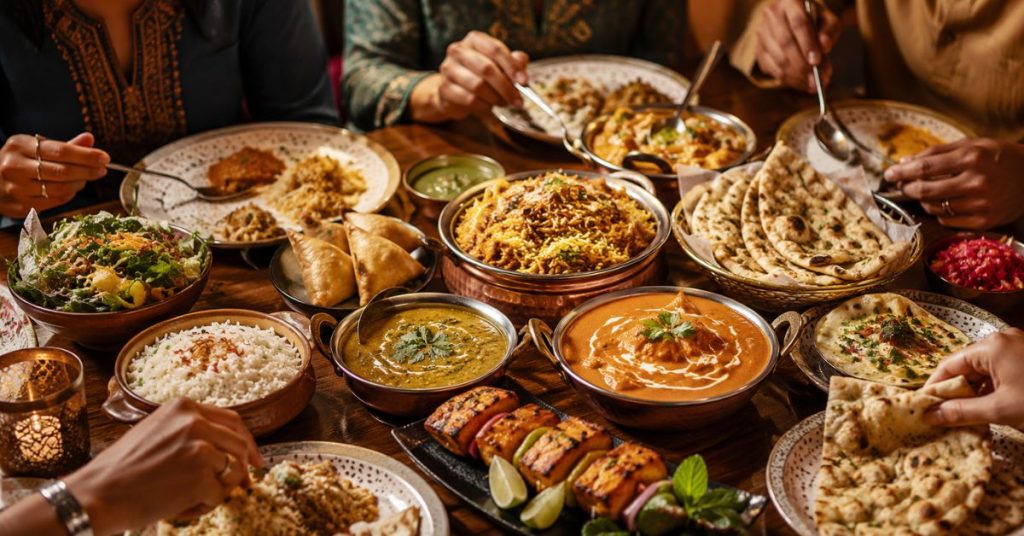
Choosing where to eat with a group sounds simple until everyone starts expressing a preference. One person wants something vegetarian, another prefers grilled meat, someone avoids very spicy food, and someone else would rather sample several dishes than commit to one large main course.
This is where Indian food has a practical advantage. Many dishes are naturally suited to the centre of the table, so a group can share curries, kebabs, rice, breads and accompaniments while each person builds a plate that suits their own appetite. Instead of forcing everyone into the same type of meal, Indian dining allows variety without making the table feel disconnected.
At Bukhara by Legacy in Singapore, that style of eating is especially visible across the restaurant menu, which brings together North-West Frontier-inspired grills, street-food starters, curries, vegetarian dishes, biryanis and tandoor-baked breads. Its dedicated Banquets & Events menu goes a step further by structuring those dishes specifically for sharing.
A Shared Indian Meal Solves the “Everyone Orders Separately” Problem
In many restaurants, six people ordering dinner can effectively result in six separate meals. Everyone chooses an individual starter and main course, eats what is on their own plate and has little reason to interact with anyone else’s food.
A shared Indian meal works differently.
A curry arrives for the table. Rice is passed around. Fresh naan can accompany several dishes rather than belonging to one person. A kebab platter becomes something everyone can taste before the main courses arrive.
More importantly, diners do not have to eat exactly the same combination. Someone might have paneer with naan, another might pair lamb curry with saffron rice, while another focuses on dal and vegetables.
That flexibility makes the meal genuinely communal without requiring everyone to have identical tastes.
One Table Can Accommodate Very Different Preferences
One of the hardest parts of organising a group dinner is finding food that satisfies people with different preferences. Indian menus make that easier because variety exists within the same style of dining.
Vegetarian and Non-Vegetarian Dishes Can Share the Same Table
A group does not have to choose between a “meat restaurant” and a “vegetarian restaurant” simply because its members eat differently.
Bukhara’s current menu, for example, includes vegetarian choices such as Sufiyani Gulnar Paneer, Dal Bukhara, Yellow Dal Tadka, Punjabi Kadhi Pakora, Pindi Chole, Paneer Butter Masala and Palak Paneer. The same table can also choose chicken kebabs, lamb, seafood and other grilled dishes.
Explore the full Bukhara menu before a group dinner and it becomes easier to choose a combination rather than searching for one dish that somehow satisfies everybody.
Everyone Does Not Need the Same Level of Heat
Indian food is often casually described as “spicy”, but spice does not automatically mean intense chilli heat.
A table can combine gentler, richer flavours with more assertive dishes. At Bukhara, for example, Murg Malai Gulzar Kebab offers a creamy style of grilled chicken, while dishes such as butter chicken and dal give the table different flavour profiles from a fiery lamb vindaloo. Raita, rice and breads can provide further contrast.
This is much easier than asking every dish to be adjusted until it somehow suits the most spice-sensitive and most adventurous person at the table.
Indian Food Gives a Group Meal a Natural Rhythm
A good group dinner is not simply about putting enough food on the table. Pacing matters.
Indian dining works particularly well because different categories of food can create a natural progression through the evening.
You might begin with chaat while everyone settles in. Chargrilled kebabs can follow while conversation gets going. Curries, dal, rice and fresh breads then become the substantial centre of the meal, followed by Indian desserts.
Bukhara’s banquet follows exactly this type of progression. It begins with Papdi Chaat, Bhel Chaat, Samosa Chaat and Pani Puri, alongside chicken and lamb kebabs, before moving to shared curries, dal, rice, breads, chutneys and dessert.
For a closer look at why those first shared bites work particularly well socially, Bukhara’s guide to Indian chaat for group meals explains how the different textures and flavours make chaat an engaging way to begin the table.
This progression matters during birthdays, family gatherings and long catch-ups because the meal develops rather than arriving all at once.
Sharing Makes Trying Something New Less Risky
Ordering an unfamiliar dish as your only main course can feel like a gamble. If you do not enjoy it, that decision affects your entire meal.
Group dining changes the calculation.
With several dishes in the centre, a table can keep familiar favourites while adding one or two things people have not tried before. Everyone gets a taste without having to commit to a full individual portion.
That makes Indian food particularly enjoyable for mixed groups containing both experienced diners and people who are relatively new to the cuisine.
At Bukhara, a group familiar with butter chicken might also decide to try the house-speciality Dal Bukhara, which the current menu describes as black lentils slow-cooked over charcoal for 24 hours. Another table might add a Royal Lambshank Biryani or one of the regional kebabs simply because everyone can sample it.
Sharing turns ordering from a series of safe personal decisions into a chance to explore the menu together.
Breads, Rice and Accompaniments Let Each Person Build Their Own Plate
The supporting dishes are one of the most useful parts of Indian group dining.
Curries may attract most of the attention, but breads, rice, raita and chutneys give individual diners control over how they enjoy them. The same curry can feel different with soft naan than with fragrant basmati rice, while a cooling spoonful of raita can change the balance of a hotter dish.
A well-rounded group order can therefore include:
- A few contrasting starters: chaat and grilled kebabs provide very different textures and flavours.
- A combination of curries: include different proteins or a vegetarian dish rather than ordering several similar gravies.
- Dal or another vegetable dish: useful as both a main choice and a complement to richer dishes.
- Rice and tandoor breads: offer both rather than forcing everyone to choose one carbohydrate.
- Raita and chutneys: small additions that help diners personalise each mouthful.
- One or two desserts for the table: sharing dessert keeps the communal style going through the final course.
Bukhara’s menu includes plain, garlic and butter naan, tandoori roti, laccha paratha and a mixed bread basket alongside steamed, saffron and jeera rice.
Group Ordering Can Actually Become Easier as the Table Gets Bigger
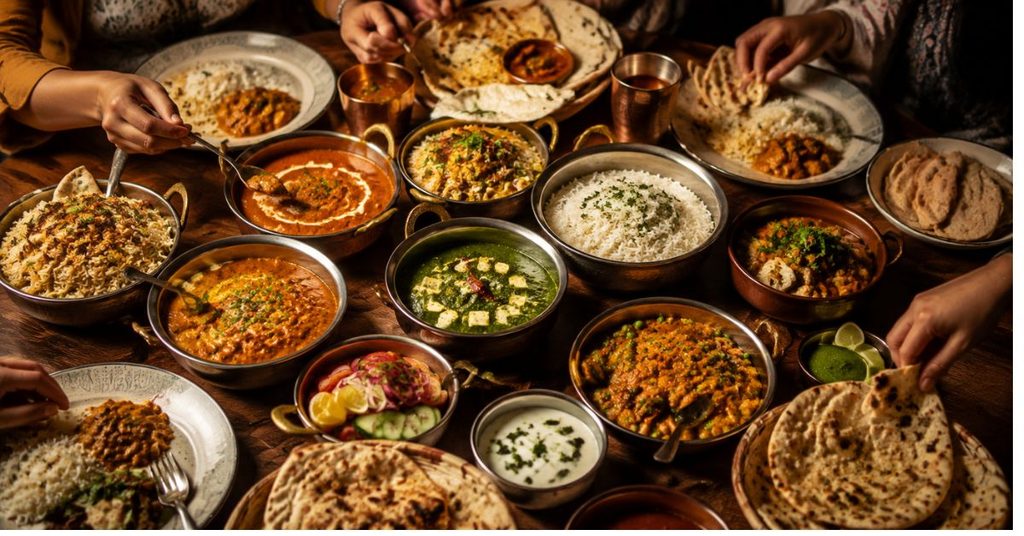
A large menu can sometimes create too many decisions for a big table. The solution is not necessarily to order less variety; it is to use a structure that scales with the group.
Bukhara’s banquet is a good example. The current menu is priced at $45.90++ per person and is recommended for two or more guests. The number of curry selections increases with the size of the table: two or three guests choose two curries, groups of four to six choose four, while groups of seven or more can choose six. Accompaniments such as dal, rice, bread, chutneys, raita and papadums are included.
The practical benefits for a group are straightforward:
- 2–3 diners: enough choice for contrast without filling the table unnecessarily.
- 4–6 diners: more curries allow different preferences to be represented.
- 7+ diners: the table can explore a much wider portion of the curry menu while everyone continues sharing the same meal.
For celebrations or dinners where nobody wants responsibility for coordinating a complicated à la carte order, the Bukhara banquet menu removes much of that friction.
Indian Food Works for Different Types of Group Occasions
The same sharing format can work surprisingly well across very different social situations.
For a family celebration, shared dishes allow different generations to choose what they enjoy without everyone needing a separate meal.
For a dinner with friends, ordering several dishes encourages tasting, comparing favourites and discovering something new.
For a corporate meal, a well-planned shared menu can reduce the long process of every person studying the menu and placing an individual multi-course order.
For a birthday or anniversary, multiple dishes arriving through the evening create a sense of abundance and occasion that an individual main course often cannot reproduce.
Drinks can follow the same flexible approach. Bukhara’s drinks menu includes options ranging from juices and soft drinks to house drinks and yoghurt-based Doogh, giving a group additional choices without requiring everyone to order the same thing.
Why Bukhara Is Particularly Suited to Group Dining in Singapore
Indian food provides the format, but the restaurant still needs to make that format easy to use.
Bukhara’s advantage for groups is that sharing is already built into its offering. Its North-West Frontier-inspired menu combines grills, curries, dal, biryanis and tandoor breads, while the banquet provides a ready-made progression from chaat and kebabs through curries and accompaniments to dessert.
That makes it possible to choose between two approaches: build your own shared meal from the à la carte menu or use the banquet structure when simplicity matters more.
Conclusion: The Best Group Meals Give People Choice Without Separating Them
Indian food works so well for group dining because sharing does not require compromise.
One diner can choose paneer while another reaches for lamb. Someone who enjoys chilli can explore a hotter curry while another stays with creamy kebabs, dal, rice and raita. Familiar favourites can sit beside dishes the group has never tried before. And because breads, rice, starters, curries and accompaniments are meant to work together, the entire table still feels like it is having one meal.
That combination of variety, flexibility, sharing and natural course progression is what makes Indian food particularly effective for families, friends, colleagues and celebrations.
As group dining continues to bring together people with increasingly different tastes and preferences, restaurants that can offer choice without fragmenting the experience will have a clear advantage. Indian cuisine already has that flexibility built into the table.
FAQs
Why is Indian food good for large groups?
Indian food makes it easy to order several dishes for the centre of the table. Guests can share curries, kebabs, rice and breads while choosing the combinations that suit their own preferences.
What should a group order at an Indian restaurant?
A balanced order usually combines starters or kebabs, a few contrasting curries, at least one vegetarian or dal dish, rice, breads, raita or chutneys, and dessert.
Is Indian food suitable for people with different spice preferences?
Yes. Indian food does not have one fixed level of heat. A group can combine mild or creamy dishes with stronger, chilli-forward options and use rice, breads and raita for balance.
Does Bukhara Singapore offer a group dining menu?
Yes. Bukhara currently offers a banquet designed for sharing from two guests onward, with starters, curry selections, accompaniments and dessert for $45.90++ per person.