
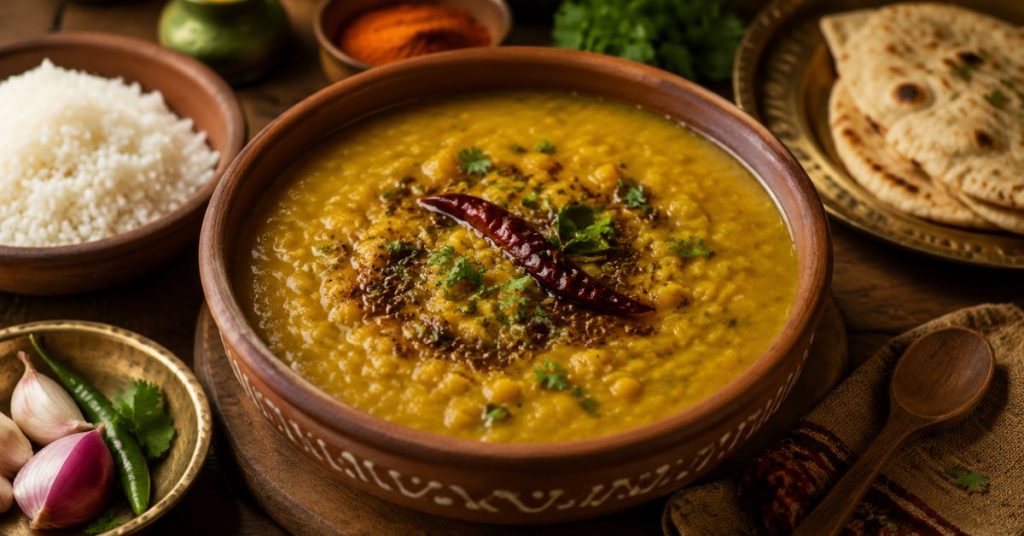
Some dishes impress through complexity. Others stay with us because they make eating feel simple, warm and deeply satisfying. Slow-cooked dal belongs firmly in the second category.
A well-made black dal does not rely on aggressive spice or elaborate presentation. Its appeal comes from patience: whole lentils simmer until their texture softens, the cooking liquid becomes naturally creamy, spices settle into the background, and butter or cream rounds everything into a rich but familiar bowl of food.
That transformation is why slow-cooked dal continues to hold its place at Indian dining tables and restaurants generations after generations. At Bukhara Singapore the difference is especially clear in Dal Bukhara, a house speciality made from whole black lentils that are slow-cooked over charcoal for 24 hours before being finished with spices, cream and churned white butter.
It is not simply dal that happens to cook for a long time. The long cooking is what creates its character.
Slow Cooking Gives Dal Its Signature Comforting Texture
The first reason slow-cooked dal feels different is texture.
Whole black lentils retain their skins during cooking, so they do not immediately disappear into the pot. Given enough gentle heat, however, their centres gradually become tender while some of the lentils begin to break down. The liquid thickens naturally around them.
The result sits somewhere between a stew and a creamy curry: substantial enough to scoop up with bread, but soft enough to settle around rice.
Time Creates Creaminess Without Turning the Dal Into a Purée
A good slow-cooked dal should still remind you that you are eating lentils. The grains become exceptionally soft, but the dish should not taste like a completely blended soup.
Long, gentle cooking creates this balance.
As the lentils soften, they gradually release starch into the surrounding liquid. Regular stirring encourages some lentils to break down while others remain intact. That combination produces the velvety consistency associated with excellent black dal.
Butter and cream enrich the final texture, but they are not doing all the work. Much of that luxurious body has already been created by the lentils themselves.
Charcoal and Time Build Flavour That Cannot Be Rushed
Cooking dal quickly can certainly produce a satisfying meal. But extended cooking develops a different flavour altogether.
Instead of tasting individual ingredients one after another—lentil, tomato, spice, butter—the flavours begin to merge. Sharp edges soften. Earthy notes become deeper. The seasoning becomes part of the dal rather than something sitting on top of it.
At Bukhara, the house Dal Bukhara is cooked over charcoal for 24 hours. That combination of slow heat and live-fire cooking gives the dish time to develop depth before cream and churned white butter are added at the finish.
For diners, the important difference is not simply “smokiness.” Proper charcoal cooking should not make every spoonful taste burnt or heavily smoked. Instead, it adds a subtle roasted character underneath the lentils, complementing their naturally earthy flavour.
The Best Slow-Cooked Dal Is Rich Without Depending on Heat
Indian food is sometimes reduced to a question of how spicy it is. Slow-cooked dal shows why that is an incomplete way to understand the cuisine.
Its depth does not require overwhelming chilli.
Long cooking allows spices to infuse gradually, creating warmth and aroma rather than one sharp burst of seasoning. The natural earthiness of whole black lentils remains central, while tomato, spices and dairy provide contrast.
Butter and cream also perform an important balancing role. They soften acidity and heat while giving aromatic spices a smoother, longer finish.
That restraint is part of the dish’s comforting nature. You do not have to fight through intense spice to find its flavour. Each spoonful is mellow, savoury and rounded.
Slow-Cooked Dal and Dal Tadka Offer Different Kinds of Comfort
Not every dal needs to simmer all day, and that is precisely what makes India’s dal traditions so varied.
Bukhara’s menu provides a useful comparison. Alongside the 24-hour Dal Bukhara, it offers Yellow Dal Tadka, prepared with masoor, toor and moong dal and finished with traditional tempering.
The two dishes satisfy in different ways.
Yellow dal tadka gets much of its personality from the final tempering, which brings freshly heated spices and aromatics to the foreground. Slow-cooked black dal works almost in reverse: its character comes from allowing flavours to settle together over many hours.
Choose slow-cooked black dal when you want:
- A thick, velvety and substantial texture
- Deep, mellow flavours rather than sharp seasoning
- A rich vegetarian centrepiece for a shared meal
- Something particularly satisfying with tandoor-baked bread or rice
Neither style needs to replace the other. The long-cooked version simply delivers a distinctive kind of warmth that is difficult to reproduce with a faster preparation.
The Right Accompaniments Make Dal Even More Comforting
Part of dal’s enduring appeal comes from the way it interacts with other food on the table.
It rarely demands to be eaten in only one way. You can tear off bread and drag it through the thick sauce, spoon dal over rice, or alternate it with grilled dishes and cooling accompaniments.
For a balanced meal, slow-cooked black dal works especially well with:
- Plain, butter or garlic naan: Soft tandoor bread collects the thick dal beautifully.
- Tandoori roti or laccha paratha: Their firmer texture provides contrast to the creamy lentils.
- Jeera rice: Cumin-tempered basmati adds fragrance without competing with the dal.
- Steamed or saffron rice: Both let the richness of the lentils remain the focus.
- Raita or a fresh salad: Something cool and fresh provides contrast between richer bites.
These are not random pairings. They work because the dal provides softness and richness while breads, rice and fresh accompaniments change the texture and rhythm of the meal. All of these styles of accompaniments are represented across Bukhara’s current menu.
Dal Feels Most Natural at the Centre of a Shared Table
Comfort food is about more than ingredients. It is also about how a dish is eaten.
A pot of dal naturally encourages sharing. Nobody needs an elaborate explanation of how to approach it. It can sit in the middle of a table while everyone combines it differently with breads, rice, curries or kebabs.
That makes dal particularly suited to family dinners and group meals.
Bukhara’s own banquet dining menu reflects this role. Its shared meal format includes a choice of yellow or black dal together with rice, breads and other accompaniments.
There is something important in that simplicity. Even when surrounded by elaborate kebabs, curries and biryanis, dal often acts as the dish diners return to between richer or spicier bites.
It anchors the table.
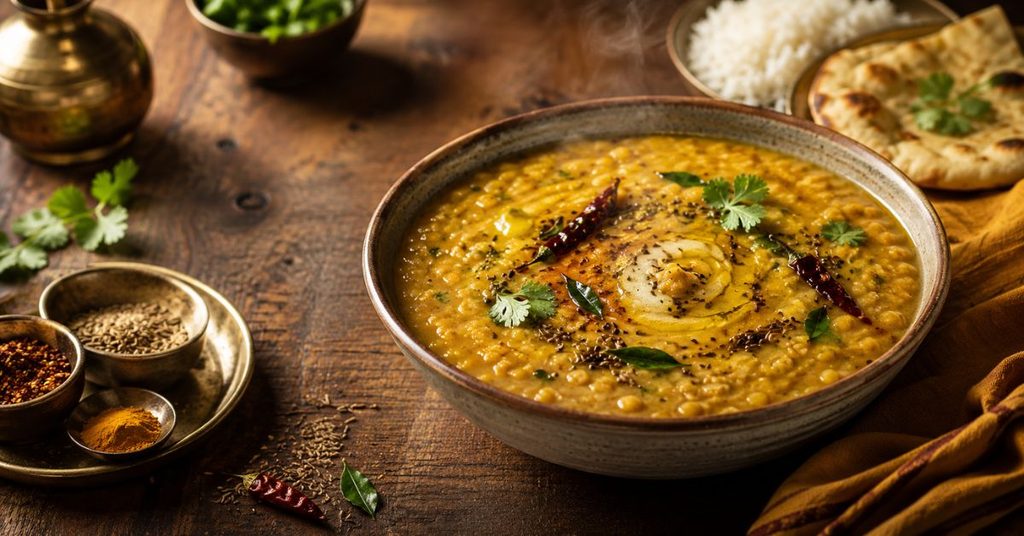
Why Whole Black Lentils Are Particularly Suited to Long Cooking
Whole black lentils have qualities that reward patience.
Because the outer skin remains intact, they can withstand prolonged cooking without immediately turning into a completely smooth mixture. At the same time, the creamy interior gradually softens and contributes body to the sauce.
That means the cook can continue developing flavour without sacrificing texture too early.
The long cooking time also gives the lentils an opportunity to absorb surrounding flavours rather than merely being coated in sauce. By the end, the seasoning and the dal should taste inseparable.
This is one reason black lentil preparations became such enduring restaurant dishes within Punjabi and North Indian food culture. Modern dal makhani is closely associated with whole black urad, slow cooking and a buttery finish, a style that became widely popular through Delhi’s restaurant tradition after Partition.
Why Slow-Cooked Dal Still Matters in Singapore
Singapore diners have access to an extraordinary range of cuisines and dining styles. In that environment, traditional cooking techniques remain valuable precisely because they offer something that cannot easily be manufactured through presentation alone.
A dish cooked patiently for many hours tastes fundamentally different from one assembled quickly before service.
That makes slow-cooked dal especially relevant for a restaurant built around North-West Frontier flavours. Bukhara describes its cooking through slow-cooked specialities, fragrant spices and tandoor-fired breads an approach where technique carries as much importance as the ingredient list.
For diners, that means Dal Bukhara can play several roles at once. It is a substantial vegetarian main course, a companion to grilled dishes, an easy dish for groups to share and, above all, something reassuringly familiar.
The setting may be Singapore, but the pleasure behind the dish is universal: warm lentils, bread or rice, a shared table and food given enough time to taste complete.
Slow Cooking Is Why This Dal Never Feels Outdated
Food trends change quickly. Slow-cooked dal has very little need to follow them.
Its appeal is built around qualities that remain desirable regardless of what happens to be fashionable: warmth, texture, generosity, aroma and the satisfaction of eating something prepared with patience.
A 24-hour dal does not need unnecessary embellishment to prove that work went into it. You taste the effort in its consistency. You notice it in the way the lentils, seasoning, butter and gentle smokiness have become one flavour rather than several separate ingredients.
That is why slow-cooked dal remains a timeless Indian comfort food. Its strength is not novelty. Its strength is that every generation can sit down, tear a piece of bread, take a spoonful and immediately understand why people continue cooking it this way.
FAQs
Why does slow-cooked dal taste better?
Extended gentle cooking allows the lentils to soften gradually, naturally thicken the sauce and absorb surrounding spices. The flavours become deeper and more integrated than in a quickly cooked preparation.
Is Dal Bukhara the same as dal makhani?
They belong to the same broad tradition of rich, slow-cooked black lentil dishes, although recipes and techniques vary by restaurant. Bukhara Singapore’s Dal Bukhara uses whole black lentils slow-cooked over charcoal for 24 hours and finished with spices, cream and churned white butter.
What should I eat with slow-cooked black dal?
Naan, tandoori roti, laccha paratha, jeera rice and steamed basmati rice all pair well with it. A fresh salad or raita can provide a cooling contrast.
Is Dal Bukhara vegetarian?
Yes. Bukhara lists Dal Bukhara in the vegetarian section of its menu. Because the dish is finished with cream and butter, however, it is not vegan as currently described.