
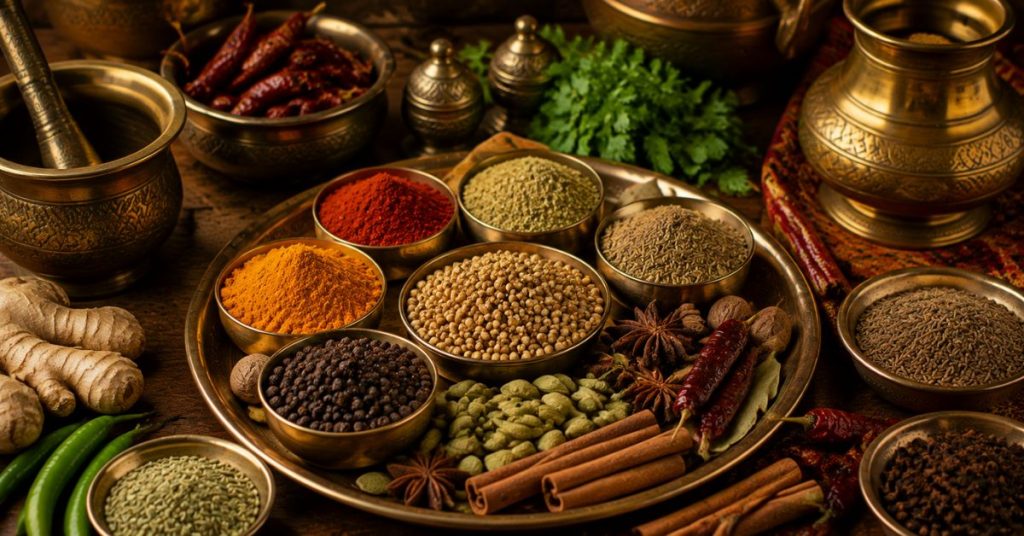
North Indian food is sometimes described simply as “rich” or “spicy”, but that misses what makes the cuisine distinctive. Two dishes may begin with similar ingredients: onion, tomato, yoghurt, lentils or meat yet taste completely different because the spices are selected, treated and added at different stages of cooking.
That distinction matters. Cumin toasted in hot ghee behaves differently from cumin simmered in a gravy. Green cardamom adds a fragrant lift, while black cardamom gives a slow-cooked dish a deeper, smokier character. Dried fenugreek added near the end of cooking creates an aroma that cannot be achieved by simply adding more chilli.
Understanding these essential spices therefore offers a better way to appreciate North Indian cuisine: not as food built around heat, but as cooking built around layers of warmth, fragrance, earthiness, tang and smoke.
At Bukhara Singapore, this approach is particularly relevant because the cuisine draws strongly on North-West Frontier traditions, including tandoor cooking, kebabs, slow-cooked lentils, curries and aromatic rice dishes.
The Foundation: Cumin, Coriander and Turmeric
Many North Indian dishes start with a relatively small group of dependable spices. What changes from recipe to recipe is their proportion and treatment.
Cumin: Warmth That Starts at the Bottom
Cumin, or jeera, is one of the most useful foundation spices in North Indian cooking. Its naturally warm, slightly bitter character becomes noticeably nuttier once toasted.
Whole cumin seeds are commonly allowed to sizzle in hot oil or ghee at the beginning of cooking. That first contact with fat releases aroma before onions, vegetables, lentils or rice enter the pan. Ground cumin can then be used later to reinforce the earthy flavour of a masala.
This versatility explains why cumin appears comfortably in everything from curries to rice. On Bukhara’s North Indian restaurant menu, Jeera Rice is built around cumin-tempered basmati, while Punjab Da Pindi Chole combines roasted cumin with coriander and dried mango powder.
Coriander: The Spice That Gives Masala Its Body
Coriander seed is less aggressive than cumin. Its fragrance is gentler and slightly citrusy, making it particularly valuable when a curry needs depth without becoming heavy.
Rather than dominating a dish, coriander often acts as a bridge between stronger ingredients. It works comfortably with cumin, chilli, ginger, garlic and turmeric, which is one reason the cumin-coriander combination appears so frequently in North Indian gravies and legume dishes. The seed and fresh leaves are both used for flavouring, although they contribute very different aromas.
When coriander is roasted before grinding, its flavour becomes warmer and rounder—ideal for dishes such as chole where the masala needs to remain noticeable even after lengthy cooking.
Turmeric: More Than the Yellow Colour
Turmeric, or haldi, certainly gives many dishes their familiar golden tone, but treating it purely as colouring misses its culinary purpose. Its earthy, slightly bitter flavour helps connect ingredients in a cooked masala, particularly when used alongside coriander and chilli.
It is generally added early enough to cook into the base rather than being sprinkled over a finished dish. This matters because raw turmeric can taste dusty and harsh. Once it has been cooked with fat, onion, tomato or yoghurt, its character becomes much more integrated. The Spices Board of India similarly identifies turmeric as both a flavouring and colouring ingredient.
Chilli Is About Heat, but Also About Balance and Colour
Red chilli has an obvious role in North Indian cooking, but good cooking rarely aims to make every dish equally hot.
Different chillies can be used for different effects. A milder red chilli may contribute colour and a warm background flavour, while a hotter variety provides the sharper heat required by a more assertive curry.
This distinction is especially important in restaurant cooking. A butter-rich tomato gravy, for example, needs enough chilli to prevent the dish from becoming cloying, but excessive heat would hide the dairy, tomato and aromatic spices that give the sauce its character.
The objective is therefore not simply more chilli = more flavour. Chilli should make the other flavours easier to notice rather than competing with them.
Cardamom, Cloves and Cinnamon Create the Aromatic Layer
If cumin and coriander form the foundation of many North Indian dishes, the next group provides something different: perfume.
Cardamom, cloves and cinnamon or cassia are especially important in biryanis, meat dishes, rich gravies and garam masala. They are powerful enough that only modest amounts are normally required.
Green and Black Cardamom Do Different Jobs
Green cardamom has a highly fragrant character and can cross comfortably between savoury dishes and desserts. The Spices Board describes it as prized for its distinctive aroma and taste.
Black cardamom is a different ingredient altogether. Its deeper, smoky quality is particularly suited to savoury food, slow-cooked meat and aromatic rice. It should not simply be substituted one-for-one for green cardamom.
That difference is useful when understanding North Indian cooking: aromatic does not necessarily mean delicate. A green cardamom pod can brighten a preparation, while black cardamom can sit underneath a lamb curry or biryani and give it a heavier, more savoury backbone.
Cloves and Cinnamon Bring Warmth Without Chilli Heat
Cloves are intensely fragrant, slightly sweet and almost numbing when used heavily. Cinnamon and cassia offer a rounder woody sweetness.
Together, they help create the warming impression associated with many slow-cooked North Indian dishes. This “warmth” is different from chilli heat. A curry can be deeply spiced with cardamom, cinnamon and cloves while remaining relatively mild on the tongue.
The same aromatic family plays an important role in traditional kebabs and royal cooking. Bukhara’s guide to the heritage of traditional Indian kebab recipes notes the use of spices such as saffron, cardamom and cloves alongside slow cooking, marination and charcoal grilling.
Garam Masala Is a Finishing Strategy, Not One Fixed Recipe
Garam masala deserves separate attention because it is commonly mistaken for a single spice.
It is actually a blend, and there is no one universal formula. Cardamom, cinnamon, cloves, cumin, coriander and black pepper are among the ingredients that may appear in North Indian versions.
More importantly, garam masala serves a different purpose from a basic curry powder. It is often used to create aromatic warmth rather than bulk up a sauce.
That is why adding a large quantity early in cooking can be counterproductive. Extended heat can flatten some of its more volatile aromas. A smaller amount added towards the end may have a greater sensory effect.
This is one of the recurring lessons of North Indian cooking: the timing of a spice can matter as much as the amount.
Kasuri Methi Gives Rich Gravies Their Recognisable Finish
One of the easiest flavours to recognise but hardest to identify in restaurant-style North Indian gravies is kasuri methi dried fenugreek leaves.
Its character is earthy, slightly bitter and deeply aromatic. Traditionally associated with Kasur, the dried leaves have become closely linked with dishes including butter chicken and paneer butter masala.
Kasuri methi is normally treated more like a finishing herb than a base spice. Crushing the dried leaves between the palms just before adding them releases their fragrance.
That small addition is particularly effective in creamy tomato gravies because its faint bitterness counters butter and cream. Without it, a rich sauce can taste smooth but one-dimensional; with it, the aroma becomes noticeably more complex.
Amchur and Hing Solve Two Very Different Flavour Problems
Not every essential North Indian spice is about warmth.
Amchur Adds Acidity Without Adding Liquid
Amchur, or dried mango powder, brings a dry, fruity sourness. This makes it valuable in dishes where acidity is needed but additional lemon juice, yoghurt or tomato would alter the texture.
Chickpea preparations are a good example. Bukhara’s Punjab Da Pindi Chole uses roasted cumin, coriander and dried mango powder, while its Bhel Puri also incorporates dry mango spice.
Amchur demonstrates how North Indian cooking balances richness: sourness can be just as important as chilli.
Hing Gives Lentils and Vegetables Savoury Depth
Asafoetida, commonly called hing, has an extremely powerful aroma in its uncooked state. Once a small amount is heated in oil or ghee, however, its character changes dramatically and contributes a deep savoury quality.
The ingredient is traditionally used in curries, sauces and pickles, and its intensity means restraint is essential.
Hing is particularly useful in dals and vegetable dishes. It proves that a spice does not need to be visible or even identifiable on its own to change the overall flavour of a dish.
Saffron Belongs to the More Luxurious Side of North Indian Cooking
Saffron is important, but it should not be presented as an everyday foundation spice in the same way as cumin or coriander.
Its strength lies in delicate aroma and colour, which makes it especially suitable for biryani, rich rice preparations, festive dishes and desserts influenced by Mughal and royal cooking traditions.
Bukhara’s menu reflects this more specialised role through Saffron Rice, Royal Lambshank Biryani seasoned with saffron and Kesari Rasmalai.
Because saffron is subtle, adding more strongly flavoured spices is not always an improvement. In a well-made biryani, the aim is for saffron to remain noticeable among basmati rice, meat and whole spices rather than disappearing underneath an overpowering masala.
How North Indian Cooking Gets More Flavour From the Same Spices
Owning the right spices is only half the story. Technique determines what those spices actually taste like on the plate.
Four methods are especially important:
- Tempering: Whole spices such as cumin are briefly heated in oil or ghee so their aromatic compounds flavour the cooking fat. In dishes such as dal tadka, this seasoned fat can transform an otherwise simple lentil preparation.
- Dry roasting: Cumin, coriander and other whole spices can be gently roasted before grinding. This creates deeper, nuttier notes and is particularly useful in robust masalas.
- Cooking spices into the masala: Ground turmeric, coriander and chilli need time with onion, tomato, yoghurt or fat. Proper cooking removes their raw, dusty character and allows the flavours to merge.
- Finishing: Garam masala and crushed kasuri methi are often most effective late in cooking, when their aroma can remain prominent rather than being cooked away.
A Practical North Indian Spice Shelf
For someone who wants a focused collection rather than dozens of rarely used jars, a versatile North Indian pantry can begin with:
- Cumin seeds and ground cumin for tempering, rice and earthy curry bases.
- Coriander seeds or powder for body and gentle citrus-like warmth.
- Turmeric for earthiness and colour.
- Red chilli powder for controlled heat and colour.
- Green cardamom for fragrant curries, rice and desserts.
- Black cardamom for meat, biryani and slow-cooked dishes.
- Cloves and cinnamon/cassia for whole-spice infusions and warming masalas.
- Garam masala for late-stage aromatic depth.
- Kasuri methi for the distinctive finish of rich North Indian gravies.
- Amchur and hing for sourness and savoury complexity respectively.
What matters more than collecting an enormous number of spices is keeping a smaller selection fresh and understanding when to use each one.
The Real Secret Is Balance Not Quantity
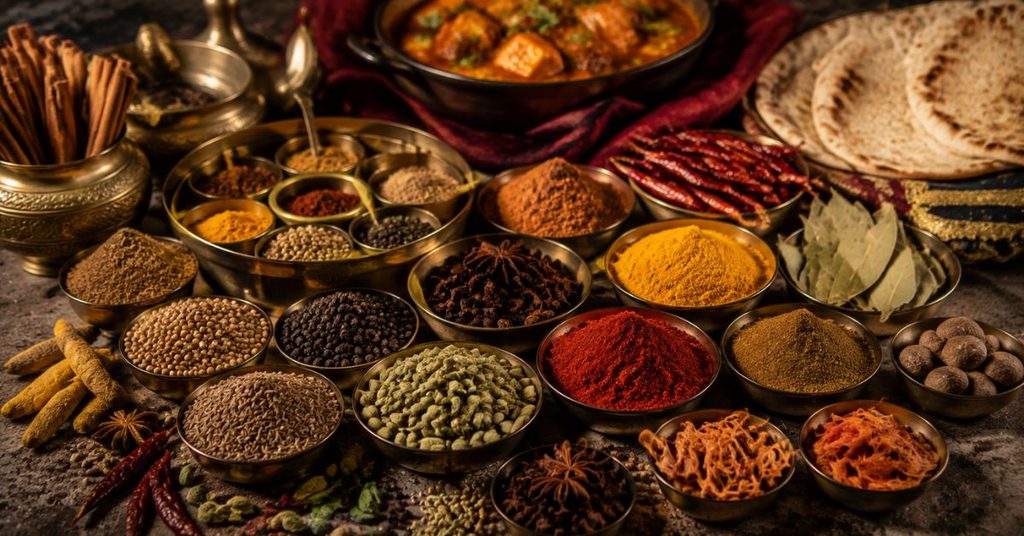
The essential spices behind North Indian cuisine work because they perform different jobs. Cumin and coriander establish the foundation. Turmeric provides earthiness. Chilli controls heat and colour. Cardamom, cinnamon and cloves create aroma. Kasuri methi adds an unmistakable finishing note, while amchur brings acidity and hing adds savoury depth.
None of these ingredients needs to dominate.
That is ultimately what separates thoughtful North Indian cooking from food that simply tastes of “masala”. The best dishes reveal their flavours gradually: perhaps smoke from the tandoor first, followed by tang, warm spices and finally the lingering aroma of cardamom or fenugreek.
Bukhara’s menu demonstrates this range through cumin-tempered rice, spice-layered chickpeas, dal finished with tempering, whole-spice curries, tandoori kebabs and saffron-scented biryanis. As North Indian cuisine continues to evolve in Singapore and beyond, ingredients may be presented in new ways, but this discipline of balancing spices, technique and timing will remain at the heart of its identity.
FAQs
What are the most important spices in North Indian cuisine?
Cumin, coriander, turmeric, red chilli, cardamom, cloves, cinnamon, black pepper and garam masala form a strong core. Kasuri methi, amchur and hing are also important for specific dishes.
Is garam masala the same as curry powder?
No. Garam masala is an aromatic spice blend whose recipe varies by cook and region. It is often added in smaller quantities to provide warmth and fragrance rather than serving as the entire spice base.
Why is cumin so common in North Indian food?
Cumin works in several forms. Whole seeds can be tempered in oil or ghee, ground cumin can deepen curries, and roasted cumin can add a nuttier flavour to dishes such as chole and raita.
What gives North Indian curries their restaurant-style aroma?
There is rarely one ingredient responsible. Whole spices, properly cooked masala, garam masala and finishing ingredients such as kasuri methi work together. Cooking technique is just as important as the spice blend.