
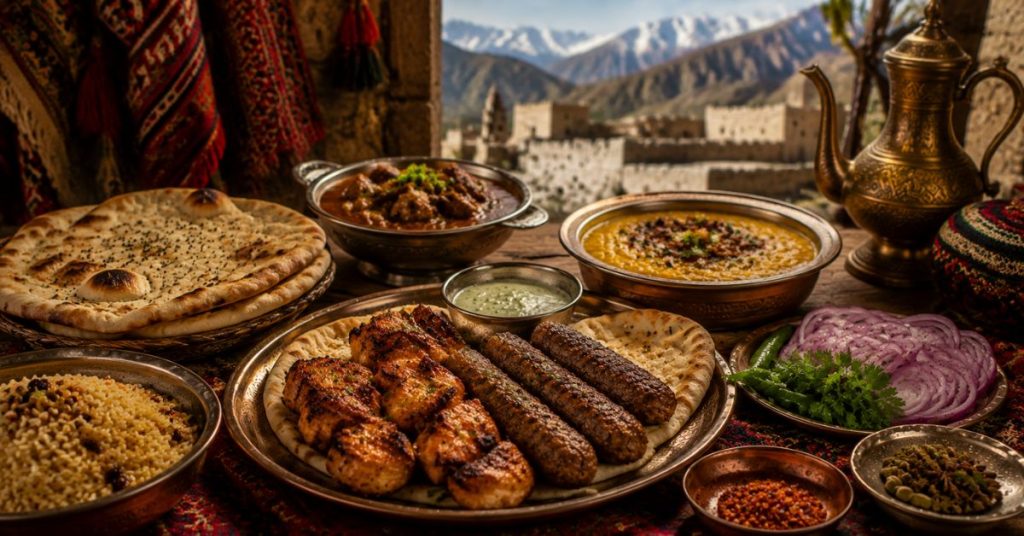
North West Frontier food is often reduced to a few familiar ideas: smoky kebabs, rich curries and bread straight from the tandoor. That description is not wrong, but it misses what makes the cuisine distinctive. Its character comes from a particular landscape, centuries of movement between South Asia and Afghanistan, a preference for fire and slow cooking and a style of hospitality in which food is meant to be shared.
Understanding that background changes the way you experience the cuisine. A simply seasoned piece of grilled meat no longer seems plain; the restraint is intentional. A bowl of slowly cooked lentils makes more sense beside hot naan. Even the aroma of charcoal, cardamom or cumin becomes part of a larger culinary story.
What Does “North West Frontier” Mean in Food?
The name has a specific historical context. The former North-West Frontier Province was a region on the north-western edge of the Indian subcontinent, bordering Afghanistan. In 2010, Pakistan’s constitutional changes replaced the provincial name with Khyber Pakhtunkhwa.
The cuisine, of course, is much older than the administrative name.
Peshawar and the surrounding frontier stood close to important routes connecting the subcontinent with Afghanistan and areas farther into Central Asia. Historical accounts describe Afghan merchants travelling through Peshawar from places including Kabul, Bukhara and Samarkand. This constant movement helped make the region a meeting point for ingredients, cooking habits and ideas.
That is why North West Frontier food cannot be understood as an isolated cuisine. Its identity reflects strong Pashtun traditions alongside influences that moved across Afghan, Central Asian, Persian and South Asian food cultures.
The result is food that feels rustic but carefully considered: substantial meats, breads, rice, lentils, dairy and aromatic seasoning prepared in ways that favour the flavour of the main ingredient.
The Frontier Philosophy: Let the Ingredient Lead
One of the most important things to understand about Frontier food is that bold flavour does not necessarily mean extreme chilli heat.
Many dishes depend on comparatively restrained seasoning. Salt, black pepper, cumin, coriander, ginger, garlic, green chilli and whole aromatic spices may be used to support meat rather than cover it. Bukhara’s own guide to aromatic spices in North-West Frontier cooking explains this emphasis on fragrance and depth rather than simply increasing pungency.
This philosophy is especially noticeable in meat cookery. When lamb or chicken is cooked over charcoal, the diner should still be able to taste the meat beneath the marinade. In a karahi, the cooking fat, meat juices, tomatoes, aromatics and spices are expected to come together rather than become a heavy sauce that overwhelms everything else.
The Main Flavour Markers to Notice
When tasting Frontier-inspired food, look for:
- Char and smoke from charcoal and high-temperature grilling.
- Warm fragrance from cumin, coriander, cardamom, cloves and other whole spices.
- Ingredient-first seasoning, especially in grilled and meat-focused dishes.
- Richness balanced by bread, rice, yoghurt or fresh accompaniments.
- Slow-developed flavour rather than complexity created simply by adding more spices.
These characteristics explain why apparently straightforward Frontier dishes can be difficult to execute well. When the ingredient list is relatively restrained, there is nowhere for poor meat, weak fire or careless cooking to hide.
Why Fire Is So Important to the Cuisine
Fire is more than a cooking method in North West Frontier food. It is responsible for much of the cuisine’s texture, aroma and personality.
The tandoor is particularly important. Its intense heat cooks skewered meats rapidly while also baking breads against the hot oven wall. The combination produces blistering, browning and a smoky edge that conventional low-temperature cooking cannot easily reproduce.
Tandoor Cooking Is About Contrast
Good tandoor cooking creates contrast: browned edges against a juicy centre, a blistered naan against a soft interior, or lightly charred spices against tender meat.
That is also why marination matters. Ingredients such as yoghurt, seasoning and aromatics have enough time to flavour and tenderise the meat before it encounters intense heat. Bukhara’s discussion of what makes tandoori chicken smoky, tender and flavourful highlights the importance of preparation as well as controlled high-temperature cooking.
The smoke is memorable, but the real craft lies in producing char without sacrificing moisture.
Karahi Cooking Shows Another Side of Frontier Food
Not every characteristic Frontier dish comes from a skewer.
The karahi, a deep, rounded cooking vessel, represents another important approach. Meat is cooked directly with aromatics, fat, tomatoes and seasonings, allowing the ingredients to reduce and concentrate around the protein.
Peshawar’s food culture remains closely associated with dishes such as mutton karahi, barbecue, chapli kebab and pulao. Namak Mandi, one of the city’s best-known food areas, continues to draw diners for exactly these kinds of traditional meat dishes.
The appeal of karahi cooking is immediacy. Unlike a heavily constructed restaurant curry, the dish often feels closer to the original ingredients. Meat, fat, aromatics and heat are doing most of the work.
Kebabs Tell the Story of Cultural Exchange
Kebabs are central to the wider culinary world stretching from Central and West Asia through Afghanistan and into the Indian subcontinent. As those traditions travelled, individual regions developed their own marinades, spice combinations, textures and cooking methods.
Frontier food generally favours kebabs that preserve a strong relationship with meat and fire. Peshawar’s famous chapli kebab takes another route altogether: seasoned minced meat is formed into broad patties and cooked on a hot surface rather than simply threaded onto a skewer. Chapli kebab remains strongly associated with Peshawar and Pashtun food culture.
This distinction matters because a good Frontier-inspired menu can acknowledge neighbouring culinary traditions without pretending every kebab has the same origin.
Bread Is Part of the Meal, Not an Afterthought
The phrase “breaking bread” is especially appropriate for this style of dining.
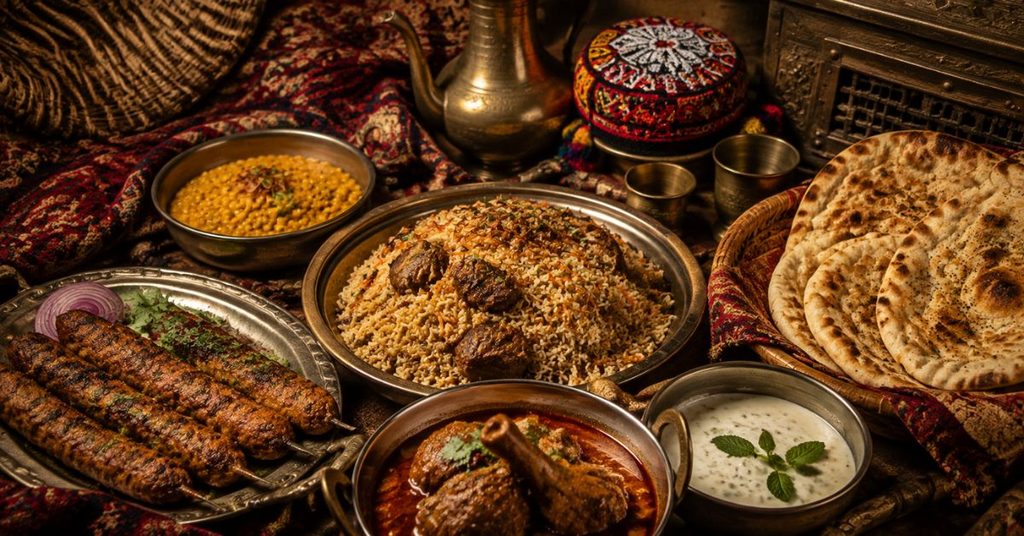
Tandoor breads are practical companions to grilled meat, lentils and karahi dishes because they do several jobs at once. They pick up meat juices, soften intense roasted flavours and make a meal naturally shareable.
Bukhara’s menu includes plain naan, tandoori roti, garlic naan, butter naan, laccha paratha and other breads, showing how important bread remains within the restaurant’s overall dining experience.
There is also a sensory element that rice alone cannot replace. Fresh bread arrives hot, with blistered sections from the tandoor and a soft centre designed for tearing rather than cutting. Passing it around the table turns eating into a collective act.
That social quality is as relevant to Frontier heritage as any particular spice.
Slow Cooking Provides the Counterpoint to the Grill
If the tandoor represents speed and extreme heat, Frontier-influenced cooking also values the opposite: patience.
Long cooking allows lentils, meat and aromatics to develop body without constant intervention. It produces flavours that cannot be recreated simply by increasing the amount of butter or spice at the end.
Bukhara’s house-speciality Dal Bukhara, for example, is described on the restaurant menu as whole black lentils slow-cooked over charcoal for 24 hours before being finished with spices, cream and churned butter.
That dish demonstrates an important principle. Frontier heritage is not only about meat. Lentils, breads and rice provide the structure that makes rich grilled dishes work as a complete meal.
Hospitality Is One of the Cuisine’s Most Important Ingredients
Food in this part of the world has long had a strong social function. Generous portions of meat, hot bread, rice and tea naturally suit communal eating, celebrations and long conversations around the table.
Modern food culture in Peshawar still reflects that relationship. Reports from the city’s food districts describe families and friends gathering around chapli kebab, karahi, pulao and green tea, particularly during festive periods.
Bukhara follows a similar philosophy in Singapore, describing its meals around celebration, togetherness and generous hospitality rather than treating the cuisine purely as a collection of dishes.
That context is worth remembering. Frontier food is at its best when several contrasting dishes reach the table together.
How to Experience the Heritage at Bukhara Singapore
Rather than ordering several similar curries, build a meal around the different techniques that define the cuisine. Bukhara’s full menu makes it possible to experience those contrasts within one sitting.
A well-rounded introduction could include:
- Begin with a charcoal or tandoor-cooked kebab to experience the cuisine’s relationship with fire.
- Add Gosht Karahi Shinwari for the concentrated, pan-cooked side of Frontier meat cookery.
- Pair the meal with Dal Bukhara and fresh tandoor bread to contrast smoke and spice with slow-cooked richness.
- Share rather than ordering individual plates, allowing bread, kebabs, curries and accompaniments to work together.
The point is not to collect as many dishes as possible. It is to notice how different cooking methods—charcoal grilling, tandoor baking, karahi cooking and long simmering create a meal with distinct textures and aromas.
Why North West Frontier Food Still Matters in Singapore
Singapore diners have access to an extraordinary range of South Asian food, but broad labels such as “Indian cuisine” can sometimes hide meaningful regional differences.
North West Frontier cooking offers something more specific. It emphasises live fire, robust ingredients, aromatic rather than indiscriminately hot seasoning, substantial breads and a style of dining built around sharing.
For restaurants, preserving those distinctions matters. Heritage becomes meaningful when it is expressed through technique rather than decoration alone. A tandoor has to produce the right char. Slow-cooked dal needs time. A kebab needs texture and moisture. Spices should complement the ingredient rather than bury it.
That is what allows traditional food to remain relevant outside its original geography: the dishes can travel, but the principles behind them must remain recognisable.
Conclusion
The richness of North West Frontier food does not come from excess. It comes from the interaction of geography, migration, cooking skill and hospitality.
Its historic crossroads encouraged culinary exchange. Its grilling traditions turned charcoal and tandoor heat into flavour. Karahi cooking concentrated meat and aromatics into deeply satisfying dishes. Bread and rice transformed individual preparations into shared meals, while restrained spices allowed smoke and ingredients to remain clearly identifiable.
For diners in Singapore, understanding those principles makes a Frontier-inspired meal more rewarding. You are not simply tasting another variation of North Indian food; you are experiencing a culinary tradition shaped by movement between regions and sustained by the simple idea that good ingredients, proper fire, patience and a shared table can create remarkable food.
FAQs
What is North West Frontier food?
North West Frontier food refers to culinary traditions associated with the historical north-western frontier region around present-day Khyber Pakhtunkhwa and neighbouring areas. It is known for grilled meats, karahi dishes, breads, rice, lentils and aromatic seasoning.
Is North West Frontier food very spicy?
Not necessarily. Many traditional dishes prioritise aroma, smoke and the natural flavour of meat, using chilli more selectively than people may expect.
What cooking methods define North West Frontier cuisine?
Charcoal grilling, tandoor cooking, karahi cooking and slow simmering are among its most characteristic techniques.
What should I try first if I am new to Frontier-style food?
Start with a tandoori or charcoal-grilled kebab, add a karahi-style meat dish, and pair them with slow-cooked dal and freshly baked tandoor bread.