
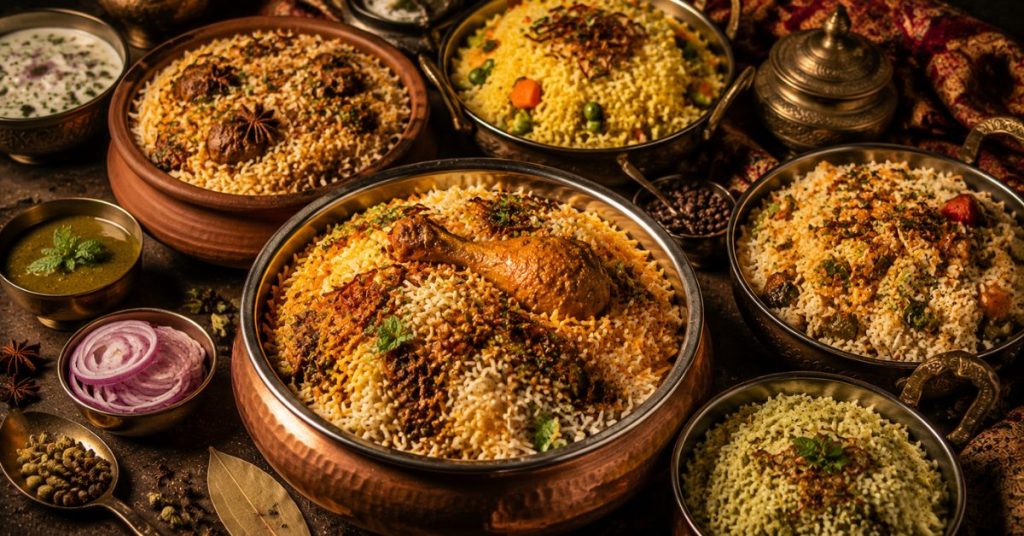
Choosing an Indian rice dish can be more complicated than it first appears. A menu may offer dum biryani, saffron rice, jeera rice and plain basmati side by side, yet each is designed for a very different kind of meal. Even within biryani, the experience changes considerably from one regional style to another.
The most useful way to understand these dishes is not to search for one “authentic” biryani formula. India has developed numerous regional traditions, shaped by different rice varieties, spice profiles, proteins and cooking methods. Lucknow is known for subtle aromatic cooking, Hyderabad for robust dum preparations, Kolkata for its distinctive potato-inclusive style, and Kerala’s Malabar region for biryanis that may use short-grain kaima or jeerakasala rice instead of long-grain basmati.
For diners in Singapore, knowing these differences makes ordering easier. It also helps explain why a full biryani may be the centrepiece of a meal, while jeera rice or saffron rice works better as a supporting partner to curry, dal or grilled meat.
What Actually Makes Biryani Different From Flavoured Rice?
A well-made biryani is conceived as a complete composed dish. Rice is combined or layered with vegetables, chicken, lamb or another main ingredient, along with aromatics and spices. The cooking process is designed so the rice absorbs flavour from the ingredients around it while the grains still retain their individual texture.
Flavoured rice has a different role. Jeera rice, saffron rice and similar preparations usually begin with rice as the main ingredient, with one or several aromatics providing character. They are generally intended to accompany another dish rather than replace it.
That distinction matters when ordering. If you already have butter chicken, rogan josh or dal on the table, another heavily layered dish may compete with the curry. A simpler cumin-scented or saffron-infused rice can give the meal more balance.
Why Dum Cooking Changes a Biryani
Dum cooking involves closing the cooking vessel tightly; traditionally the lid may be sealed with dough and finishing the dish over gentle heat. Steam remains trapped inside rather than escaping freely. That enclosed environment gives rice, meat, vegetables and whole spices time to exchange aromas.
The objective is not simply to cook everything for longer. Good dum cooking creates controlled flavour concentration. Saffron, cardamom, cloves, cinnamon and similar aromatics should perfume the rice rather than make it aggressively spicy.
Bukhara’s own guide to aromatic spices in North-West Frontier cooking explains how slow, enclosed cooking allows delicate aromatics to spread through rice dishes. Its current menu also specifically describes its vegetable and chicken dum biryanis as being sealed for slow cooking.
The result should be noticeable as soon as the pot is opened: fragrance first, followed by layers of flavour as you eat.
Four Regional Biryani Styles That Help Explain the Dish
There are far too many Indian biryanis to reduce them to a definitive list. These four styles, however, show particularly clearly how technique and regional preference can transform the same basic idea.
Awadhi or Lucknowi Biryani: Delicate and Aromatic
Awadhi cooking is strongly associated with Lucknow and tends to value fragrance and restraint rather than overwhelming chilli heat. Rice preparations traditionally make careful use of ingredients such as cardamom, mace, saffron, rose water or kewra, depending on the recipe.
In many Lucknowi approaches, components are prepared with precision before being brought together and finished on dum. This gives the finished rice a layered aroma without requiring a heavy coating of masala.
This is a good direction for diners who want biryani that tastes refined rather than fiery.
Hyderabadi Biryani: Deeper and More Robust
Hyderabadi biryani follows a different flavour logic. One of its best-known techniques is kachchi biryani, in which marinated meat is cooked together with the rice during the dum stage rather than being completely cooked beforehand. Yogurt, fried onions, herbs and spices contribute to a deeper, more assertive profile.
The contrast with Lucknowi biryani is useful when ordering: Hyderabad often suits diners looking for stronger masala and meat flavour, while an Awadhi approach tends to favour elegance and perfume.
Kolkata Biryani: Fragrant Rice With Its Famous Potato
Kolkata biryani has close connections to Awadhi culinary traditions but developed its own identity in Bengal.
Its most recognisable feature is potato, cooked until it absorbs the flavours surrounding the rice and meat. The overall profile is typically fragrant and comparatively restrained, with the potato functioning as part of the dish rather than as an inexpensive filler. Modern accounts also caution against taking every popular story about the origin of that potato literally.
For diners used to strongly spiced biryani, Kolkata style can be surprisingly subtle.
Malabar and Thalassery Biryani: A Different Rice Experience
Basmati is strongly associated with many North Indian biryanis, but it is not compulsory.
Malabar and Thalassery traditions from Kerala commonly use fragrant short-grain varieties such as jeerakasala or kaima rice. Ghee, fried onions, nuts and other regional ingredients can produce a rich yet distinctly different texture from long-grain northern biryani.
This is an important reminder that judging every biryani by how long its rice grains are misses much of India’s regional diversity.
Understanding Bukhara’s Three Biryani Options
Bukhara’s current Singapore restaurant menu offers three biryanis that illustrate how changing the main ingredient can substantially change the experience.
Awadhi Subz Sufiyani Dum Biryani
For diners who prefer a meat-free main course, the Awadhi Subz Sufiyani Dum Biryani is built around basmati rice, traditional spices and five vegetables. The pot is sealed with dough and slow-cooked in the Lucknow-inspired dum style.
The important point is that a vegetable biryani does not need to imitate meat biryani. Vegetables contribute sweetness, moisture and individual textures of their own, while the enclosed cooking process gives them time to flavour the rice.
It is particularly suitable when several richer curries or kebabs are already being shared and the table needs a substantial vegetarian centrepiece.
Shahi Murg Dum Biryani
The Shahi Murg Dum Biryani combines chicken with delicately layered rice before the pot is sealed for the final cooking stage.
Chicken makes this a versatile middle ground. It provides more richness than a vegetable biryani without the heavier character associated with slow-cooked lamb. For a mixed group where diners have different appetites, chicken biryani is often the easiest biryani to share alongside kebabs, raita and vegetable dishes.
Royal Lambshank Biryani
Bukhara’s Royal Lambshank Biryani takes a richer direction. The restaurant describes it as a North Indian preparation featuring slow-cooked marinated lamb shank served with saffron-seasoned rice.
Lamb shank changes the eating experience because it gives the dish a more substantial, meat-forward centre. This is the option to consider when the biryani itself is intended to be the main event rather than simply one shared dish among many.
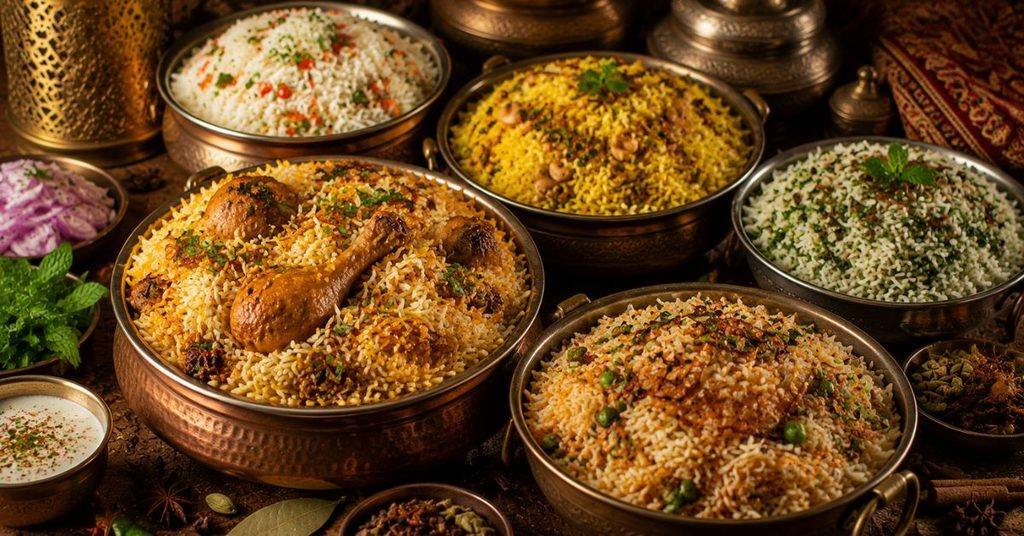
Saffron Rice, Jeera Rice and Plain Basmati Each Have a Purpose
Not every Indian meal needs biryani. In fact, choosing a simpler rice can make a rich curry taste better because the flavours are not competing for attention.
Bukhara currently offers steamed basmati rice, saffron rice and jeera rice alongside its biryanis.
Saffron Rice Adds Fragrance Without a Heavy Masala
Saffron rice uses the floral aroma and golden colouring of saffron to give basmati more character while keeping the preparation relatively restrained.
It works especially well with richer meat or paneer dishes because the rice contributes perfume without introducing another dominant spice profile.
For a closer comparison, Bukhara’s guide to saffron rice versus jeera rice explains how saffron creates a more floral character while cumin gives jeera rice its warmer, earthier flavour.
Jeera Rice Brings Warm, Toasted Cumin Notes
Jeera rice is made by tempering cumin seeds so their aroma moves into the fat and, ultimately, the rice.
Its strength is versatility. The earthy cumin flavour makes otherwise simple basmati more interesting without making it overly rich. That makes jeera rice particularly useful with dal, chickpea dishes, vegetables and tomato- or onion-based curries.
Steamed Basmati Gives Strong Curries Space
Plain rice can sometimes be the smartest order on the table.
When a curry already contains intense spices, butter, cream or a deeply flavoured sauce, steamed basmati provides contrast. Instead of adding another aromatic layer, it absorbs the gravy and allows the main dish to remain the focus.
How to Choose the Right Rice for Your Meal
Rather than asking which rice dish is “best”, consider what else you are eating.
- Choose a dum biryani when you want the rice dish itself to function as a complete or central main course.
- Choose chicken biryani for an approachable shared option that works with both meat and vegetable sides.
- Choose lamb biryani when you want something richer and more substantial.
- Choose saffron rice with creamy, aromatic or meat-heavy curries when you want fragrance without another full layer of masala.
- Choose jeera rice with dal, chickpeas or vegetable curries when a warm but uncomplicated accompaniment makes more sense.
- Choose steamed basmati when the curry is already powerful enough to provide all the flavour the rice needs.
This way of ordering usually produces a more balanced table than simply choosing the richest-sounding rice available.
What to Look for in a Well-Made Biryani
A good biryani should reveal its quality through balance rather than sheer intensity. When it arrives, look for a few practical signs:
- Distinct rice grains: the rice should feel light and separated rather than compressed into a wet mass.
- Aroma before heat: saffron and whole spices should create fragrance without every mouthful tasting aggressively of chilli.
- Evenly cooked main ingredients: meat should be tender and vegetables should retain some identity instead of disappearing into the rice.
- Different flavours through the layers: biryani should become more interesting as you move through the pot, not taste identical from top to bottom.
- Enough moisture without greasiness: the rice should not be dry, but excess oil should not dominate the plate.
These qualities matter more than unusually bright colouring or simply adding extra masala.
Complete the Meal Without Overloading It
Biryani already contains multiple layers of flavour, so its accompaniments usually work best when they provide contrast.
Cooling yogurt-based raita is the classic example. Bukhara’s menu includes mixed vegetable raita and plain yogurt, both of which provide a fresh counterpoint to aromatic rice. Onion salad and a simple green salad can add crunch and acidity without making the meal heavier.
For drinks, something refreshing generally makes more sense than another strongly flavoured component. Bukhara’s guide to Indian drinks that pair with spicy food covers options ranging from yogurt-based drinks to citrus and mint-forward refreshments.
The principle is simple: if the biryani is complex, the supporting elements do not need to be.
Conclusion
Indian biryani makes more sense once you stop treating it as a single recipe. Awadhi biryani emphasises fragrance and restraint. Hyderabadi preparations can offer greater spice intensity and the distinctive kachchi dum technique. Kolkata developed its own aromatic potato-inclusive tradition, while Malabar and Thalassery biryanis demonstrate that even the choice of rice can completely change the dish.
Flavoured rice deserves the same attention. Saffron rice brings delicate perfume, jeera rice contributes warm cumin, and steamed basmati provides a neutral base for powerful curries.
For Singapore diners exploring Indian cuisine, the next step is not necessarily finding one biryani and declaring it the best. It is learning to recognise the cooking style and choosing the rice that suits the occasion. As restaurants continue to showcase more regional Indian cooking, those distinctions will become increasingly useful and make every order considerably more interesting.
FAQs
What is the main difference between biryani and pulao?
Biryani usually relies on more deliberate layering and aromatic finishing, often including dum cooking. Pulao generally cooks rice more directly with stock, spices and other ingredients. Regional recipes can overlap, so the boundary is not always absolute.
Is dum biryani always spicy?
No. Dum describes the sealed, slow-cooking technique, not the chilli level. An Awadhi dum biryani can be highly aromatic while remaining relatively mild.
Can vegetarian biryani be authentic?
Yes. Biryani traditions have developed numerous meat-free versions using vegetables, paneer, jackfruit and other ingredients. What matters is the cooking technique and flavour structure rather than the presence of meat.
Which rice is best with Indian curry?
Jeera rice works particularly well with dal and vegetable curries, while saffron rice suits richer, aromatic dishes. Plain basmati is ideal when the curry already has a strong flavour.